Info
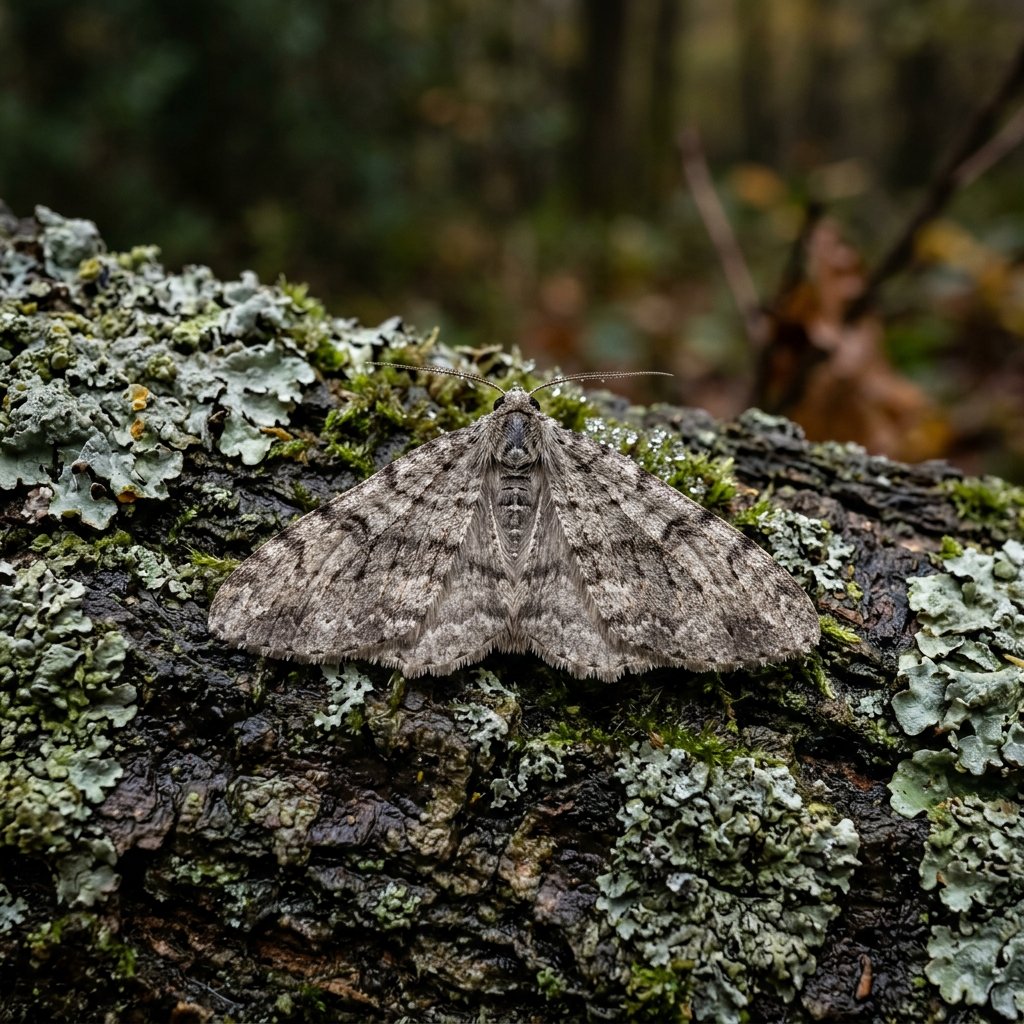
Often called the November Moth, the Epirrita dilutata is a quiet herald of the changing seasons. While most butterflies and moths have long since tucked themselves away for the winter, this resilient insect emerges just as the last leaves are falling, braving the autumn chill with its ghostly, translucent wings. It is a master of camouflage, perfectly evolved to vanish against the lichen-covered bark of forest trees.
🔍 How to Identify
- 🦋 The Wings: Broad and delicate, the wings are typically a pale silver-grey or brownish-grey. They are decorated with faint, wavy dark bands that look like ripples on a pond.
- 📐 Resting Posture: Unlike many moths that fold their wings like a tent, the November Moth rests with its wings spread flat against the surface, making it look almost like a part of the tree bark.
- 🕵️ The Look-Alikes: Be careful—this moth is famously difficult to distinguish from its close relatives, the Pale November Moth and the Autumnal Moth. Even experts often need a magnifying glass to tell them apart!
🌲 Habitat & Ecology
- 🍃 A Forest Dweller: You are most likely to spot them in deciduous woodlands, hedgerows, and established gardens. They are particularly fond of oaks, birches, and hawthorns, which serve as "nurseries" for their young.
- 🐛 The Caterpillar Phase: In the spring, the larvae emerge as bright green caterpillars with pale yellow stripes. They are generalist eaters, munching on the fresh foliage of various fruit trees and shrubs before spinning a cocoon in the soil.
- 🌙 Night Owls: As adults, they are strictly nocturnal. If you leave a porch light on during a damp October or November evening, you might find one resting nearby, drawn to the glow.
⚠️ Safety & Toxicity
- ✅ Harmless Friend: The November Moth is completely safe for humans and pets. It does not bite, sting, or carry any known diseases.
- 🚫 Low Garden Impact: While the caterpillars do eat leaves, they rarely appear in high enough numbers to cause significant damage to your garden plants. They are a vital food source for birds and bats preparing for winter.
✨ Fun Fact
The November Moth is a bit of a romantic rebel; while most insects mate in the warmth of summer, these moths wait for the cold. They have a special "antifreeze" protein in their blood that allows them to remain active and find mates even when temperatures drop near freezing!
More Details








