Info
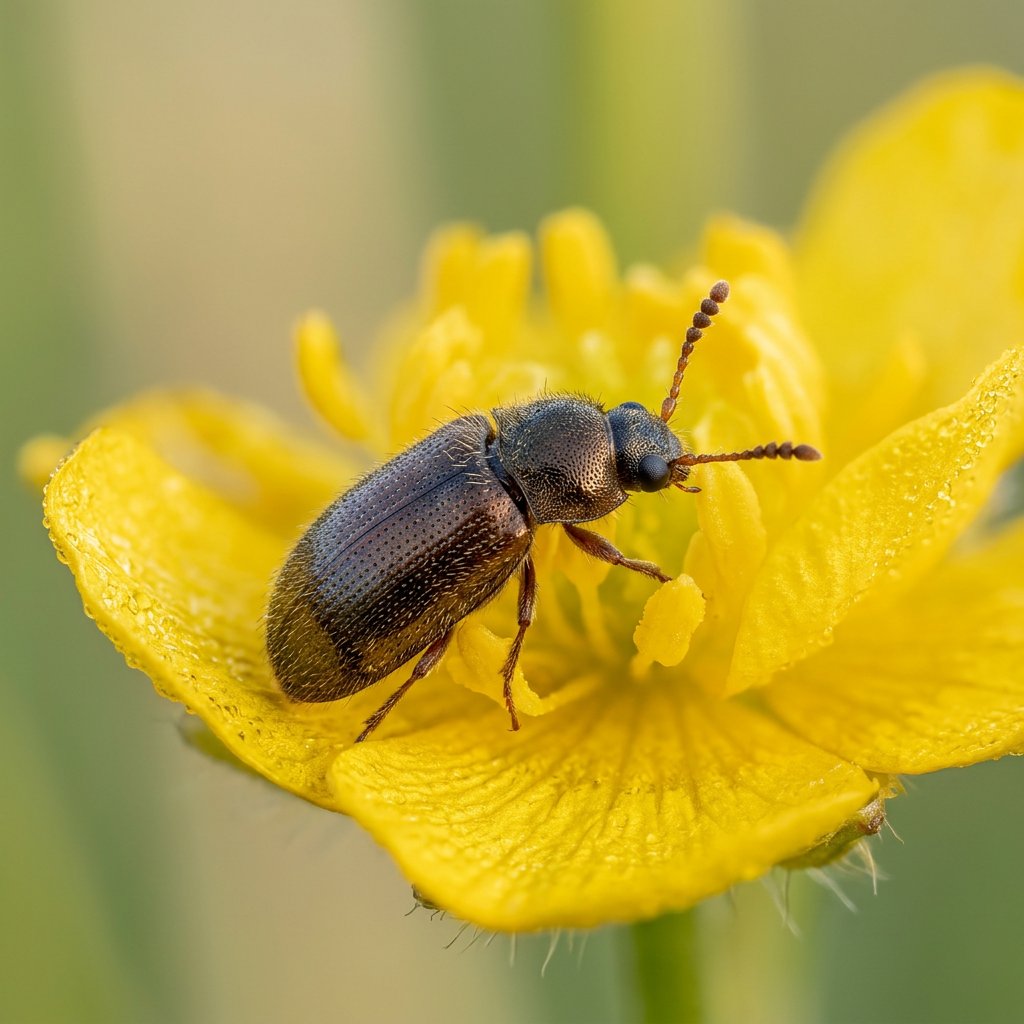
Often overlooked due to its tiny size, Epuraea aestiva—commonly known as a Sap Beetle or Pollen Beetle—is a gentle spring visitor that plays a quiet but vital role in the garden. This little beetle is essentially a member of the forest’s "cleaning crew," spending its days tucked inside blossoms or scavenging near tree sap. While some beetles can be intimidating, this one is a harmless neighbor that signals the true arrival of warmer weather.
🔍 How to Identify
- 🪲 Oval Silhouette: It has a distinctively broad, oval, and slightly flattened body shape, reaching only about 2.5 to 4 millimeters in length.
- 🎨 Rusty Hues: Its color ranges from a dull, pale yellow to a warm, rusty brown (ferruginous), which allows it to blend in perfectly with the centers of spring flowers.
- 🛡️ Short Wing Covers: If you look closely through a hand lens, you’ll notice its wing covers (elytra) are slightly shorter than its body, often leaving the very tip of its abdomen exposed.
🌲 Habitat & Ecology
- 🌸 The Blossom Buffet: In the spring and early summer, you will most frequently find them on white-flowered trees and shrubs, such as Hawthorn, Mountain Ash (Rowan), and Elderberry, where they feed on pollen and nectar.
- 🍂 Nature’s Recycler: While they love flowers, they are also attracted to fermenting organic matter and "bleeding" sap from wounded trees, helping to break down substances that might otherwise attract more troublesome pests.
⚠️ Safety & Toxicity
- ✅ Harmless Status: Epuraea aestiva is completely safe for humans and pets. It does not possess a stinger, it does not bite, and it is not known to carry any diseases.
- 🌱 Garden Impact: Unlike some of its cousins that attack ripening fruit, Epuraea aestiva is generally considered a neutral resident or a minor pollinator. It rarely causes any noticeable damage to ornamental plants or garden crops.
✨ Fun Fact
- 🕒 Early Risers: These beetles are among the first of their family to emerge from winter hibernation; they are "phenological markers," meaning their appearance is a reliable scientific sign that spring has officially transitioned into its active growth phase.
More Details








