Info
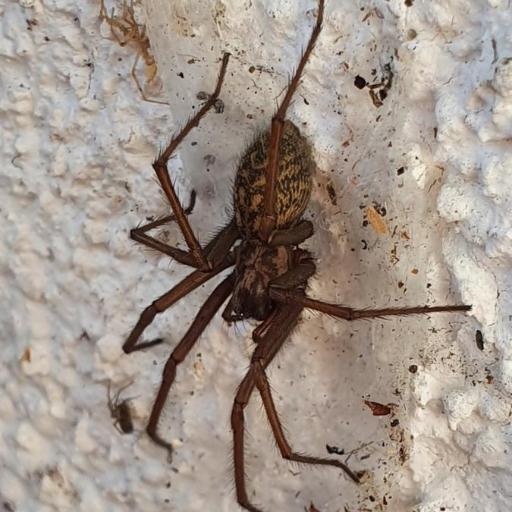
Known as the "Giant House Spider," Eratigena atrica is the guest that nobody invited but almost everyone has met. These long-legged arachnids are the Olympic sprinters of the spider world, often scuttling across floors during late summer and autumn. Despite their imposing size and "scary" speed, they are actually helpful roommates that act as a natural, chemical-free pest control service for your home.
🔍 How to Identify
- 🦵 Legs for Days: They possess exceptionally long, spindly legs, which can give the spider a total span of up to 4 inches (10 cm), making them appear much larger than they actually are.
- 🎨 Earthy Camouflage: The body is hairy and colored in shades of dark brown, grey, and tan, typically featuring a pale "sternum" mark and a faint, dark chevron pattern on the abdomen.
- 🕸️ Funnel Webs: Unlike the classic "Halloween" circular web, these spiders spin flat, sheet-like webs that lead into a silk-lined funnel where the spider hides and waits for prey.
🌲 Habitat & Ecology
- 🏠 Domestic Dwellers: As the name suggests, they are frequently found in dark, undisturbed areas of human dwellings, such as cellars, attics, behind heavy furniture, and in garden sheds.
- 🦟 The Ultimate Predator: They are highly effective hunters that feed on common household pests, including flies, moths, and even other smaller spiders.
- 🏃 A Track Star: They are among the fastest spiders in the world relative to their size. They don't have the stamina for long distances, but their short bursts of speed are designed to ambush prey before it can react.
⚠️ Safety & Toxicity
- 🤝 Non-Aggressive: While their size can be intimidating, they are quite shy. Their first instinct is always to run away and hide rather than bite.
- 🩹 Minimal Risk: They are not considered medically significant to humans. If forced to bite (for example, if squeezed in a hand), the sensation is usually described as a minor pinch, less painful than a bee sting, with no long-term effects.
- 🐾 Pet Safety: They pose no real threat to cats or dogs. In most cases, a curious pet is more of a danger to the spider than vice versa.
✨ Fun Fact
🏆 Record Breaker: For many years, the Giant House Spider held the Guinness World Record for the fastest spider on land, clocked at speeds of nearly 1.7 feet per second! That is the equivalent of a human running at roughly 45 miles per hour.
More Details








