Info
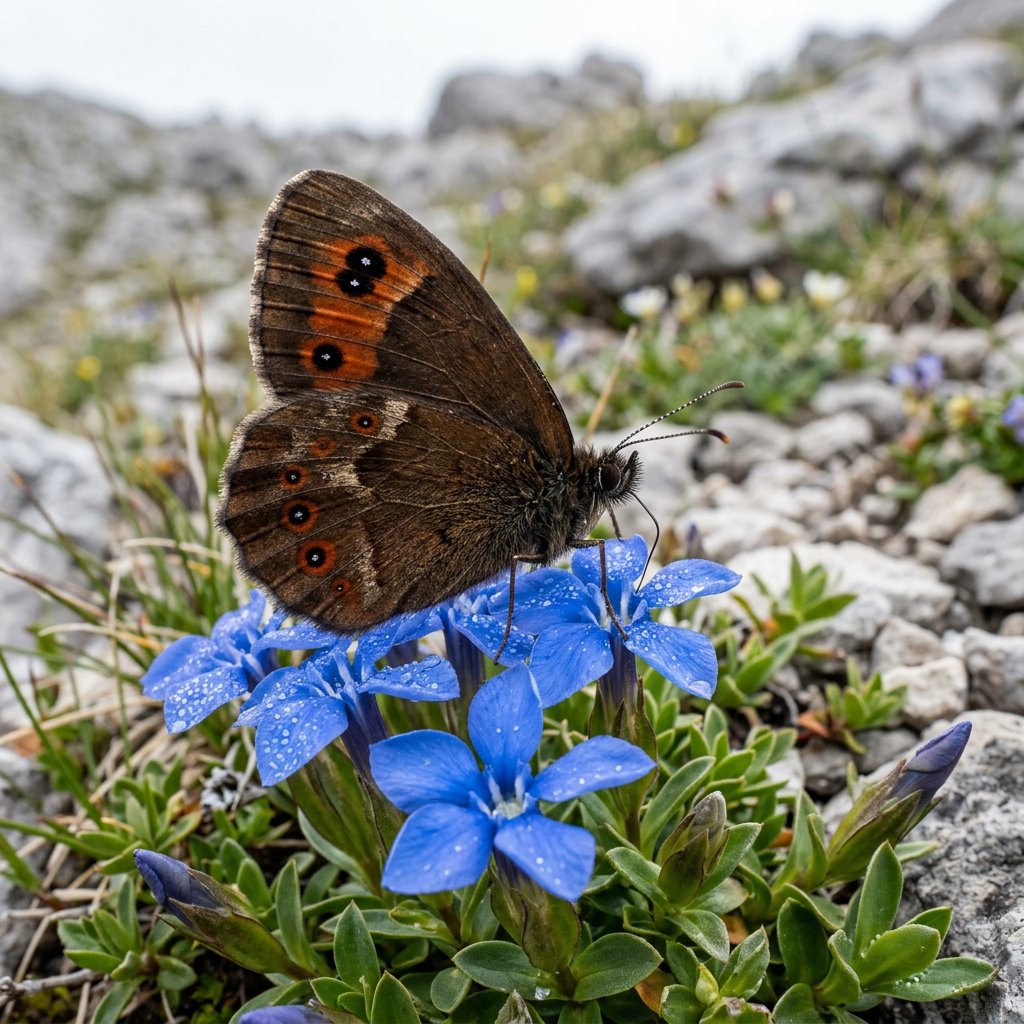
The Large Ringlet (Erebia euryale) is a dark, velvet-winged gem of the high altitudes, often referred to by collectors as one of the "Mountain Ringlets." Found dancing across the alpine meadows of Europe, it is a hallmark of pristine mountain air and rugged landscapes. While many butterflies prefer the heat of the lowlands, this species has mastered the art of living where the air is thin and the summers are short.
🔍 How to Identify
- 🦋 Velvet Wings: The upper side of the wings is a deep, smoky chocolate brown, providing a rich backdrop for its colorful markings.
- 🟠 Orange Bands: Look for a distinctive band of rusty orange-red on the forewings, which contains a series of small, black "eyespots."
- ⚪ The Underside Tell: The underside of the hindwing usually features a pale, yellowish, or whitish "dentate" (toothed) band, which helps tell it apart from its very similar cousin, the Arran Brown.
🌲 Habitat & Ecology
- 🏔️ Mountain Specialist: This butterfly is rarely seen in gardens unless you live in a high-altitude region. It thrives in damp mountain forests, grassy clearings, and subalpine meadows between 800 and 2,500 meters.
- 🌾 Grassy Diet: The caterpillars are specialists that feed on various mountain grasses, such as Fescue (Festuca) and Moor Grass (Sesleria), blending in perfectly with the green blades.
- 🌦️ Weather Watcher: Because mountain weather is fickle, these butterflies are highly sensitive to sunlight; they will vanish into the grass the moment a cloud covers the sun to preserve their body heat.
⚠️ Safety & Toxicity
- ✅ Harmless: The Large Ringlet is a gentle "friend" of the mountain trails. It possesses no sting, no bite, and is not toxic to humans.
- 🦋 Fragile Scales: While safe to observe, their wings are covered in microscopic scales that are easily damaged. It is best to admire their flight or wait for them to land on a flower rather than attempting to handle them.
✨ Fun Fact
The Large Ringlet is a true "slow-lifer." Because the mountain growing season is so short, the larvae often take two full years to complete their development, spending two entire winters tucked away in the frozen grass before finally emerging as a butterfly!
More Details








