Info
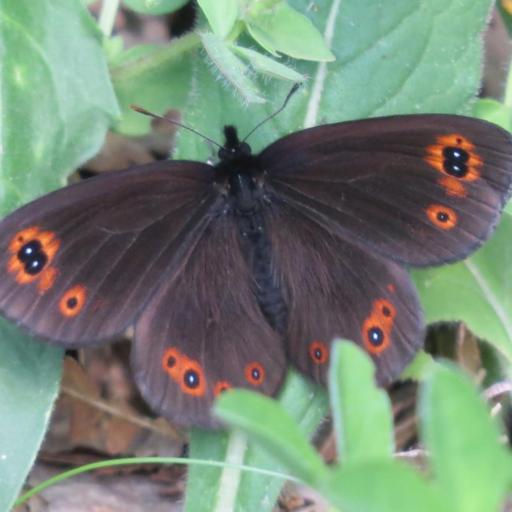
Often called the Woodland Ringlet, this delicate butterfly is a classic herald of early summer in European meadows. Named after the mythical Gorgon because of the many "eyes" peering from its wings, it is a gentle "friend" to the environment and a vital indicator of healthy, unpolluted grasslands.
🔍 How to Identify
- 🦋 Velvety Wings: The primary color is a deep, sooty brown or charcoal black, looking almost like velvet when fresh.
- 👁️ The "Medusa" Eyes: Both the forewings and hindwings feature a series of striking orange-yellow circles, each containing a black "pupil" with a tiny white center.
- 📏 Subtle Underside: The underside of the wings is a more muted brown, allowing the butterfly to vanish against tree bark or dried grass when it closes its wings to rest.
🌲 Habitat & Ecology
- 🌿 Grassland Resident: Unlike many butterflies that crave garden flowers, the Woodland Ringlet spends its youth as a caterpillar munching on common meadow grasses like Bromus and Festuca.
- ☀️ Sun-Dappled Flights: You’ll most likely spot them fluttering low to the ground in damp meadows, woodland clearings, or along the edges of forests where the sun hits the tall grass.
- 🕰️ Short Season: They are univoltine, meaning they only produce one generation per year, typically flying between May and July depending on the altitude.
⚠️ Safety & Toxicity
- ✅ Harmless Friend: The Woodland Ringlet is completely non-toxic and lacks any sting, bite, or chemical defense.
- 🐾 Pet & Child Safe: It poses no threat to curious pets or children. In fact, they are quite shy and will likely flutter away long before you can get close.
✨ Fun Fact
The "eyes" on the Woodland Ringlet’s wings aren't just for show—they are a clever survival tactic! Predators like birds often strike at the prominent eyespots, thinking they are the head of the insect. This leads the bird to peck at the wing edges, allowing the butterfly to escape with only a small tear in its wing rather than a fatal injury to its body.
More Details








