Info
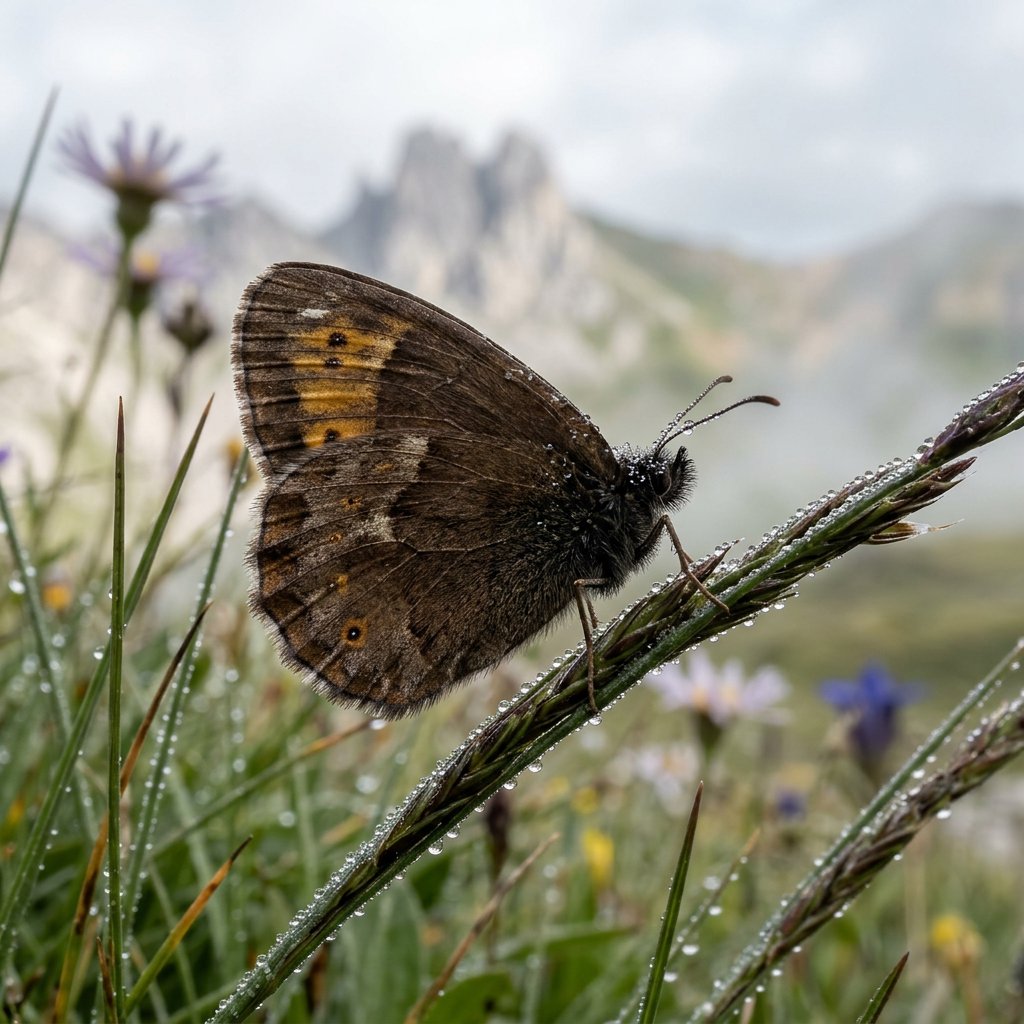
Often called the Blind Alpine Ringlet, this resilient butterfly is a true specialist of the high mountains. Found dancing across the windswept peaks of the European Alps and Tatras, it is a "friend" of the ecosystem and a favorite sight for hikers. It earned its "blind" nickname because, unlike most of its close relatives, it lacks the dark eye-spots that usually decorate the wings of Ringlet butterflies.
🔍 How to Identify
- 🦋 The "Blind" Wings: Look for dark, sooty-brown wings featuring a row of orange or ochre-yellow rectangular patches. Crucially, these orange patches are solid—they do not have the black-and-white "pupils" or eye-spots seen on other Erebia species.
- 📏 Compact Size: It is a relatively small butterfly, with a wingspan of about 32–38mm, designed for low, erratic flights to avoid being swept away by mountain gusts.
- 🌫️ Underwing Pattern: The underside of the hindwings is usually a flat, grayish-brown, providing perfect camouflage against the lichen-covered rocks when it closes its wings to rest.
🌲 Habitat & Ecology
- 🏔️ High-Altitude Specialist: You won’t find this insect in your backyard unless you live above the tree line. It thrives in damp alpine meadows and rocky slopes, usually between 1,500 and 2,500 meters in elevation.
- ❄️ The Two-Winter Life: Because the mountain summers are so short, the larvae (caterpillars) often cannot grow fast enough to mature in one season. They are remarkable survivors that frequently hibernate through two full winters before finally emerging as butterflies.
- 🌼 Pollinator Role: The adults are active on sunny days, moving from flower to flower to sip nectar, while the caterpillars feed exclusively on hardy mountain grasses like Festuca (fescue).
⚠️ Safety & Toxicity
- ✅ Completely Harmless: This butterfly is a gentle mountain inhabitant. It possesses no sting, no bite, and is not known to be toxic if accidentally brushed against.
- 🦋 Fragile Nature: While safe for humans and pets, the butterfly itself is very delicate. Its scales can be easily damaged by oils from human skin, so it is best enjoyed through a camera lens rather than handled.
✨ Fun Fact
⏳ The Alternate Year Mystery: In many mountain valleys, the Blind Alpine Ringlet follows a strict two-year cycle. This means you might see thousands of them flying one summer, but if you return to the exact same spot the following year, you might not find a single one!
More Details








