Info
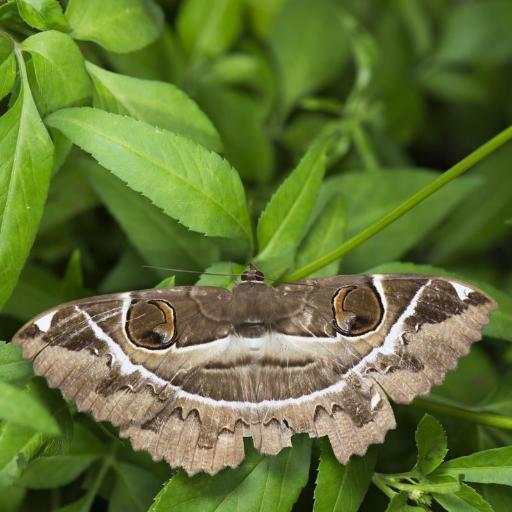
Named after the Greek god of primordial darkness, the Erebus moth (commonly known as the Great Owlet Moth) is a true titan of the night. These massive, velvety creatures are often mistaken for bats or small birds when they flutter near porch lights. With their haunting "eye-spots" and incredible camouflage, they have inspired ghost stories and folklore across the tropical and subtropical regions they inhabit.
🔍 How to Identify
- 👁️ The "Owl Eyes": The most striking feature is a pair of large, intricate ocelli (eye-spots) on the forewings, which look remarkably like the eyes of a staring forest predator.
- 👐 Impressive Span: They are among the largest moths in the world, with some species boasting a wingspan that can exceed 15 centimeters (6 inches).
- 🍂 Cryptic Patterns: Their wings are a masterclass in mimicry, patterned with ripples of chocolate brown, charcoal, and cream to resemble dried leaves or tree bark.
🌲 Habitat & Ecology
- 🌙 Shadow Seekers: During the day, they hide in deep shade—caves, hollow trees, or the dark corners of old buildings—to avoid birds. They only emerge once the sun has completely set.
- 🍎 Fermented Diet: Unlike many butterflies that seek flower nectar, Erebus moths often prefer the "liquor" of the forest. They are frequently found feeding on the juices of overripe, fermenting fruit or oozing tree sap.
⚠️ Safety & Toxicity
- 🛡️ Harmless Giant: Despite their intimidating size and "spooky" eye-spots, these moths are entirely harmless to humans. They do not bite, sting, or carry any toxins.
- 🦋 Fragile Scales: Like all moths, their wings are covered in tiny scales that look like dust. While not poisonous, touching them can damage the moth’s ability to fly, so it’s best to admire these gentle giants from a distance.
✨ Fun Fact
In many cultures, the appearance of a large Erebus moth inside a home is seen as a supernatural omen. While some see them as "money moths" bringing luck, others believe they are the souls of ancestors stopping by for a quiet visit.
More Details








