Info
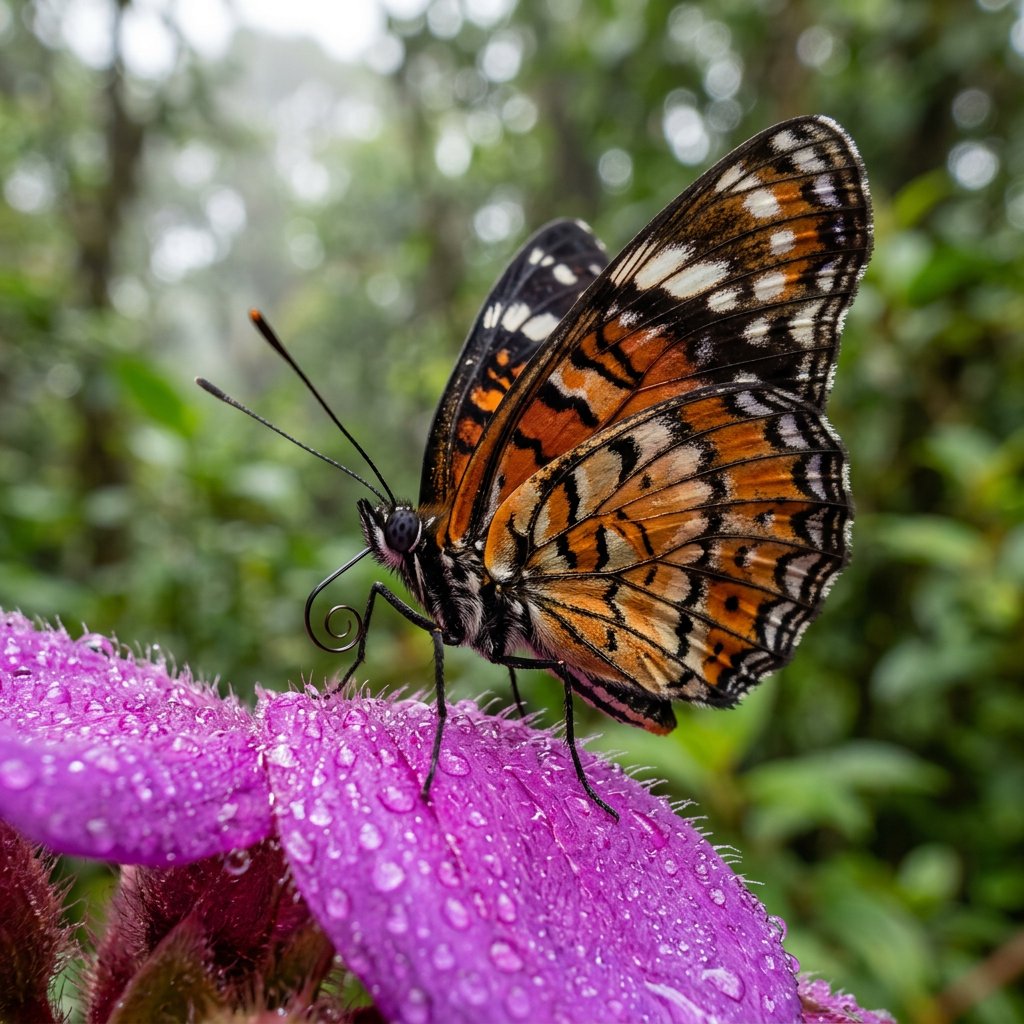
Often called Lansdorf's Crescent, this striking butterfly is a jewel of the South American rainforests. It is a master of "copycat" survival, blending into the vibrant landscape of Brazil and Argentina by mimicking the appearance of much more dangerous species. While its bold patterns might look like a warning, this delicate insect is a peaceful pollinator and a welcome sight for any nature lover.
🔍 How to Identify
- 🦋 Wing Pattern: Its wings feature a deep black velvet background, dramatically interrupted by bold creamy-white bands on the forewings and bright orange or yellow patches near the base and hindwings.
- 📏 Shape: It possesses elongated, slightly rounded wings characteristic of the Nymphalidae family, giving it a graceful, fluttering silhouette in flight.
- 🎨 The Underside: The reverse side of the wings mirrors the top pattern but with softer, more muted tones, allowing it to "disappear" against tree bark or dried leaves when its wings are closed.
🌲 Habitat & Ecology
- 🌿 Forest Dwellers: You will most likely find these butterflies dancing along the edges of humid tropical forests or near riverbanks where their favorite host plants, like Ruellia, grow in abundance.
- 🎭 Expert Mimicry: The Lansdorf's Crescent participates in what scientists call a "mimicry ring." By looking almost identical to the toxic Heliconius butterflies, it tricks birds into thinking it would make a bitter, poisonous snack.
- 🍭 Diet & Role: As adults, they spend their days flitting from flower to flower sipping nectar, acting as vital pollinators for forest wildflowers.
⚠️ Safety & Toxicity
- ✅ Status: Completely harmless.
- 👐 Details: Unlike the "longwing" butterflies it mimics, Eresia lansdorfi is not toxic. It has no sting, no bite, and is perfectly safe to observe closely. However, like all butterflies, their wings are incredibly fragile; the oils from human skin can damage the microscopic scales they need for flight, so it is best to watch them with your eyes, not your hands.
✨ Fun Fact
The Lansdorf's Crescent is so good at its disguise that even experienced entomologists sometimes have to look at the vein patterns in the wings to tell it apart from the toxic butterflies it imitates!
More Details








