Info
Commonly known as the Butternut Woolly Worm, these strange creatures look more like floating bits of cotton or fuzzy mold than insects. They are actually the larvae of sawflies, primitive cousins of wasps and bees. While they might look like a soft snack for birds, their snowy white disguise is a clever trick to hide their true identity from predators.
🔍 How to Identify
- ☁️ The "Wool" Coat: The most striking feature is the thick, white, waxy secretion that covers the larvae's body. It looks like tufts of pulled cotton or tiny white dreadlocks.
- 🐛 Hidden Body: If you gently brush away the wax, the larvae are pale green or yellow with black eye spots. They have more "prolegs" (tiny fleshy legs) along their body than typical butterfly caterpillars.
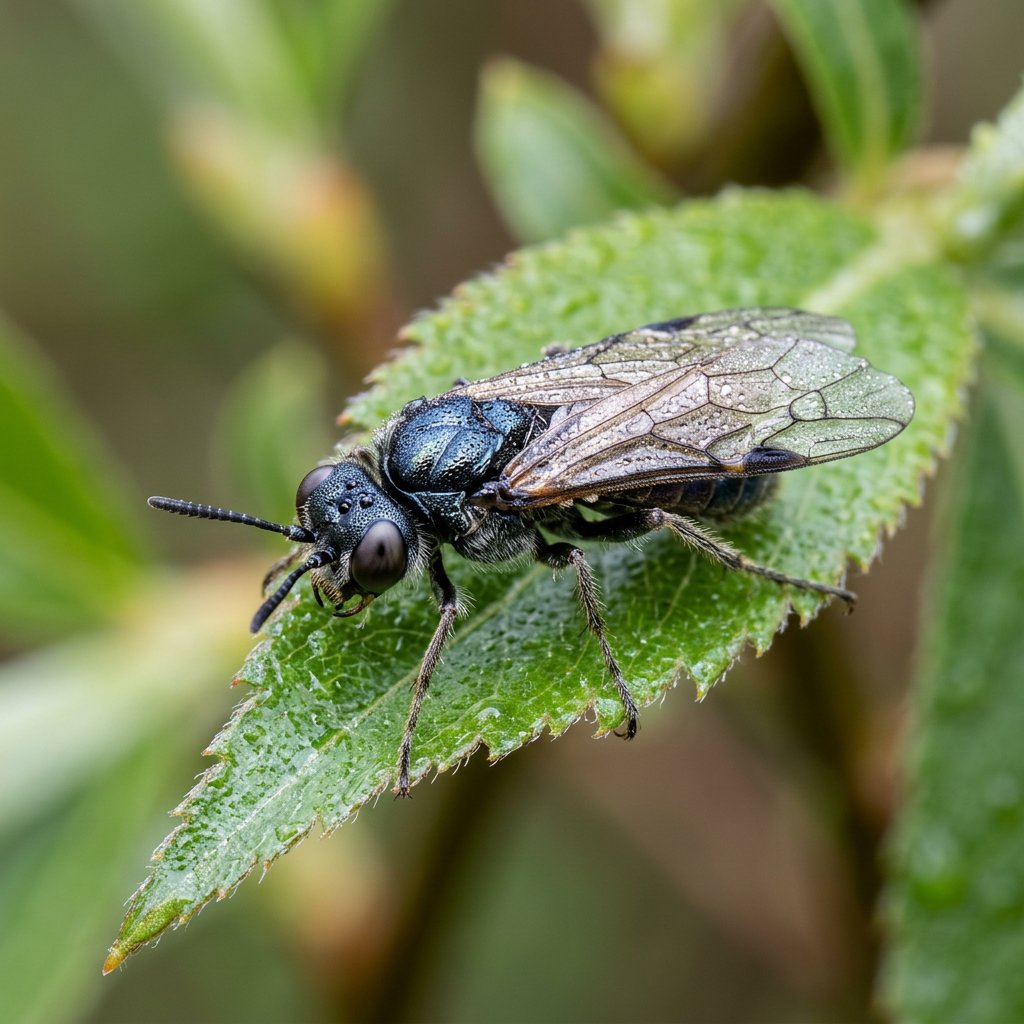
- 🐝 Adult Form: The adults are small, black, and shine like polished metal. Unlike wasps, they lack a narrow "waist," giving them a sturdier, rectangular profile.
🌲 Habitat & Ecology
- 🌳 Host Favorites: You’ll most likely find them congregating on the undersides of leaves on Butternut, Black Walnut, or Alder trees. They are picky eaters and rarely stray from their preferred host.
- 🍃 The Skeletonizer: Rather than eating the entire leaf, young larvae often "skeletonize" it. They eat the soft green tissue but leave the veins behind, creating a delicate, lacy pattern on the foliage.
- 🍂 Seasonal Cycle: They spend the winter as pupae tucked away in the soil or leaf litter, emerging in late spring as adults to lay eggs directly into the veins of new leaves.
⚠️ Safety & Toxicity
- 🛡️ Gentle Residents: Despite their fuzzy and somewhat alien appearance, Eriocampa larvae do not sting or bite humans. The white "wool" is simply a non-toxic wax and does not contain irritating hairs like some "stinging" caterpillars.
- 🐶 Pet Safety: They are generally harmless to pets, though the waxy coating might cause minor stomach irritation if a curious dog decides to sample a large number of them.
- 🌳 Tree Health: While a large colony can make a tree look a bit "frosted" and tattered, they rarely cause enough damage to kill a healthy, established tree.
✨ Fun Fact
The white "wool" is a brilliant survival strategy! If a bird or predatory insect tries to grab the larva, the waxy filaments break off easily, leaving the predator with a dry mouthful of "lint" while the insect drops safely to the ground below.
More Details








