Info
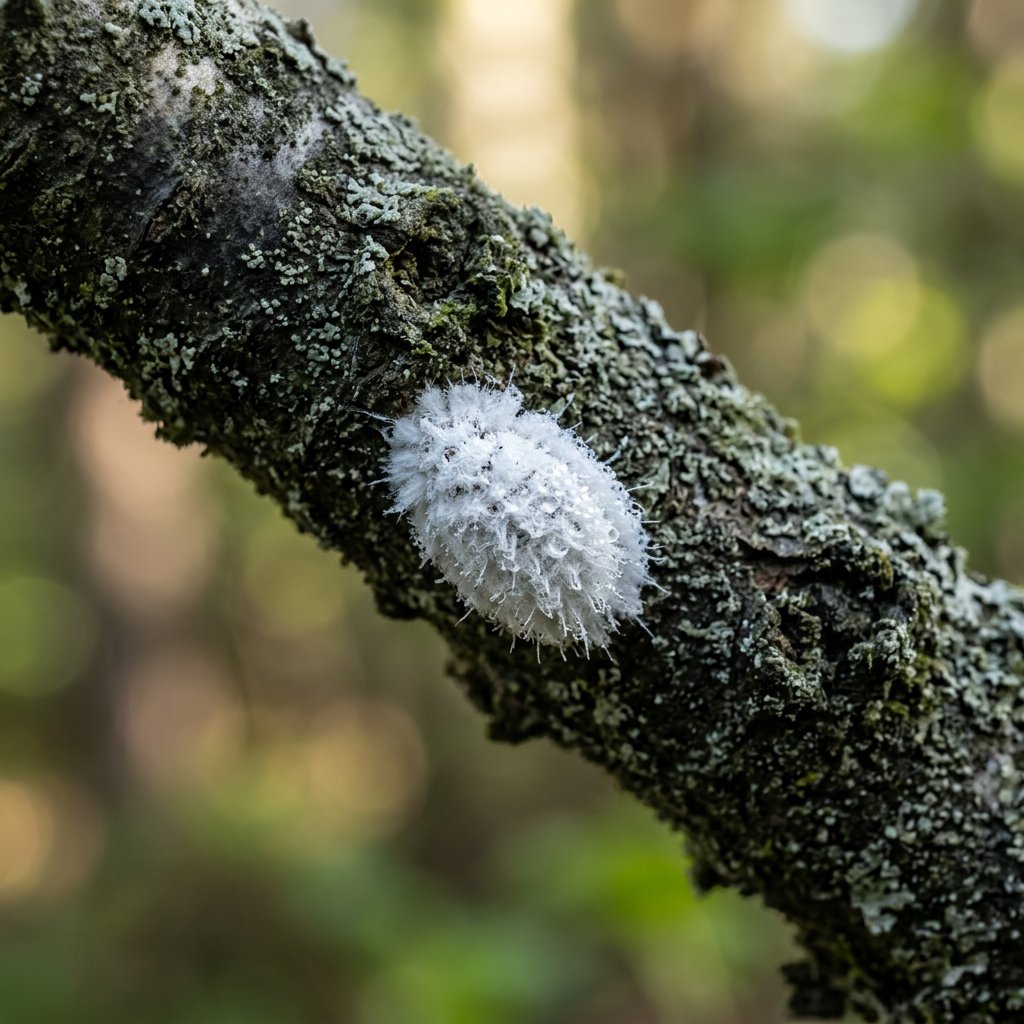
Often mistaken for bits of fluff or a localized fungal infection, the Felt Scale (Eriococcidae) is a master of disguise in the insect world. These tiny sap-suckers wrap themselves in protective, waxy blankets that look remarkably like felt or cotton, clinging tightly to the stems and leaves of their host plants. While they might look soft and stationary, they are persistent garden hitchhikers that can stress a plant if their population grows too large.
🔍 How to Identify
- 🧶 Felt-like Sacs: The most recognizable sign is the white, cream, or greyish "ovisac" that looks like a tiny, elongated cotton ball or felt pouch attached to the plant.
- 🐜 Hidden Body: If you were to peel back the waxy coating, you would find a small, oval, often reddish or purple insect underneath.
- 🌿 Settled Clusters: Unlike active crawlers, adults are usually found in stationary clusters in bark crevices, leaf axils, or along the undersides of foliage.
🌲 Habitat & Ecology
- 🍭 The Honeydew Trail: These insects survive by piercing plant tissues to drink sap. Because they consume so much sugar, they excrete a sticky substance called "honeydew," which often coats nearby leaves.
- 🖤 Sooty Mold: If you see a black, soot-like fungus growing on your plant’s leaves, look closely—it is likely feeding on the honeydew produced by a hidden colony of Felt Scales.
- 🌳 Host Favorites: While they are found worldwide, different species have specific tastes; some are notorious for infesting Crape Myrtles, while others prefer Beech trees or Azaleas.
⚠️ Safety & Toxicity
- ✅ Safe for Humans: These insects are completely harmless to people and pets. They do not bite, sting, or carry diseases that affect mammals.
- 🥀 Plant Foe: While they aren't "toxic," they are considered a garden pest. A heavy infestation can cause yellowing leaves, stunted growth, and branch dieback due to the constant loss of nutrients.
- 🐜 Ant Guardians: You may notice ants crawling around them; the ants actually protect the scales from predators in exchange for the sugary honeydew they produce.
✨ Fun Fact
In Australia, some species of Eriococcidae are "gall-formers." They chemically signal the host plant to grow a complex, wooden chamber (a gall) around the insect, providing it with a private, armored fortress to live in!
More Details








