Info
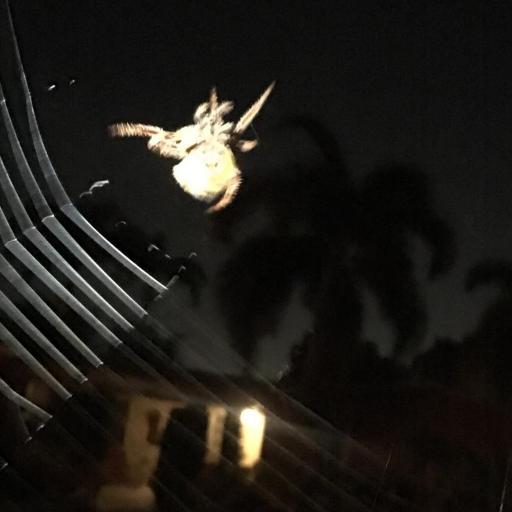
Often called the Tropical Orb-weaver, this spider is the ultimate garden architect of the warmer latitudes. Known for its incredible variety of colors—ranging from neon green to earthy brown—it is a master of disguise that blends perfectly into leaves or tree bark. If you’ve ever walked into a massive, sticky web across your porch at night, you’ve likely met this hard-working, nocturnal neighbor.
🔍 How to Identify
- 🎨 The Chameleon Abdomen: It features a large, teardrop-shaped abdomen that is highly "polymorphic," meaning it can appear in various patterns, often with a bright white "heart" or "lightning bolt" mark on its back.
- 🕷️ Spiny Legs: Its legs are robust and covered in fine, stiff hairs (macrosetae), often displaying dark bands or joints.
- 📏 Size Difference: Females are significantly larger and more bulbous, while males are much smaller and more slender, often overlooked by the casual observer.
🌲 Habitat & Ecology
- 🌙 The Night Shift: This spider is strictly nocturnal. It spends its nights suspended in the center of a large, circular web, but as soon as the sun rises, it retreats to a nearby leaf, tucking its legs in to look like a harmless bump or bird dropping.
- ♻️ Sustainable Living: To save energy, the Tropical Orb-weaver often tears down and eats its own web at dawn. By consuming the silk, it recycles the proteins to spin a brand-new web the following evening.
- 🦟 Pest Control: They are a gardener's best friend, acting as a natural pesticide by catching huge quantities of moths, mosquitoes, and beetles.
⚠️ Safety & Toxicity
- 🛡️ Non-Aggressive: These spiders are very shy and have no interest in humans. If threatened, they will typically drop to the ground or scurry away rather than bite.
- 🐝 Low Risk: While they do have venom (used to paralyze their insect prey), it is not medically significant to humans. A bite—which usually only happens if the spider is squeezed—is comparable to a mild bee sting and results in minor localized swelling.
✨ Fun Fact
Early scientists were so confused by the different colors and patterns of Eriophora ravilla that they accidentally gave it dozens of different scientific names, thinking they were discovering many different species instead of just one very stylish spider!
More Details








