Info
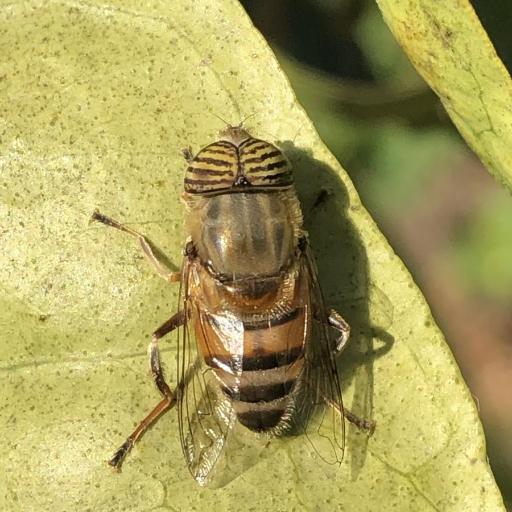
Meet the master of disguise, often called the Band-eyed Drone Fly. At first glance, you might jump back thinking you’ve spotted a wasp or a bee, but this clever insect is actually a harmless hoverfly. Found across Africa and Europe, it has successfully "hitchhiked" to parts of North America, where it spends its days expertly mimicking its stinging cousins to stay safe from predators.
🔍 How to Identify
- 👁️ The Eyes: Its most striking feature is its large, reddish-brown eyes covered in distinct vertical dark stripes—giving it a "tiger-eye" appearance.
- 🐝 The Body: It sports a thick, robust abdomen with yellow and black bands, a classic example of Batesian mimicry used to fool birds into thinking it can sting.
- 🪽 The Wings: Unlike the four wings of bees and wasps, this fly has only two clear wings, which it uses to perform incredible stationary hovering maneuvers.
🌲 Habitat & Ecology
- 🌼 Pollinator Power: As an adult, this fly is a "garden friend." It feeds exclusively on nectar and pollen, making it an essential pollinator for many flowering plants.
- 💧 The "Rat-Tail" Phase: Before it becomes a beautiful flyer, its larvae live in stagnant water or damp organic matter. They are known as "rat-tailed maggots" because they possess a long, snorkel-like breathing tube to reach the surface for air.
- ☀️ Sun Lovers: You will most likely spot them on bright, sunny days, resting on wide-open flowers like daisies or carrots where they can easily soak up the heat.
⚠️ Safety & Toxicity
- 🛡️ Status: Completely harmless and non-aggressive.
- 🚫 No Sting: Despite its intimidating "wasp-like" costume, the Band-eyed Drone Fly possesses no stinger and cannot bite. It relies entirely on its bluff to keep enemies at bay.
- 🐾 Pet Safety: They pose no threat to curious pets or children; in fact, having them in your garden is a sign of a healthy, biodiverse ecosystem.
✨ Fun Fact
The "rat-tail" breathing tube of their larvae is a marvel of nature—it can extend several times the length of the larva's body, acting like a telescopic straw so they can survive in oxygen-poor mud!
More Details








