Info
Often mistaken for a small moth fluttering near the forest floor, the Sleepy Duskywing is actually a specialized member of the "skipper" butterfly family. Found across North America, these little aviators get their name from their muted, "sleepy" appearance compared to their flashier cousins. They are the quintessential spirits of the early spring oak woods, appearing just as the first leaves begin to unfurl.
🔍 How to Identify
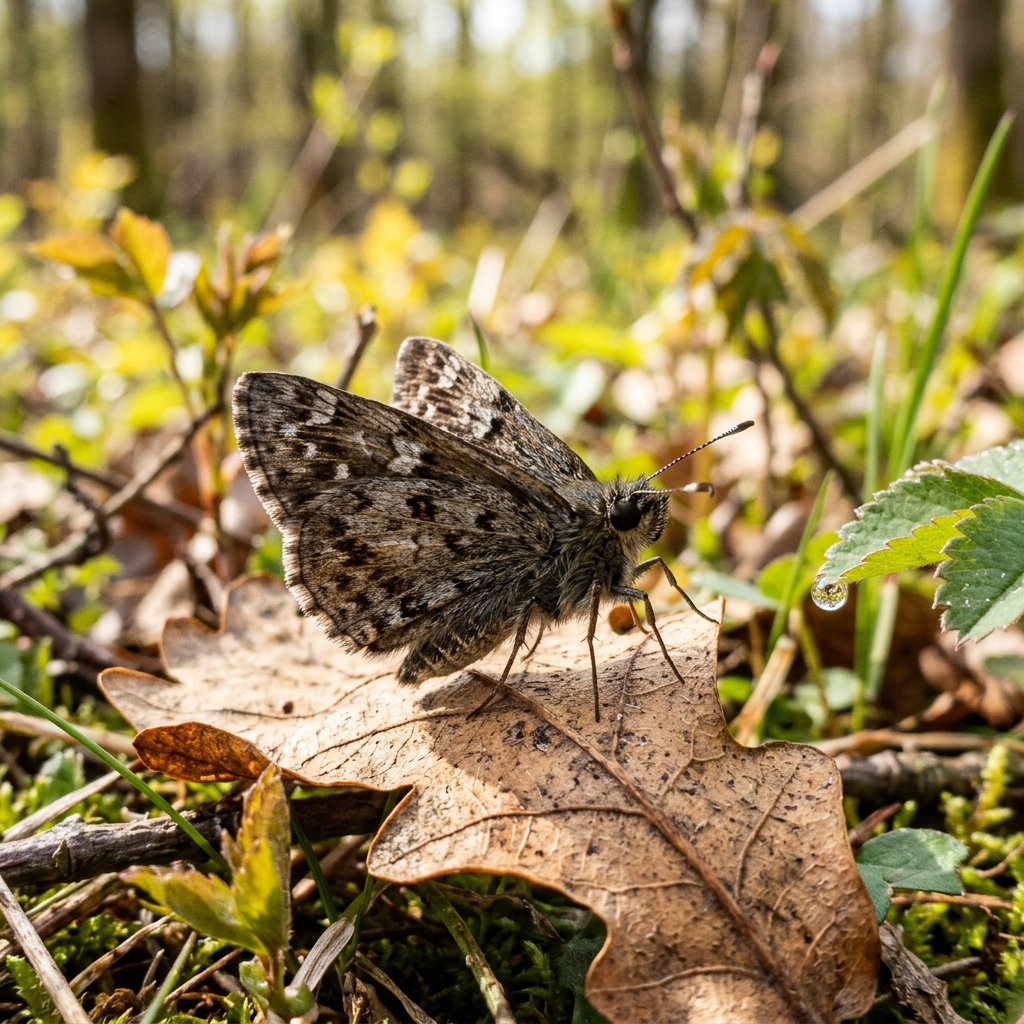
- 🦋 The "Spotless" Wing: The easiest way to identify the Sleepy Duskywing is by what it lacks. Unlike most other duskywings, it has no tiny, translucent white spots on its forewings.
- 🟤 Mottled Camouflage: Their wings are a rich, velvety tapestry of grayish-brown with two distinct dark, chain-like bands that allow them to vanish instantly against a background of dead leaves.
- 💨 Skipping Flight: True to their "skipper" family name, they move with a rapid, erratic, "skipping" flight pattern, usually staying within a few feet of the ground.
🌲 Habitat & Ecology
- 🌳 The Oak Specialist: This insect is deeply tied to the health of the forest. Their caterpillars are "specialists," feeding almost exclusively on the tender new growth of various oak species, particularly Scrub Oak and Black Oak.
- 🌸 Springtime Nectaring: They are strictly spring-fliers. You will see them patrolling rocky ridges or woodland edges where they sip nectar from low-growing wildflowers like Wild Strawberry, Blueberry, and Henbit.
- 🍂 Master of Disguise: When they rest, they often spread their wings flat or wrap them slightly around a twig, mimicking a dried leaf to hide from hungry birds.
⚠️ Safety & Toxicity
- 🛡️ Completely Harmless: The Sleepy Duskywing is a "friend" of the gardener. They do not bite, sting, or possess any chemical defenses that could harm humans or animals.
- 🐾 Pet Friendly: They are non-toxic and pose no threat to curious pets who might encounter them in the yard. They are sensitive to pesticides, however, so a "nature-friendly" garden is their best sanctuary.
✨ Fun Fact
🎓 The Hilltopper: Male Sleepy Duskywings are famous for a behavior called "hilltopping." They will fly to the highest point in their local landscape—even if it’s just a small mound—and defend that territory vigorously while waiting for a female to fly by!
More Details








