Info
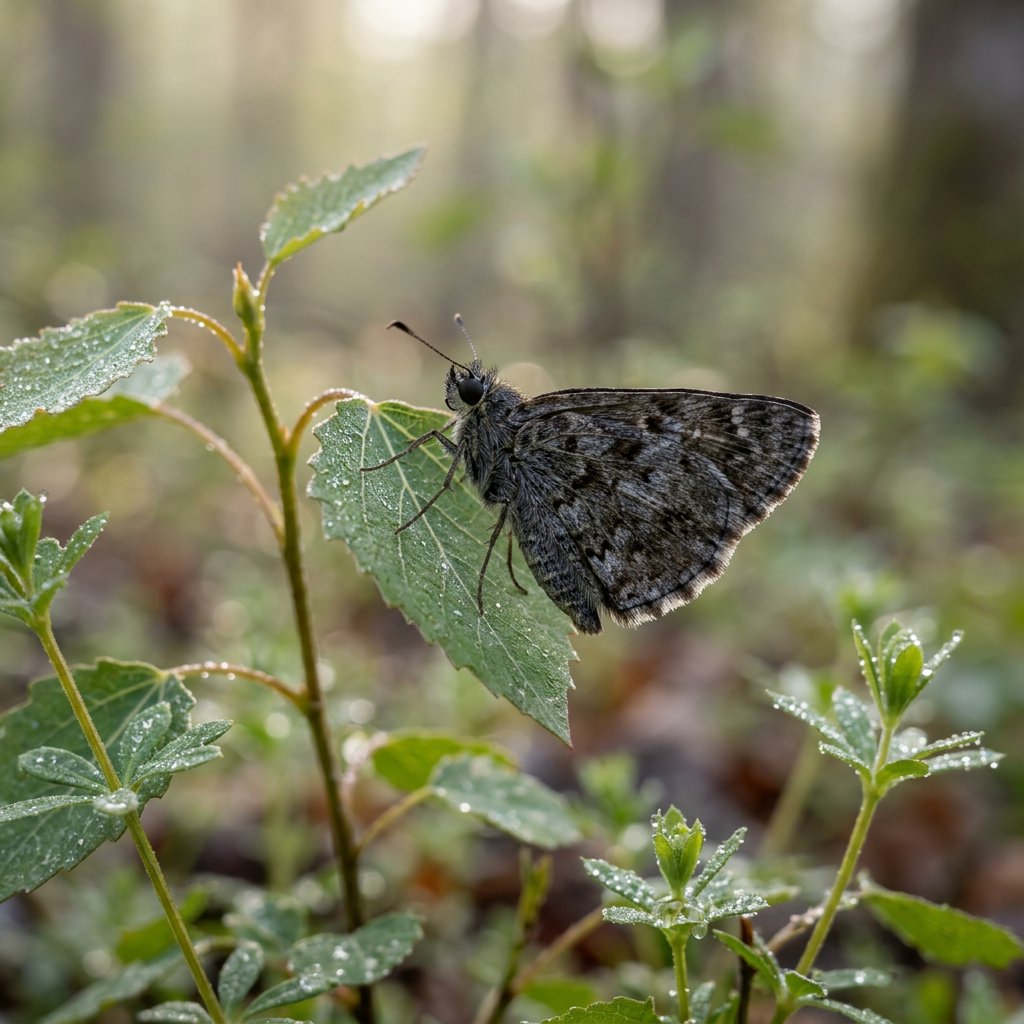
Meet the Dreamy Duskywing, a subtle beauty that prefers the quiet dappled light of woodland edges to the bright glare of open fields. While many butterflies scream for attention with vibrant oranges and blues, this species embraces a sophisticated palette of charcoal, silver, and cocoa. Its poetic name perfectly reflects the soft, "hazy" patches on its wings that look as though they were painted with woodsmoke.
🔍 How to Identify
- ☁️ The "Dreamy" Frosting: The most defining feature is a patch of gray, frosted scales on the outer half of the forewing, giving it a blurred, ethereal appearance.
- 🚫 No White Spots: Unlike many of its "Duskywing" cousins (like the Juvenal’s Duskywing), the Dreamy Duskywing lacks any transparent white spots on its wings.
- 📏 Small & Stout: It has a thick, moth-like body and relatively short, rounded wings that span only about an inch, making it look quite "chunky" in flight.
🌲 Habitat & Ecology
- 🍂 Forest Dwellers: You are most likely to spot them along gravel roads, forest clearings, or near streams where their host plants—willows, poplars, and aspens—are abundant.
- 🦋 Low-Profile Pollinator: They are "low-flyers," often staying close to the ground to sip nectar from early spring flowers like wild strawberries, lupines, and blueberry bushes.
- 🐛 The Leaf-Roller: As caterpillars, they are master architects; they silk together the leaves of poplar or willow trees to create a private, protective "sleeping bag" where they hide during the day.
⚠️ Safety & Toxicity
- ✅ Harmless Friend: The Dreamy Duskywing is a completely safe "friend" in the garden. They do not bite, sting, or possess any chemical defenses that are dangerous to humans.
- 🐾 Pet Safe: They are non-toxic to dogs and cats, though their fast, erratic flight might tempt a curious pet into a harmless game of chase.
✨ Fun Fact
The species name icelus is a nod to Icelos, the Greek god of dreams. It was named this because the hazy, gray patterns on its wings were thought to look like the fleeting, indistinct images seen in a dream.
More Details








