Info
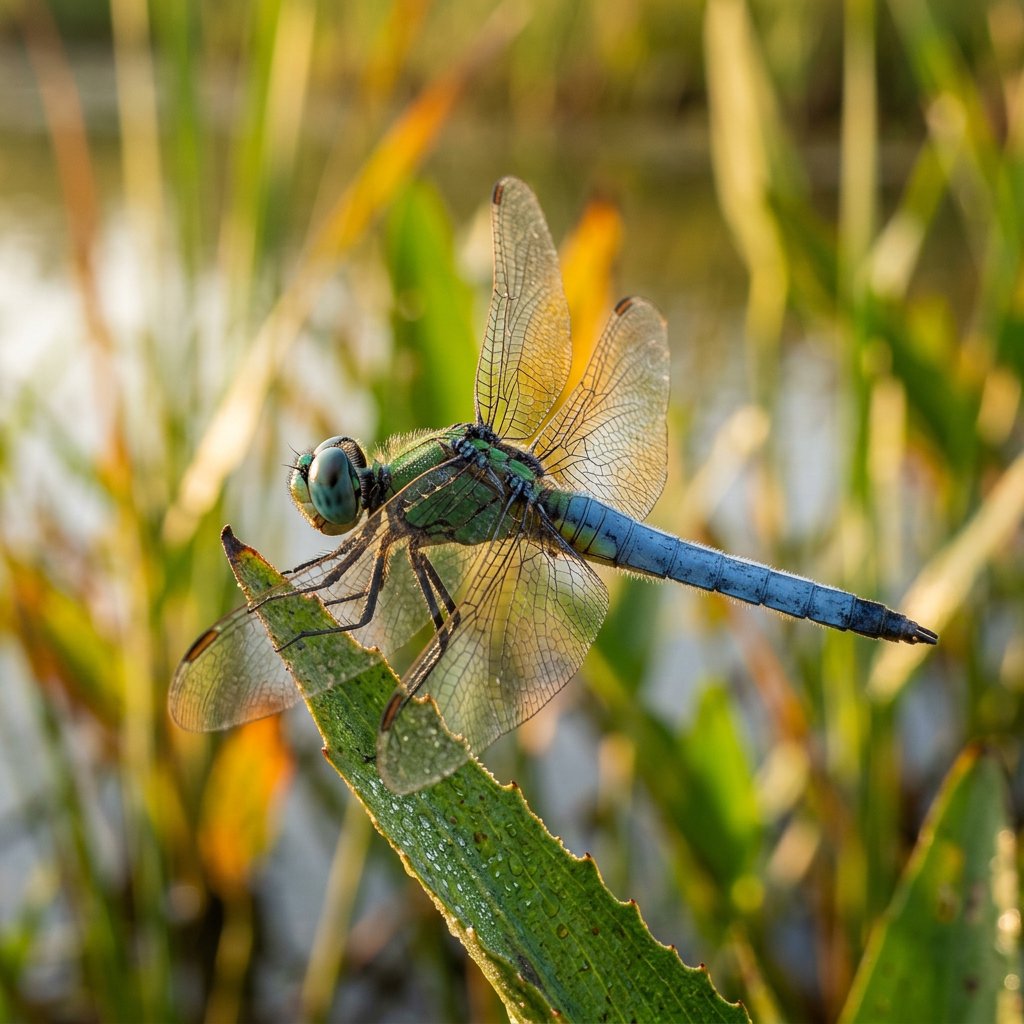
Often called the "Green Jacket" or simply the Eastern Pondhawk, this dragonfly is one of the most fearless and common predators patrolling North American wetlands. It is famous among birdwatchers and gardeners for its dramatic "puberty"—females and juveniles are a brilliant leaf-green, while mature males undergo a total transformation, turning a dusty, powdery blue. They are the ultimate "guardians of the pond," known for their hawk-like habit of perching on the ground to ambush prey.
🔍 How to Identify
- 🟢 Vibrant Color Shift: Females and young males are a bright, camouflage green with dark, rectangular spots along the abdomen. Mature males develop a "pruinose" coating, making them appear soft, sky-blue.
- ⚪ White Tail Tips: Regardless of their body color, both males and females feature distinct, bright white appendages (cerci) at the very tip of their tails.
- 👀 Emerald Eyes: They possess massive, wrap-around compound eyes that are typically green or blue-green, providing them with a nearly 360-degree field of vision for hunting.
🌲 Habitat & Ecology
- 💧 The Low-Level Hunter: Unlike many dragonflies that prefer high branches, Pondhawks love to perch on flat ground, rocks, or low-lying lily pads. This makes them very easy for hobbyists to spot and photograph.
- 🦟 Nature’s Pest Control: They are voracious carnivores. A single Pondhawk acts as a biological vacuum, devouring mosquitoes, gnats, and flies. They are even known to tackle prey as large as themselves, including other dragonflies and butterflies.
⚠️ Safety & Toxicity
- ✅ The Gardener's Friend: These insects are entirely safe for humans, children, and pets. They do not have a stinger and carry no venom or toxins.
- 🤏 Handle with Care: While they are not aggressive toward people, a large adult might deliver a tiny, harmless "pinch" with its mandibles if handled roughly. It is best to admire their aerial acrobatics from a distance to avoid damaging their delicate wings.
✨ Fun Fact
The Eastern Pondhawk is one of the most aggressive hunters in the dragonfly world; it is frequently observed practicing "cannibalism," snatching other dragonfly species right out of the air for a mid-day snack!
More Details








