Info
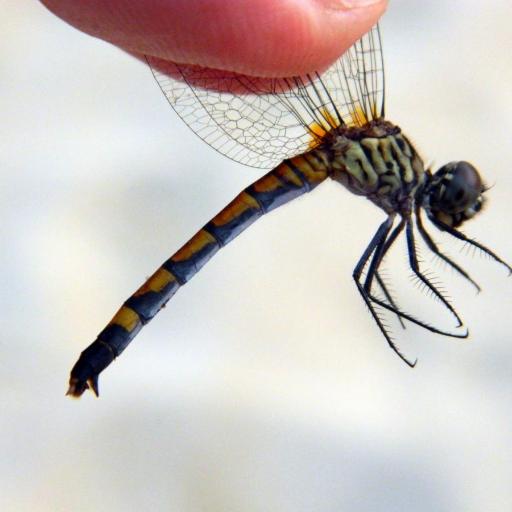
Known as the Seaside Dragonlet, this petite dragonfly is a true coastal specialist. While most dragonflies are strictly tethered to freshwater, this resilient species has conquered the salty marshes and mangroves of the Atlantic and Gulf coasts. It is a glittering, salt-tolerant gem often seen darting through sea spray and marsh grasses.
🔍 How to Identify
- 🌊 Color Morphing: Mature males develop a dusty, "pruinose" blue coating that looks like a fine powder. In contrast, females and young males sport a striking, intricate pattern of yellow and black.
- 📏 Compact Build: They are relatively small dragonflies, usually measuring only 1 to 1.5 inches in length, making them easy to miss if they aren't moving.
- 🪟 Clear Wings: Their wings are mostly transparent, though some females may show subtle smoky patches or dark spots at the base.
🌲 Habitat & Ecology
- 🧂 Saltwater Specialist: This is the only dragonfly in North America capable of breeding in high-salinity environments. Their larvae (naiads) thrive in tide pools and salt marsh potholes where other insects would perish.
- 🦟 The Marsh Sentinel: They act as nature’s pest control. Both the aquatic larvae and the flying adults have a massive appetite for salt-marsh mosquitoes and biting flies.
- 🌾 Perching Behavior: Unlike some dragonflies that fly constantly, the Seaside Dragonlet loves to perch on the tips of salt-meadow hay or cordgrass to scout for prey.
⚠️ Safety & Toxicity
- 🛡️ Completely Harmless: Despite their somewhat "pointy" appearance, they have no stinger. They are gentle predators that do not bite humans unless handled very roughly.
- 🐾 Pet Safe: They are non-toxic and pose no threat to curious dogs or cats that might try to snap at them in the garden.
✨ Fun Fact
- 🧬 Internal Desalinator: To survive in salt water, the larvae of the Seaside Dragonlet have evolved specialized cells in their rectal chamber that act like tiny pumps, actively pushing excess salt out of their bodies to maintain their internal balance!
More Details








