Info
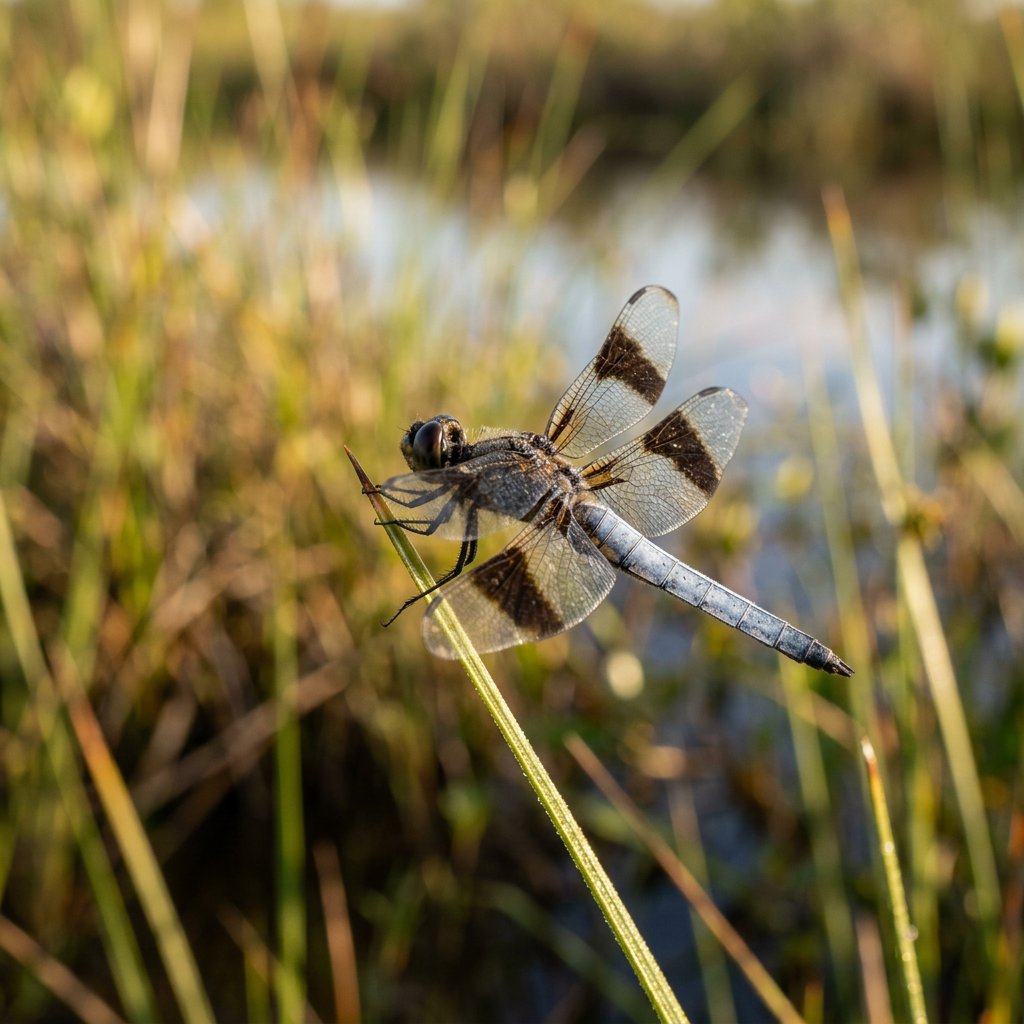
The Band-winged Dragonlet is a striking aerial acrobat often seen patrolling the edges of ponds and marshes across the Americas. Known for the bold, dark "ink stains" on its wings, this dragonfly looks like a miniature fighter jet in pursuit of its next meal. While its dark coloration might look intimidating, it is a beneficial garden visitor that spends its day hunting pests.
🔍 How to Identify
- 🏁 The Wings: Mature males are easily recognized by a broad, dark brown or black band across the middle of each wing, with clear tips and bases.
- 🎨 Body Color: Males develop a dusty, blue-black "pruinescence" (a waxy coating) as they age, while females and young males are typically a warm, golden-brown or olive.
- 📐 The "Obelisk" Posture: On hot days, you’ll see them pointing their abdomens straight up toward the sun to minimize heat absorption, looking like a tiny sundial.
🌲 Habitat & Ecology
- 🦟 The Mosquito Hunter: These are top-tier predators in the insect world. They catch mosquitoes, gnats, and flies mid-air using their legs like a tiny wicker basket.
- 💧 Water Preferences: They are highly adaptable and are often the first to colonize temporary rain pools, ditches, and backyard ponds, making them excellent "pioneer" species.
- ☀️ Sun Lovers: You will rarely find them in the shade; they require the heat of the sun to power their flight muscles for high-speed maneuvers.
⚠️ Safety & Toxicity
- 🛡️ Status: Completely harmless to humans and pets.
- 🚫 No Stinger: Despite their "dragon" name and pointed tails, dragonflies do not have stingers. They may try to pinch with their tiny mandibles if caught in a hand, but they cannot break the skin or cause harm.
- 🌿 Garden Friend: They are considered highly beneficial because they provide natural pest control for your backyard.
✨ Fun Fact
The Band-winged Dragonlet is a master of disguise during its youth; young males look exactly like females to avoid being bullied by older, territorial males until they are strong enough to defend their own "turf."
More Details








