Info
Commonly known as the Lima Bean Pod Borer, this small, unassuming moth is a master of stealth in the vegetable garden. While the adult moth looks like a dusty piece of bark, its larvae are notorious for their "inside-out" appetite, tunneling into bean pods to feast on the seeds within. Gardeners often don't realize they have a visitor until they harvest their peas and find a tiny, unwanted roommate!
🔍 How to Identify
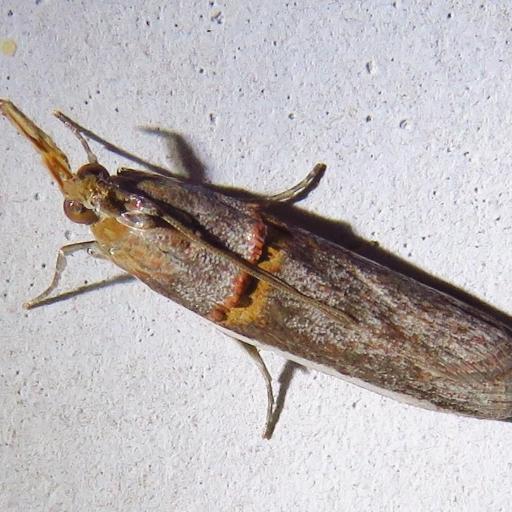
- 👃 The "Snout": Like many grass moths, it has long labial palps that stick out from the front of its head, giving it a distinct, pointed "nose" or snout appearance.
- 📏 Wing Pattern: The forewings are brownish-grey with a very noticeable white or pale-cream stripe running along the front edge (the leading margin).
- 🟠 Golden Band: If you look closely at the base of the wings, there is a subtle but beautiful orange or golden-yellow transverse band that sets it apart from other drab moths.
- 🐛 The Larvae: The caterpillars are initially pale green but can turn a pinkish or reddish hue as they mature, usually found tucked neatly inside a legume pod.
🌲 Habitat & Ecology
- 🍽️ The Legume Lover: This insect is a specialist. Its life revolves around the Fabaceae family—think lima beans, peas, cowpeas, and even mung beans. It is a "foe" to farmers but a fascinating example of host-specificity.
- 🌙 Night Moves: The adults are nocturnal and highly attracted to light. During the day, they rest flat against stems or leaves, blending in perfectly with dried foliage to avoid birds.
- 🏠 Hidden Childhood: The female lays her eggs on the flower buds or young pods. As soon as the larvae hatch, they bore directly into the pod, spending their entire youth protected from predators and pesticides by the bean’s own shell.
⚠️ Safety & Toxicity
- ✅ Harmless to Humans: The Lima Bean Pod Borer does not bite, sting, or carry diseases. They are completely safe to handle, though they are quite fragile.
- 🚫 Garden Nuisance: While safe for you, they are "toxic" to your harvest. They leave behind "frass" (insect poop) inside the pods, which can lead to fungal growth and make the beans inedible for humans.
✨ Fun Fact
The Etiella zinckenella is a world traveler! It is one of the most widely distributed moth species on the planet, found everywhere from the tropical heat of Australia and Southeast Asia to the temperate gardens of Europe and the Americas. Wherever there are beans, this moth has likely found a way to get there.
More Details








