Info
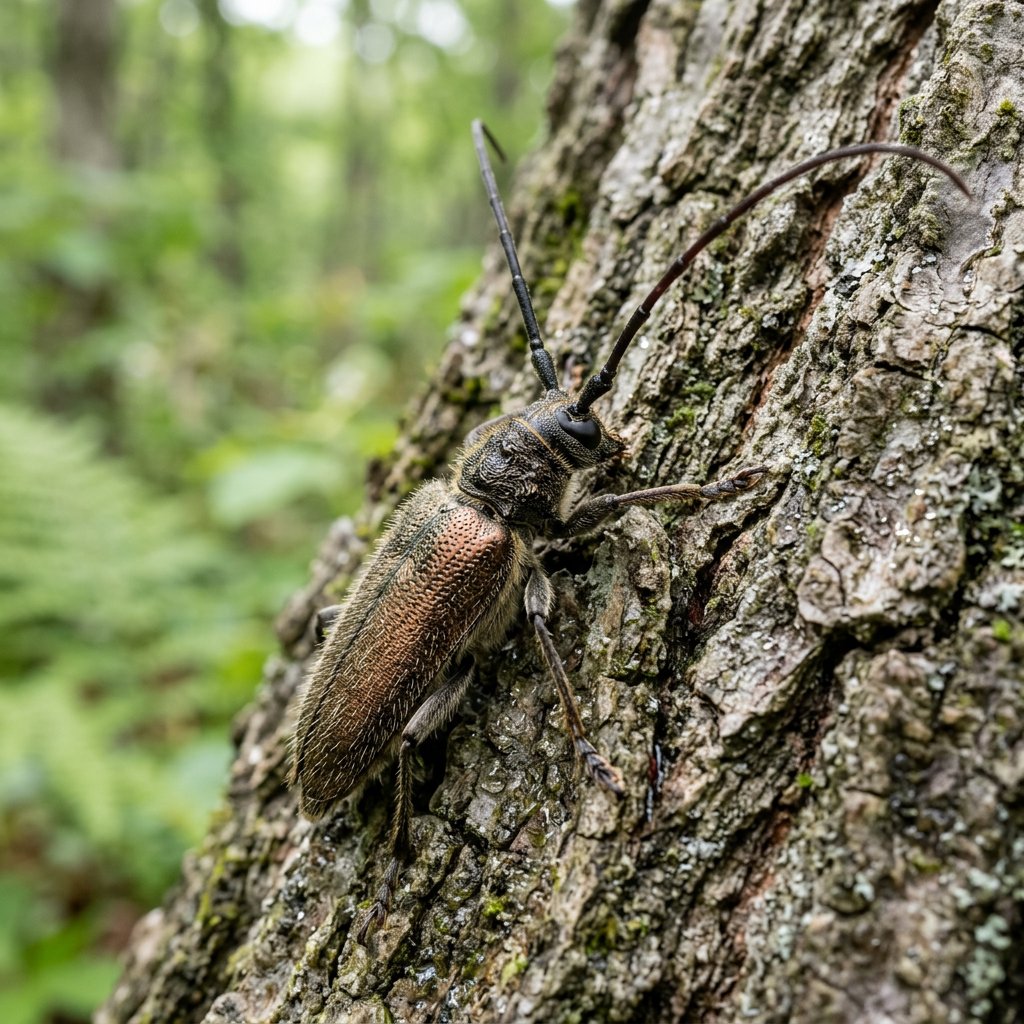
Known as an elegant member of the longhorn beetle family, Etorofus species are the "forest acrobats" of the insect world. Often found clinging to wildflowers on sunny days, these beetles are famous for their incredibly long, sweeping antennae that make them look far more intimidating than they actually are. While they play a vital role in the decomposition of old wood as larvae, the adults are gentle flower-visitors that help with pollination.
🔍 How to Identify
- 📡 The Antennae: True to their "longhorn" heritage, their antennae are often as long as or longer than their entire bodies, used to "smell" their way toward potential mates and food.
- 📐 Tapered Body: They possess a distinctively elongated, slender body that tapers toward the back, giving them a sleek, aerodynamic appearance compared to rounder beetles.
- 🧥 Textured Elytra: Their wing covers (elytra) are often covered in fine, velvety hairs or subtle pits, usually appearing in earthy tones like deep mahogany, charcoal, or tawny brown.
🌲 Habitat & Ecology
- 🌼 Pollen Lovers: As adults, you’ll most likely spot them in meadows or at the edges of forests, where they feast on the nectar and pollen of white or yellow flowers like Queen Anne’s Lace or Elderberry.
- 🪵 Forest Recyclers: The life of an Etorofus begins deep inside decaying logs or stumps. The larvae are wood-borers that help break down fallen timber, returning essential nutrients to the forest floor.
- ☀️ Sun Seekers: These beetles are diurnal, meaning they are active during the day. They rely on the sun's warmth to power their flight muscles as they zip between blossoms.
⚠️ Safety & Toxicity
- 🛡️ Harmless Friend: Etorofus beetles are not venomous and do not possess a stinger. They are generally shy and will fly away if disturbed.
- 🤏 The "Pinch" Factor: While they are not aggressive, their mandibles (mouthparts) are designed for chewing wood or pollen. If handled roughly, they might give a tiny, harmless pinch, but it is rarely enough to break the skin.
- 🐾 Pet Safety: They are non-toxic to cats and dogs, though the hard shell might cause a bit of an upset stomach if a curious pet decides to make them a snack.
✨ Fun Fact
The long antennae of the Etorofus are more than just for show—they are packed with highly sensitive receptors that can detect the pheromones of a mate from over a mile away, even through thick forest canopy!
More Details








