Info
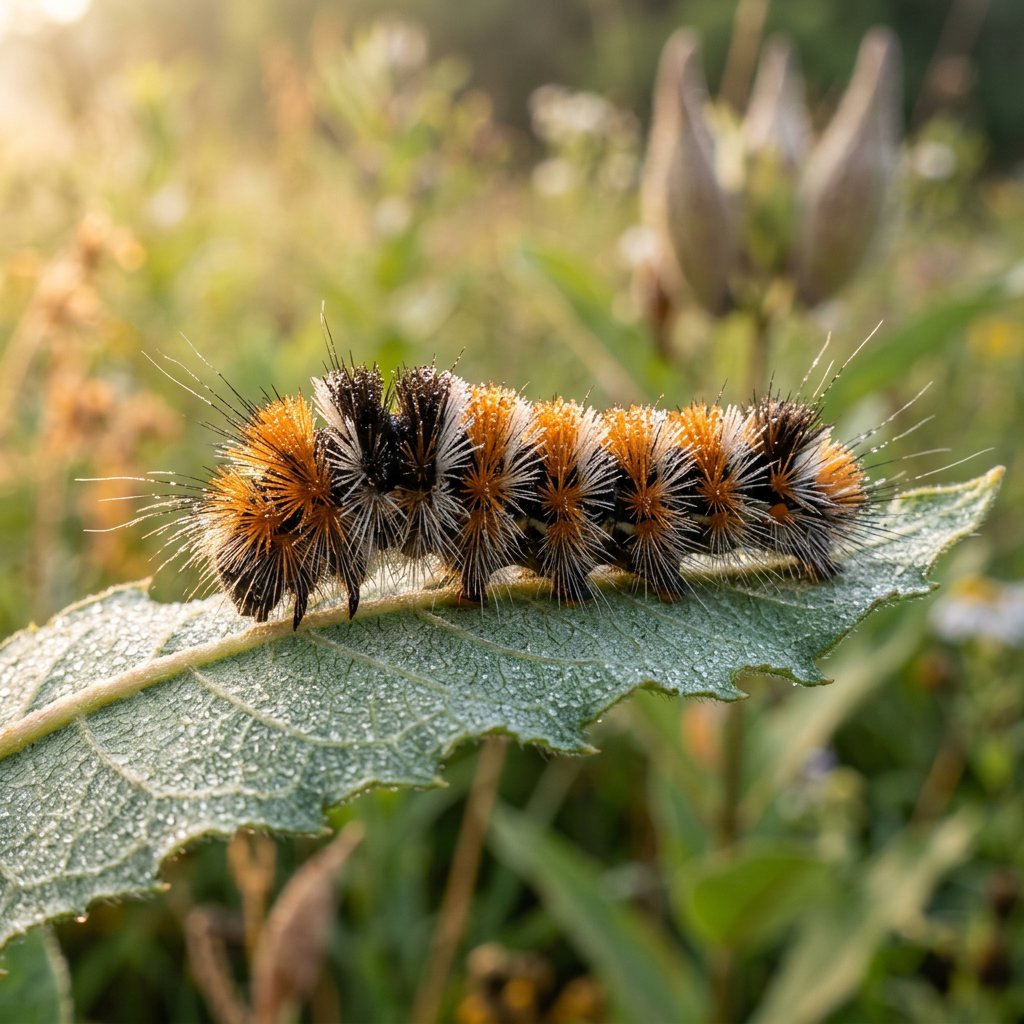
Often called the Milkweed Tiger Moth, this insect is the "punk rocker" cousin of the Monarch butterfly. While the adult moth is a modest, mousy grey, its caterpillar stage is famous for its wild, multi-colored tufts of hair. You will often find these social caterpillars stripping milkweed leaves in large groups, looking like a tiny, fuzzy parade.
🔍 How to Identify
- 🐛 Larval Tufts: The caterpillars are unmistakable, covered in dense, "pom-pom" tufts of black, white, and bright orange hairs (setae) that stick out in all directions.
- 🦋 Subtle Adult Wings: Adult moths have plain, mouse-gray or light tan wings with no distinct patterns, which helps them blend into tree bark during the day.
- 🟡 Yellow Abdomen: If you see the moth fly, you might catch a glimpse of its bright yellow abdomen, which is marked with a line of black dots.
🌲 Habitat & Ecology
- 🌿 The Milkweed Diet: Like the Monarch, this species is a milkweed specialist. However, while Monarchs prefer tender new growth, Tussock Moth caterpillars are happy to munch on older, tougher leaves that other insects ignore.
- 👥 Gregarious Living: Young caterpillars are highly social. They stay clustered together in large groups, often skeletonizing a leaf until only the veins remain before moving as a unit to the next one.
- 🛡️ Chemical Storage: By consuming milkweed, they sequester cardenolides (toxic steroids). This makes both the caterpillar and the moth extremely unpalatable to birds.
⚠️ Safety & Toxicity
- 🚫 Skin Irritant: While they don't have a "sting," the caterpillar's thick hairs are urticating. Touching them can cause skin redness, itching, or a prickly rash, especially for children or those with sensitive skin.
- 🐾 Pet Warning: If a curious dog or cat tries to eat these fuzzy caterpillars, the toxic chemicals and irritating hairs can cause drooling, vomiting, or mouth irritation. It is best to keep pets away from infested milkweed.
✨ Fun Fact
Adult Milkweed Tussock Moths have a built-in "anti-bat" system! They have an organ that emits ultrasonic clicks. When they hear a bat’s sonar, they click back to announce their toxicity, effectively "jamming" the bat's hunt and telling it to find a tastier snack elsewhere.
More Details








