Info
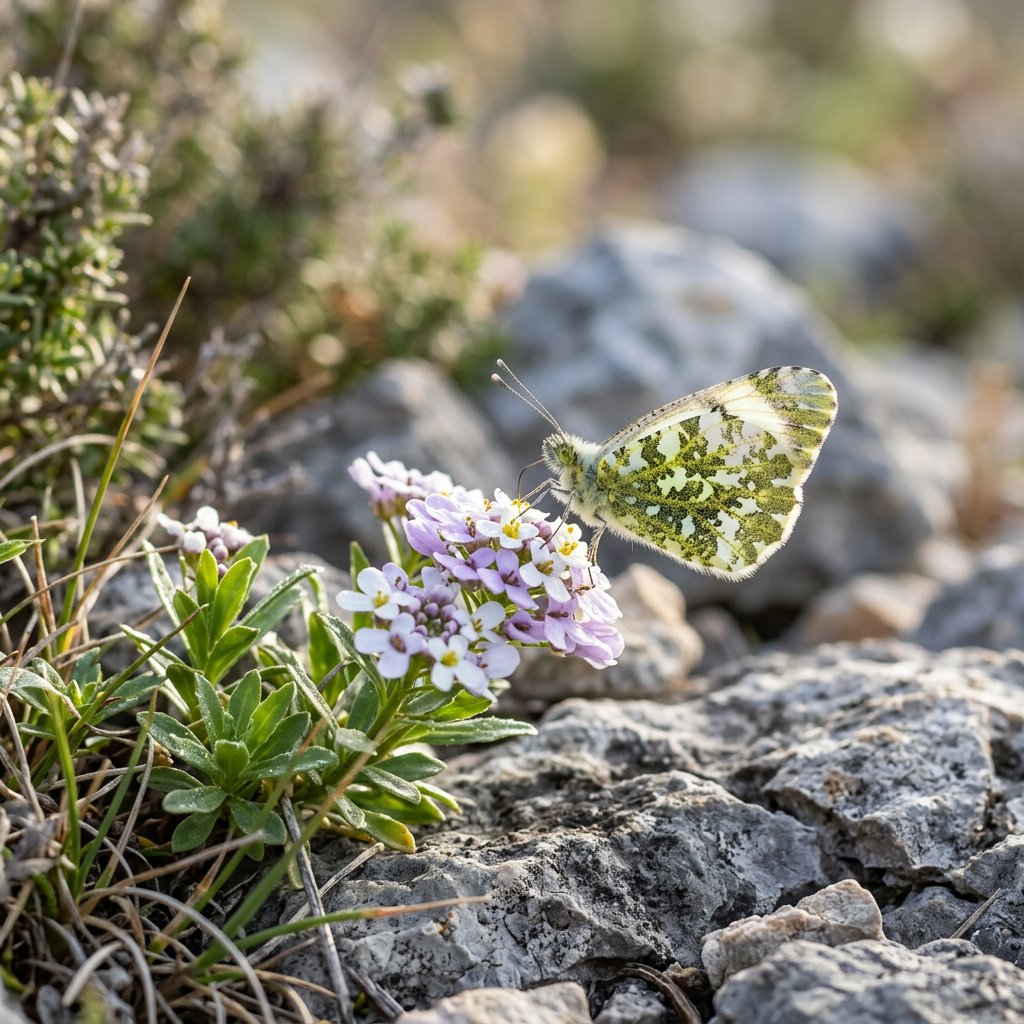
Often referred to as the Dappled White, Euchloe ausonia is a true herald of spring across the sun-drenched hills of Southern Europe and the Mediterranean. While it looks like a simple white butterfly in flight, it carries a secret "camouflage suit" on the underside of its wings that allows it to vanish against rocky terrain or mustard flowers the moment it lands. This elegant traveler is a favorite among hikers who enjoy the early-season warmth of wildflower meadows.
🔍 How to Identify
- 🦋 The "Secret" Underside: The most striking feature is the underside of the hindwings, which is intricately marbled with a mossy greenish-grey pattern. This acts as perfect camouflage when the butterfly rests on stems.
- ⚪ The Topside View: When open, the wings are creamy white. The forewings feature a distinct black patch at the tips and a small, dark "discoidal" spot in the center.
- 📏 Delicate Build: It is a medium-sized butterfly with a rapid, erratic flight pattern, making it look like a flickering white scrap of paper caught in the wind.
🌿 Habitat & Ecology
- 🌼 The Mustard Connection: The larvae are specialists, feeding almost exclusively on the buds and flowers of plants in the Brassicaceae (mustard) family, such as tower mustard and buckler mustard.
- ☀️ Sun-Seekers: You will most likely find them in open, dry areas, including rocky slopes, scrublands, and flowery meadows. They are "hill-toppers," meaning males often congregate on high ground to wait for mates.
- 🐝 Pollination Role: As adults, they are active pollinators, flitting from flower to flower to drink nectar, favoring yellow and white crucifers that match their own coloration.
⚠️ Safety & Toxicity
- 🛡️ Harmless Friend: The Dappled White is completely harmless to humans. It does not bite, sting, or carry any toxins that can irritate the skin.
- 🐾 Pet Safety: These butterflies are non-toxic to pets. If a curious dog or cat happens to catch one, there is no risk of poisoning, though the butterfly is much better off left to its flight!
✨ Fun Fact
The "green" marbling on the underside of their wings is actually an optical illusion! Butterflies rarely have green pigment; instead, the color is created by a clever mixture of black and yellow scales that, when viewed by the human eye, blend together to look like olive green.
More Details








