Info
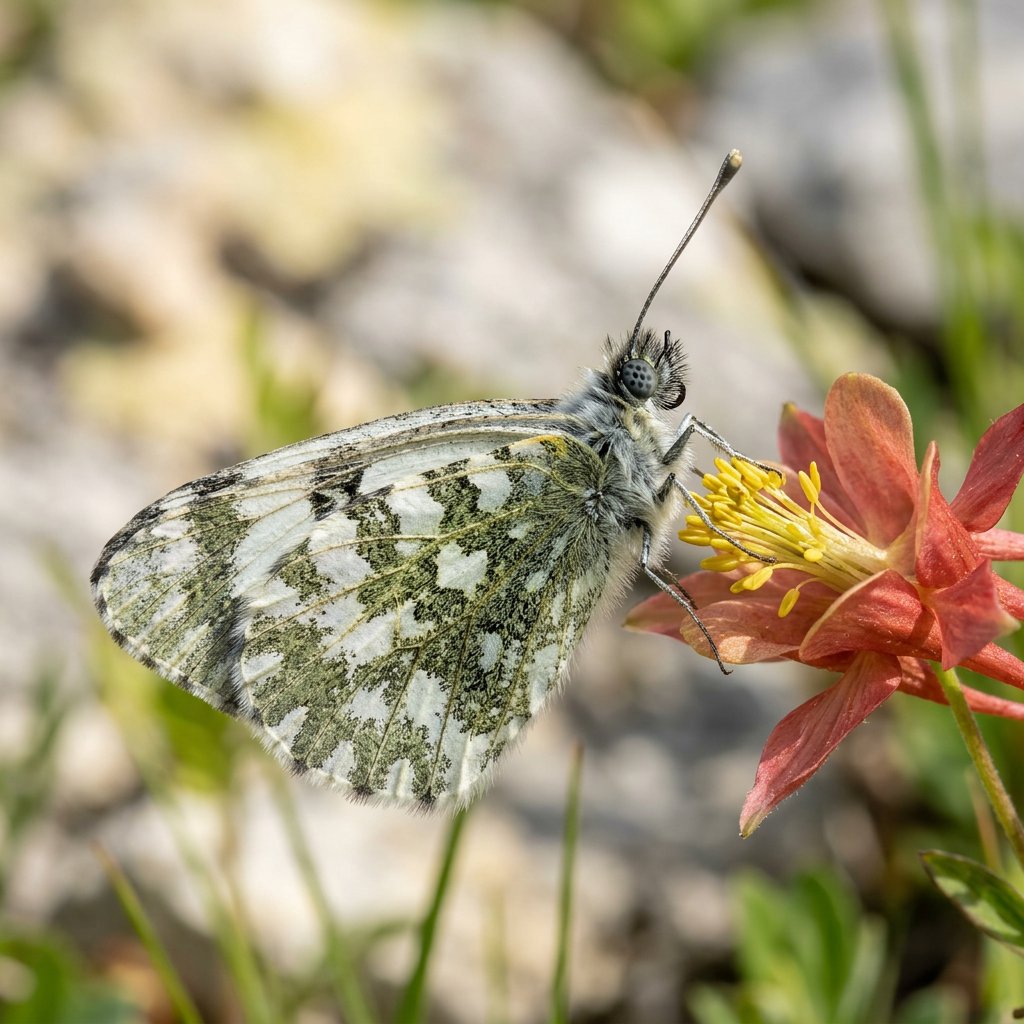
Known as the Olympia Marble, this dainty butterfly is a true herald of early spring. Often mistaken for a common "Cabbage White" at a distance, it reveals an intricate, mossy-green "marbling" on its wings once it lands. It is a specialist of rocky barrens and open woodlands, appearing briefly each year like a ghostly petal caught in the wind.
🔍 How to Identify
- 🎨 The "Marble" Pattern: The most striking feature is the underside of the hindwings, which are washed with delicate, yellow-green or grayish-green veins that resemble marble stone.
- ⚪ The Upper Wing: The top side is a creamy, pristine white with a small, distinct black rectangular spot near the tip of the forewing.
- 🦋 Flight Style: It has a low, erratic, and fast flight pattern, often staying close to the ground as it searches for its specific host plants among the rocks.
🌲 Habitat & Ecology
- 🥗 Host Plant Specialist: The Olympia Marble is a picky eater. Its caterpillars feed almost exclusively on Rockcress (Arabis and Boechera species), meaning you will only find this butterfly where these specific wild plants grow.
- 📅 A Brief Appearance: This insect is "univoltine," meaning it produces only one generation per year. Adults emerge in late April or May and are only active for a few weeks before disappearing until the following spring.
⚠️ Safety & Toxicity
- ✅ Harmless Friend: The Olympia Marble is completely safe. It possesses no stinger, does not bite, and does not produce any toxins that would harm humans or curious pets.
- 🌸 Pollinator Role: It is a beneficial visitor to your landscape, helping to pollinate spring wildflowers while moving between sun-drenched rocky outcrops.
✨ Fun Fact
The Olympia Marble spends the vast majority of its life—nearly 11 months—as a pupa (chrysalis). It waits patiently through the summer heat and the freezing winter, perfectly timed to emerge exactly when the Rockcress begins to bloom!
More Details








