Info
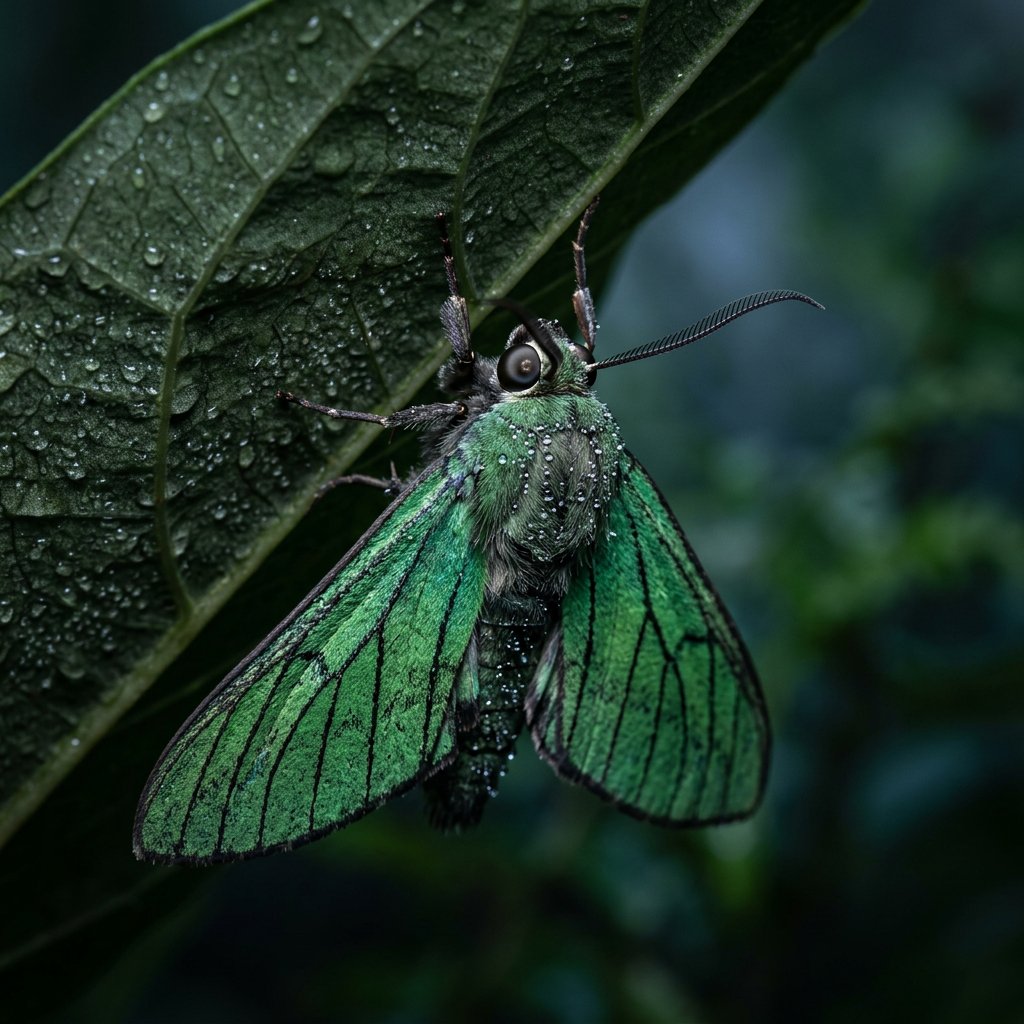
The Verdant Hawkmoth, scientifically known as Euchloron megaera, looks like a piece of high-tech military equipment designed by Mother Nature herself. With its aerodynamic shape and striking "jungle camo" wings, it is one of the most stunning large moths found across Sub-Saharan Africa. Often mistaken for a hummingbird during the twilight hours, this moth is a master of high-speed flight and precision hovering.
🔍 How to Identify
- 🎨 Forewings: Deep, mossy green with subtle darker lines and a tiny white dot. This pattern provides perfect camouflage against forest foliage.
- 🧡 Hindwings: A surprising burst of vibrant orange or golden yellow, usually featuring a bold black spot at the base that is only visible when the moth takes flight.
- 🚀 Body Shape: A thick, torpedo-shaped body that tapers to a point, covered in dense, velvet-like olive green hairs.
🌲 Habitat & Ecology
- 🌙 Nocturnal Navigator: This is a primary pollinator of deep-tubed flowers. It emerges at dusk to feed, using its incredibly long proboscis (tongue) to drink nectar while hovering mid-air.
- 🍃 Host Plants: The caterpillars are particularly fond of the Grape family (Vitaceae). You will often find them munching on Cissus vines or wild grapes, where they grow quite large before burrowing into the soil to pupate.
- 💡 Light Attraction: Like many Hawkmoths, they are highly sensitive to light. In suburban areas, they are frequently seen resting near porch lights or on white walls where they have been "dazzled" by the brightness overnight.
⚠️ Safety & Toxicity
- 🛡️ Status: Completely harmless. The Verdant Hawkmoth does not possess a stinger, and its mandibles are not designed for biting.
- 🐕 Pets & Kids: They are safe to handle gently. While the large, green caterpillars might look intimidating with their "eyespots" (a defense mechanism to mimic snakes), they do not have stinging hairs or toxic secretions.
✨ Fun Fact
The name "Megaera" is borrowed from Greek mythology—she was one of the three Furies. While the moth is peaceful, its swift, silent flight and dramatic "startle" spots on its hindwings likely reminded early naturalists of these powerful, hovering deities.
More Details








