Info
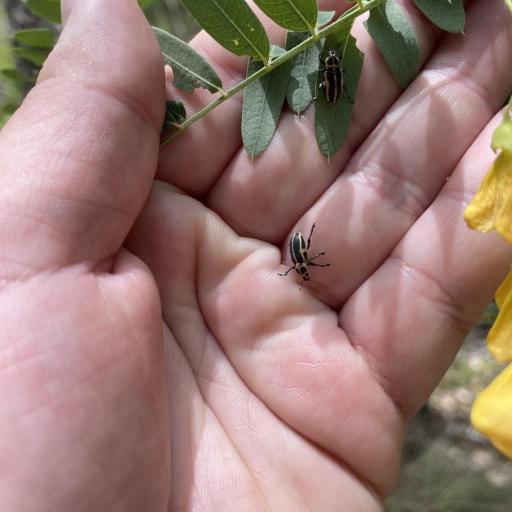
Often called the Painted Snout Beetle, Eudiagogus pulcher is a tiny masterpiece of the insect world. With its shimmering metallic stripes and sturdy little body, it looks less like a common bug and more like a piece of living jewelry. This beetle is a specialist feeder, often found decorating the leaves of its favorite legume plants across the southern United States and Mexico.
🔍 How to Identify
- 🎨 Metallic Stripes: Features brilliant turquoise, copper, or neon-green longitudinal stripes set against a dark, velvety black or navy background.
- 👃 Broad Snout: Unlike the long, "elephant-trunk" snouts of many weevils, this species has a short, wide, and sturdy snout adapted for leaf-munching.
- 🛡️ Armored Build: A very hard, rounded exoskeleton that gives it a "tank-like" appearance under a magnifying glass.
🌲 Habitat & Ecology
- 🌿 The Sesbania Specialist: These beetles are almost exclusively found on Sesbania species (commonly known as Rattlebox or Coffeebean). If you find a patch of these yellow-flowered plants near a marsh or ditch, you are likely to find this beetle.
- 🎭 Playing Possum: When disturbed, the Handsome Snout Beetle employs a defense called thanatosis. It will tuck in its legs, drop off the leaf, and remain perfectly still on the ground, pretending to be a bit of inanimate debris until the threat leaves.
- 🌊 Wetland Preferences: They are most common in humid environments, particularly near lake edges, riverbanks, and moist fields where their host plants thrive.
⚠️ Safety & Toxicity
- ✅ Harmless Guest: This beetle is completely safe for humans and pets. It possesses no stinger, does not bite, and does not produce irritating chemical sprays.
- 🐾 Pet Safety: While they aren't toxic, their hard shells are difficult to digest, so it’s best to keep curious cats or dogs from snacking on them.
- 🏡 Home & Garden: They are not structural pests and will not survive long inside a house. In the garden, they only target specific legumes and rarely bother common vegetables or flowers.
✨ Fun Fact
The scientific name pulcher is the Latin word for "beautiful" or "handsome." It is one of the few instances in biology where the formal scientific name perfectly matches the common name and the insect's actual appearance!
More Details








