Info
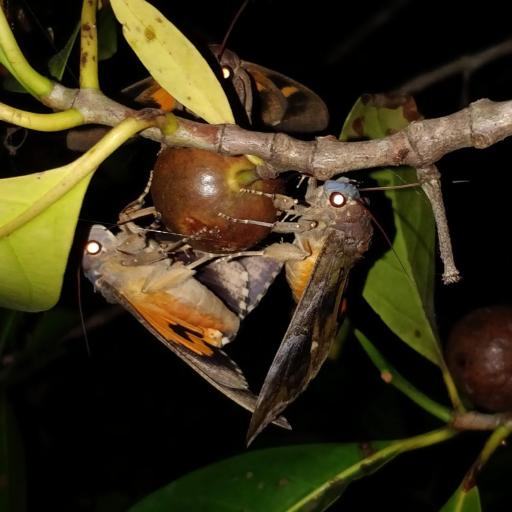
Known as the Fruit-piercing Moth, members of the Eudocima genus are the ultimate "secret agents" of the insect world. By day, they are indistinguishable from a dried, fallen leaf, but by night, they reveal vibrant, hidden colors and a specialized toolset for raiding orchards. While they are a wonder of evolution, they are often viewed as a "foe" by gardeners and farmers due to their unique feeding habits.
🔍 How to Identify
- 🍂 The Dead Leaf Disguise: Their forewings are masterfully camouflaged, featuring pointed tips, leaf-like veins, and earthy brown or green tones that make them vanish against forest litter.
- ✴️ Hidden Flash: When startled or in flight, they reveal striking hindwings that are usually bright orange or yellow with bold black patches or borders.
- ⚔️ The Serrated Proboscis: Unlike most moths that have soft "straws" for nectar, Eudocima has a rigid, saw-toothed mouthpart strong enough to drill through thick fruit skins.
- 🐛 Larval Mimicry: The caterpillars are often dark and velvety with large, colorful "eyespots" on their sides, designed to make them look like a small snake to ward off birds.
🌲 Habitat & Ecology
- 🥭 Orchard Raiding: These moths are primarily found in tropical and subtropical regions. Unlike other moths that visit flowers, adults seek out ripening fruits like citrus, mangoes, guava, and even tomatoes to feed on their juice.
- 🌿 Specific Hosts: The larvae are quite picky, usually feeding on woody vines (especially those in the Menispermaceae family) found near the edges of forests or in overgrown gardens.
- 🌙 Night Shift: They are strictly nocturnal; you are most likely to spot them near fruit trees just after dusk or resting on walls near outdoor lights.
⚠️ Safety & Toxicity
- 👐 Safe to Touch: Eudocima moths are completely harmless to humans and pets. They do not possess a stinger, and they do not bite people.
- 🍎 Crop Damage: While safe for you, they are "dangerous" to your harvest. The tiny holes they drill into fruit allow bacteria and fungi to enter, which often leads to the fruit rotting and falling prematurely.
- 🐾 Pet Interaction: They are not known to be toxic if accidentally eaten by a curious cat or dog, though their large size might be a bit of a choking hazard for very small pets.
✨ Fun Fact
The proboscis of a Fruit-piercing Moth is so powerful and sharp that it can even puncture the tough, leathery rind of a pomegranate to reach the sweet seeds inside!
More Details








