Info
Often referred to as the Narrow-winged Grey, this subtle master of camouflage is one of the most common "micro-moths" you’ll encounter in urban environments. While many moths prefer the deep cover of forests, this species has adapted perfectly to live alongside humans, often hiding in plain sight on the very walls of our homes. It is a quiet, industrious member of the garden ecosystem that spends its life blending into the textures of the stone world.
🔍 How to Identify
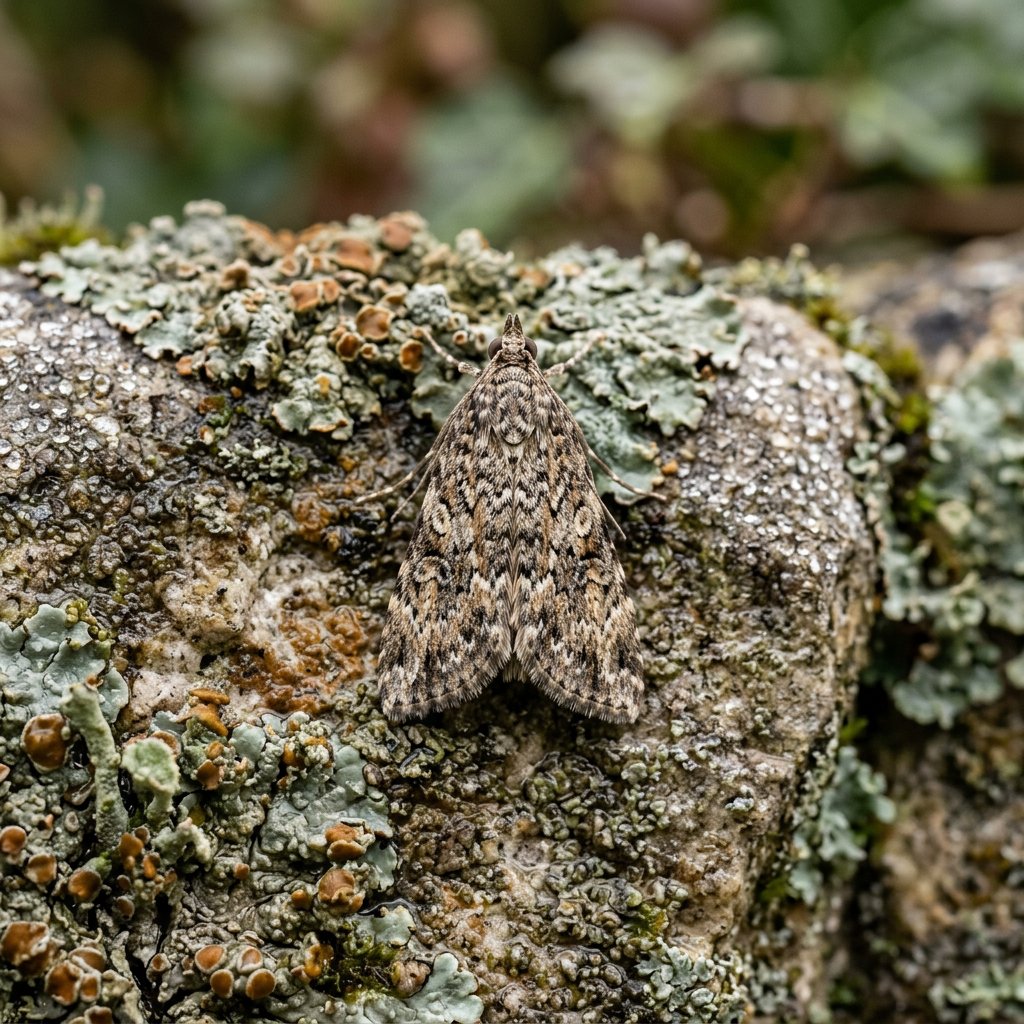
- 📏 Slender Profile: True to its name, its wings are exceptionally narrow and elongated, giving it a sleek, needle-like silhouette when resting.
- 🎨 Stone Camouflage: The forewings are a beautiful, intricate mosaic of smoky greys, silvers, and blacks, designed to mimic the exact appearance of lichen-covered rock or weathered wood.
- 📐 Triangular Posture: When at rest, it holds its wings in a tight, steep triangle or "tent" shape, often pressing itself flat against a surface to disappear into the shadows.
🌲 Habitat & Ecology
- 🧗 The Wall Dweller: This moth is a specialist of vertical landscapes. You are most likely to spot it resting on brick walls, garden fences, or stone monuments during the day.
- 🥗 Moss Specialist: Unlike many "pest" moths that eat crops or clothes, the larvae of Eudonia angustea feed almost exclusively on mosses and lichens growing on walls and rooftops.
- 🌙 Night Navigator: It is strictly nocturnal and is highly attracted to artificial lights. If you leave a porch light on in late summer, this is often one of the first tiny visitors to arrive at the glow.
⚠️ Safety & Toxicity
- 🛡️ Completely Harmless: This insect is a "friend" to your home and garden. It possesses no sting, no bite, and does not carry any toxins.
- 🐾 Pet & Child Safe: It is non-toxic to curious cats or dogs. Because its larvae eat moss rather than garden plants or stored pantry goods, it is considered a neutral-to-beneficial presence in the yard.
✨ Fun Fact
While many moth species only emerge for a few weeks a year, the Narrow-winged Grey is a marathon runner; in many regions, it can be found flying in almost every month of the year, sometimes even appearing during mild winter spells!
More Details








