Info
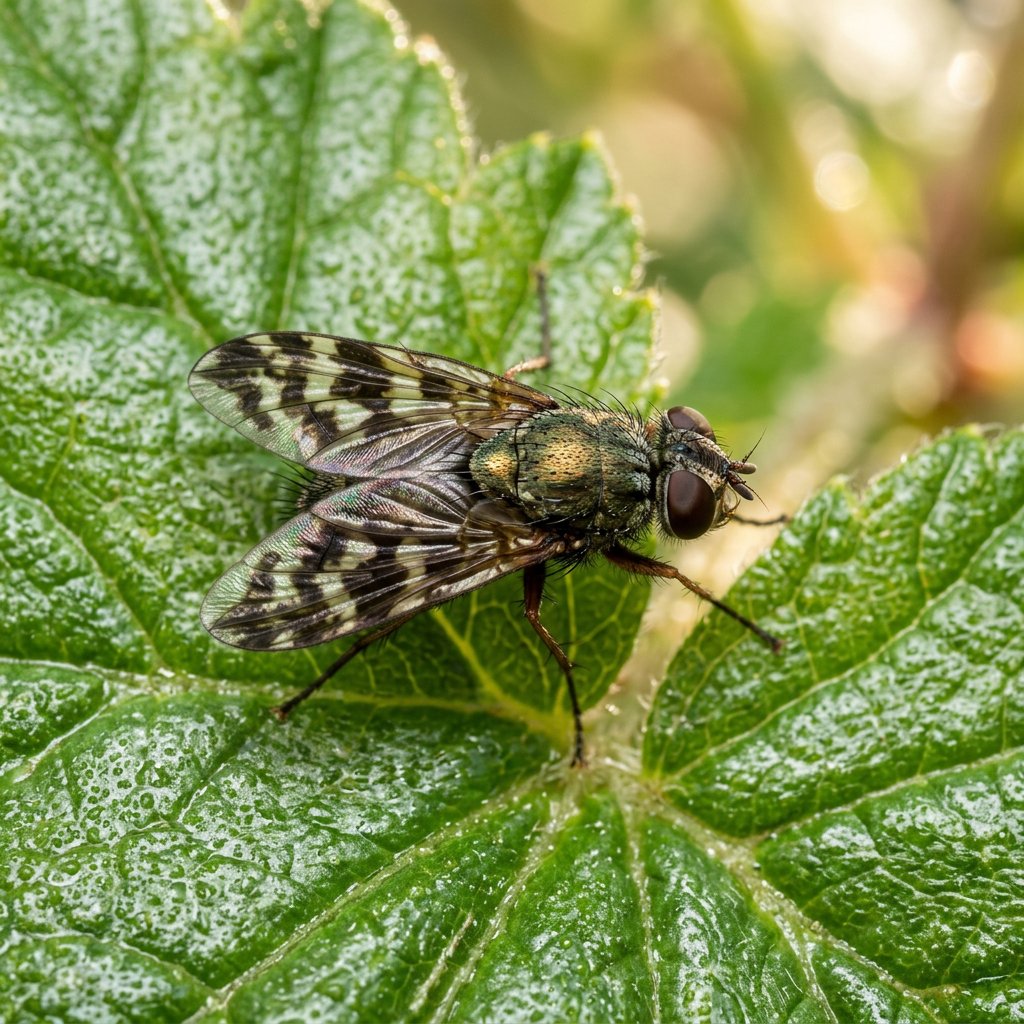
The Celery Fly, often called the Hogweed Picture-winged Fly, is a tiny insect with a big personality. While gardeners might groan at the sight of its larvae tunneling through their parsnips, this fly is a marvel of biological design. With wings that look like stained glass and a body that changes color depending on the time of year, it is one of the most visually striking "mini-beasts" found in the backyard vegetable patch.
🔍 How to Identify
- 🪟 The Wings: Features a complex "picture-wing" pattern of dark, smoky zig-zags and blotches across a clear membrane, which they often wave rhythmically.
- 🎨 The Seasonal Body: Uniquely, their color shifts with the seasons; the spring generation is usually a bright orange-brown, while the late-summer generation is often a deep, glossy black.
- 👁️ The Eyes: Large, prominent eyes that shimmer with iridescent green and red hues when viewed under a magnifying glass.
🌲 Habitat & Ecology
- 🥬 The Leaf Miner: The larvae are "leaf miners," meaning they live and feed inside the layers of a leaf. They create distinctive pale, blister-like blotches on celery, parsnips, and hogweed, protecting themselves from predators while they eat.
- 🤺 Territorial Dancing: Adult males are surprisingly feisty. They pick a specific leaf as their "stage" and perform intricate wing-waving dances to defend their territory from other males and attract females.
- 🏡 Garden Presence: You are most likely to spot them from May to October in vegetable gardens, damp meadows, or anywhere members of the carrot family (Apiaceae) grow wild.
⚠️ Safety & Toxicity
- ✅ Status: Harmless to humans and pets.
- 🦟 No Sting: Despite its pointed appearance, the Celery Fly does not bite or sting. The "point" at the end of the female's body is merely an ovipositor used for tucking eggs safely into leaf tissue.
- 🌱 Garden Impact: While they are a "foe" to the aesthetics of your celery crop, they do not carry diseases that affect humans.
✨ Fun Fact
🧪 The Great Identity Crisis: Because the orange spring generation looks so different from the black autumn generation, early scientists were convinced they were two entirely different species! It wasn't until they were bred in a lab that the "two-toned" secret was finally revealed.
More Details








