Info
Often called the "Potter Wasp," Eumenes fraternus is the master mason of the insect world. Famous for building miniature ceramic-like jugs out of mud, this solitary hunter is a gardener's secret ally. While their sleek, thin-waisted silhouette might look intimidating, they are far more interested in their architectural projects than in bothering humans.
🔍 How to Identify
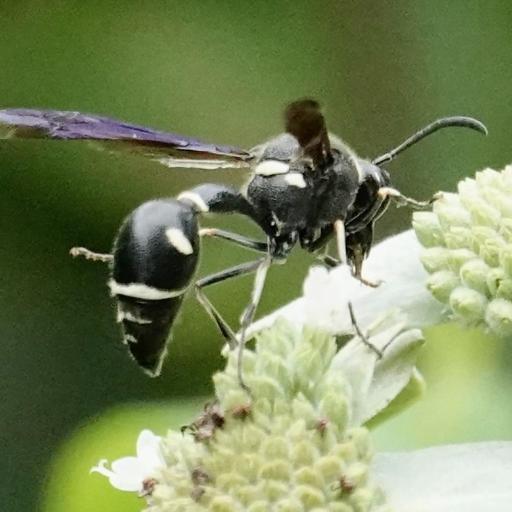
- ⌛ The "Vase" Waist: They possess a remarkably long, thin first segment of the abdomen (called a petiole), giving them a delicate, exaggerated hourglass silhouette.
- 🖤 Classic Patterning: A sleek, jet-black body decorated with distinct ivory or pale yellow stripes and spots, particularly on the thorax and the base of the abdomen.
- 📂 Folded Wings: Like other vespid wasps, they fold their smoky-tinted wings lengthwise when at rest, making them appear narrower and more streamlined.
🌲 Habitat & Ecology
- 🏺 Architectural Marvels: Look for tiny, marble-sized mud pots attached to twigs, garden walls, or even window screens. These are nursery chambers crafted from mud and saliva, shaped with a perfectly flared "lip" like a fine vase.
- 🐛 Caterpillar Hunter: They are natural pest controllers. The mother wasp paralyzes small caterpillars and stuffs them into her mud jug to serve as a fresh, living pantry for her developing larva.
- 🌸 Occasional Pollinator: While the larvae eat meat, the adults spend their time sipping nectar from wildflowers, providing a secondary benefit to your garden as they travel between blooms.
⚠️ Safety & Toxicity
- 🛡️ Solitary & Peaceful: Unlike yellowjackets or hornets, Potter Wasps have no colony to defend. They are non-aggressive and will almost never sting unless they are physically handled or trapped against skin.
- 🐾 Mild Risk: Their sting is relatively low on the pain scale compared to social wasps. They pose very little threat to children or pets, though anyone with a known wasp allergy should still exercise standard caution around them.
✨ Fun Fact
🎨 Ancient Inspiration: Some historians believe that the design of early indigenous pottery in North America may have been directly inspired by the perfectly symmetrical, jug-like nests created by these tiny insects!
More Details








