Info
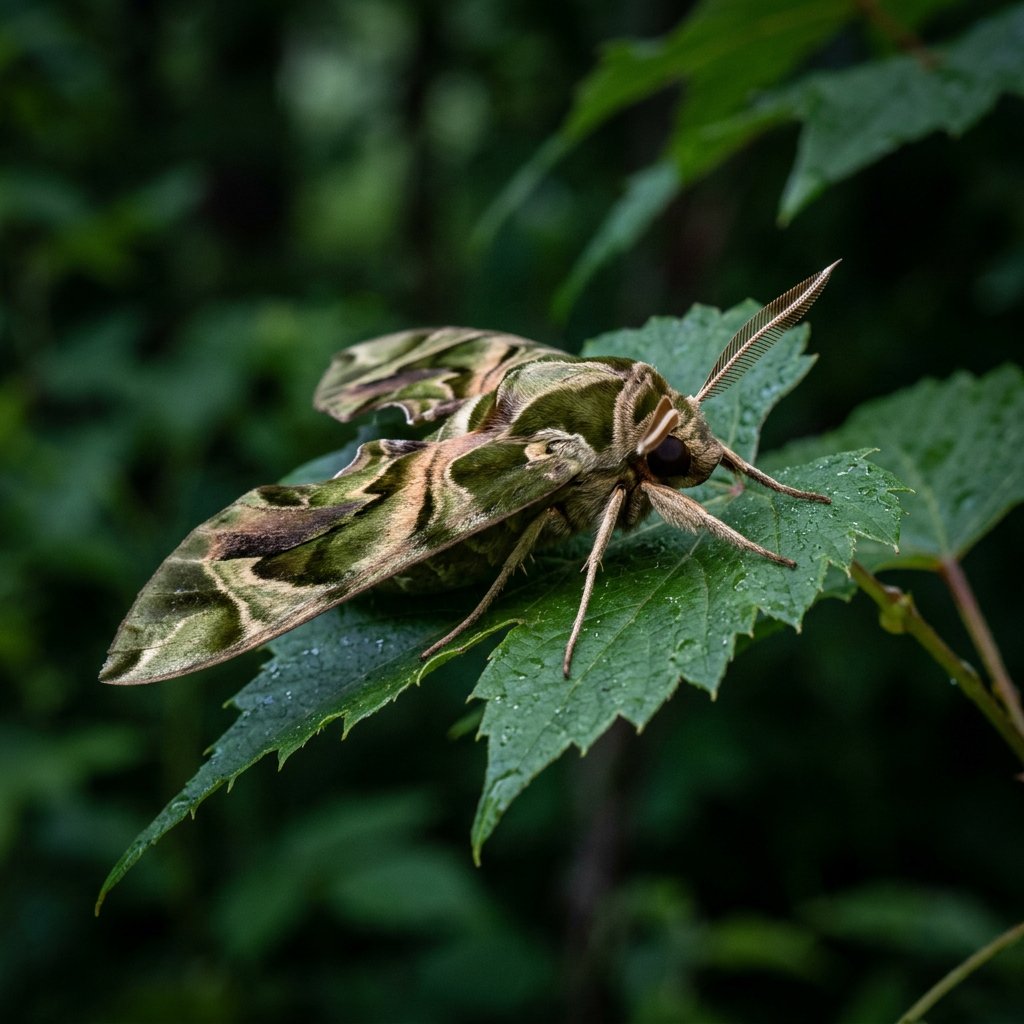
Often mistaken for a small bird or a high-tech drone, the Pandorus Sphinx (Eumorpha pandorus) is one of North America’s most elegant nocturnal visitors. With its sophisticated olive-green "camouflage" pattern and impressive wingspan, it is a master of disguise that looks more like a piece of military tech than a bug. Despite its large size and heavy buzzing, it is a gentle giant that plays a vital role in nighttime pollination.
🔍 How to Identify
- 🦋 The Wings: Large, sleek, and pointed, featuring a beautiful mosaic of olive-green, tan, and dark forest-green patches, often highlighted by tiny splashes of rosy pink or cinnamon.
- 🧥 The Body: It has a thick, torpedo-shaped body that is built for high-speed flight. When resting, it holds its wings in a "stealth bomber" triangular shape.
- 🐛 The Caterpillar: The larvae are massive and come in green or reddish-brown. They feature distinct white "eyespots" along their sides and a unique "button" on their tail end where a horn used to be.
🌲 Habitat & Behavior
- 🍇 Diet & Hosting: You will most likely spot them near Grapevines or Virginia Creeper. These plants are the "nurseries" for their caterpillars, providing the high-energy foliage they need to grow.
- 🌙 The Night Shift: As a crepuscular and nocturnal species, they emerge at dusk. They are particularly attracted to pale, fragrant flowers like Moonflowers or Petunias, which are easy to see in the dark.
- 🚁 Aerial Acrobatics: They are members of the Hawkmoth family, known for their ability to hover perfectly still in mid-air while unfurling a long tongue (proboscis) to drink nectar.
⚠️ Safety & Toxicity
- 🛡️ Status: Completely harmless. They do not bite, sting, or carry any diseases.
- 🚫 The "False Stinger": Young caterpillars have a soft "horn" on their rear that looks intimidating to predators, but it is entirely fleshy and incapable of poking or injecting venom.
- 🐾 Pet Safety: They are non-toxic to cats and dogs, though a pet might be startled by their large size and erratic, fast-paced flight if one finds its way indoors.
✨ Fun Fact
- 🎁 The "All-Gifted" Moth: Its name Pandorus is derived from the Greek myth of Pandora, meaning "all-gifted." This refers to the moth’s incredible array of colors and patterns, which many early naturalists considered a "gift" of beauty to the natural world.
More Details








