Info
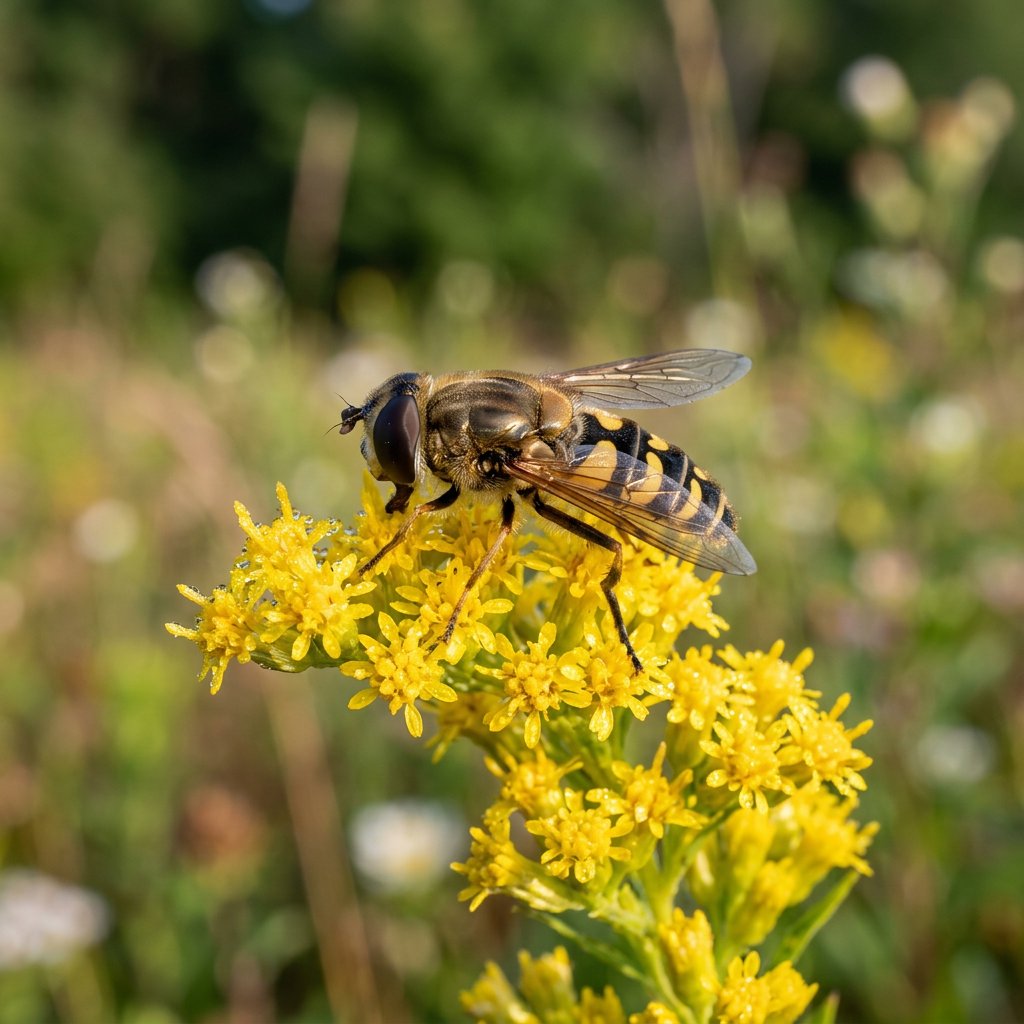
The American Hoverfly is nature's clever little impersonator, often mistaken for a small yellowjacket or bee as it darts through sun-drenched gardens. Commonly known as a "Flower Fly," this high-performance flier is a master of mid-air suspension, often seen hanging perfectly still above a blossom before vanished in a blink. Far from being a pest, this insect is a garden double agent: a dedicated pollinator as an adult and a fierce protector of plants in its youth.
🔍 How to Identify
- 👀 The Eyes: Features massive, wrap-around eyes that take up most of its head, a key giveaway that this is a fly and not a bee.
- 🐝 Bee Mimicry: A glossy black abdomen marked with bright yellow "commas" or bands, a visual trick designed to scare off birds and other predators.
- 🚁 Single Pair of Wings: Unlike bees and wasps which have four wings, the Hoverfly has only two clear wings, allowing for its signature "helicopter" flight pattern.
🌲 Habitat & Ecology
- 🍽️ Aphid Assassin: While the adults are peaceful nectar-sippers, their larvae are legless, slug-like hunters that can devour hundreds of aphids, making them a favorite of organic gardeners.
- 🌸 Floral Favorite: You will most likely find them in open meadows, backyards, and vegetable patches, specifically drawn to flat, open flowers like daisies, dill, and fennel.
⚠️ Safety & Toxicity
- 🛡️ Status: Completely Harmless.
- 🚫 No Sting: Despite its "warning" colors, the American Hoverfly possesses no stinger and cannot bite. It relies entirely on its resemblance to a wasp to stay safe.
- 🌿 Garden Friend: They are safe to have around children and pets; in fact, having them in your garden is a sign of a healthy, pesticide-free ecosystem.
✨ Fun Fact
The American Hoverfly is such a sophisticated aviator that it can fly backwards and even upside down for short bursts to navigate through thick foliage or escape a sudden threat!
More Details








