Info
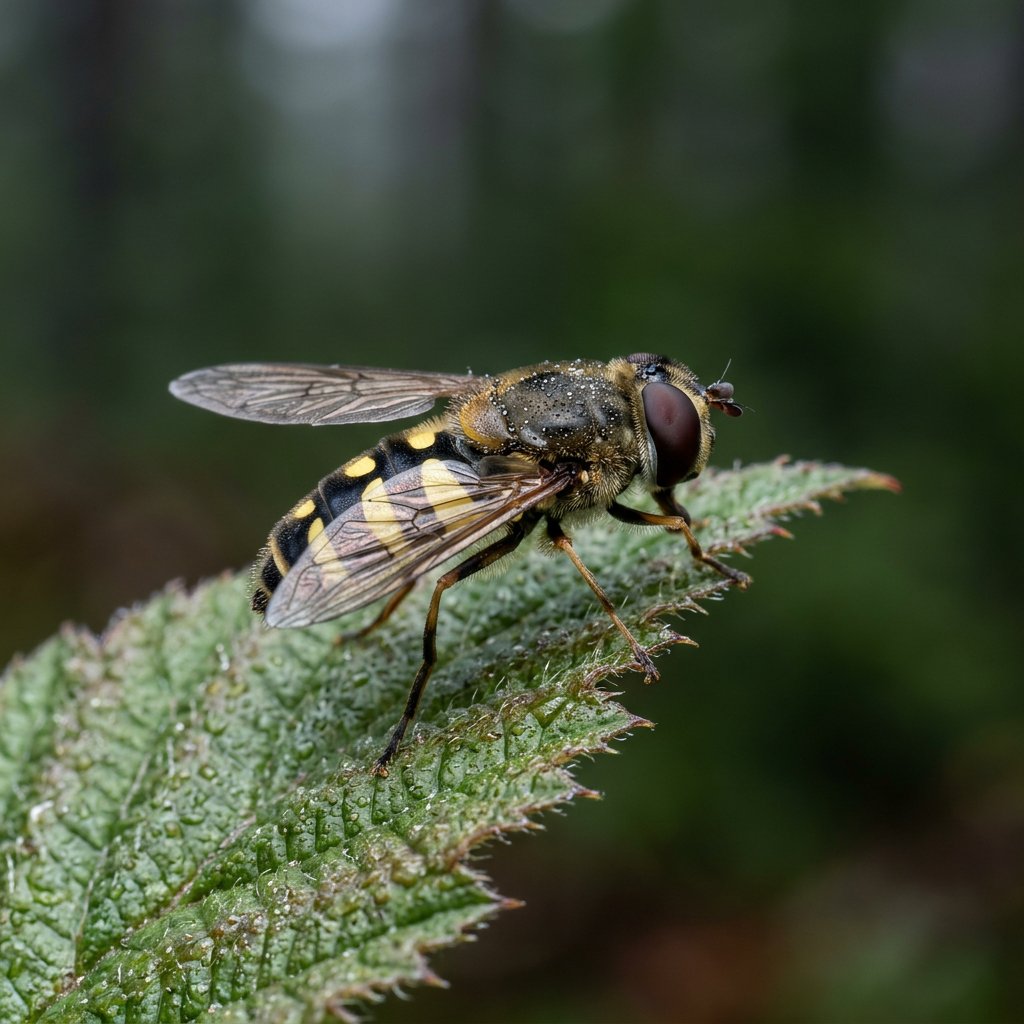
Meet the Lapp Hoverfly, a tiny aviator that has perfected the art of deception. While it wears the flashy yellow and black "uniform" of a wasp to scare off predators, it is actually a harmless, nectar-loving fly. These "gardener's best friends" are famous for their incredible flight stability, often seen suspended perfectly still in mid-air like a miniature helicopter before darting away.
🔍 How to Identify
- 🐝 The Wasp Mimicry: It features bright yellow, often "comma-shaped" or broken bands across a dark abdomen. This "Batesian mimicry" tricks birds into thinking the fly has a stinger.
- 👀 Giant Aviator Eyes: It possesses massive, wrap-around compound eyes that take up most of its head, providing an nearly 360-degree field of vision to spot predators and flowers.
- 🪽 The Single Wing Pair: Unlike bees and wasps which have four wings, the Lapp Hoverfly has only two functional wings. Look closely for tiny, knob-like structures called "halteres" behind the wings which act as gyroscopes for balance.
🌲 Habitat & Ecology
- 🍽️ The Aphid Hunter: While the adults are peaceful pollinators, their larvae are voracious predators. A single larva can consume hundreds of aphids during its development, making them elite natural pest controllers for your garden.
- 🗺️ Northern Voyager: As the name lapponicus (referring to Lapland) suggests, this species is particularly well-adapted to cooler, northern climates and high altitudes, though they are frequently found in sunny meadows and backyard gardens across the Northern Hemisphere.
⚠️ Safety & Toxicity
- 🛡️ Completely Harmless: The Lapp Hoverfly is a "bluffer." It has no stinger, no venom, and its mouthparts are designed only for sipping nectar, not biting.
- 🐶 Pet & Child Friendly: They are safe to have around curious pets or children. In fact, they are a great "starter insect" for kids to observe because they often hover close enough to be studied without any risk of injury.
✨ Fun Fact
Hoverflies are the masters of high-speed physics; they are among the few insects capable of flying backward and even upside down for short bursts to navigate through dense foliage!
More Details








