Info
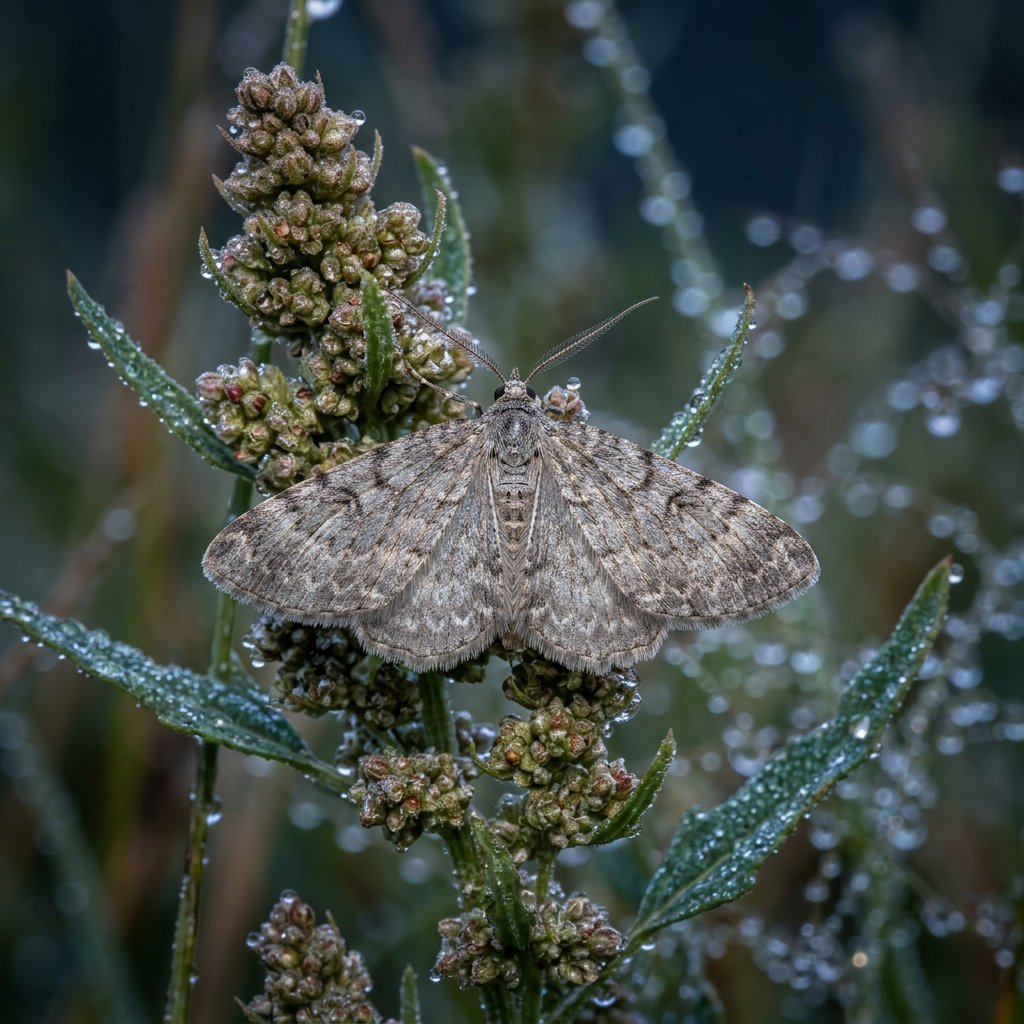
Known affectionately as the Plain Pug, this subtle little moth is a master of camouflage. While it might lack the neon colors of a butterfly, it is a vital part of the nocturnal ecosystem, flitting through gardens and coastal scrublands across Europe and parts of Asia. Often overlooked because of its modest "tawny" wardrobe, it plays a quiet but important role as a pollinator during the moonlit hours.
🔍 How to Identify
- 🦋 Resting Posture: Like most "pugs," it rests with its wings spread flat against a surface, creating a distinctive wide "T" shape that helps it blend into bark or dry leaves.
- 🎨 Coloration: Its wings are a muted greyish-brown or clay color, marked with faint, wavy pale lines that look like delicate ripples on a pond.
- 🎯 The Discal Spot: Look closely at the center of the forewing for a tiny, dark, elongated "beauty mark" (discal spot) which is a key identification feature for this species.
🌲 Habitat & Ecology
- 🍽️ The Seed Eater: Unlike many caterpillars that munch on leaves, the larvae of the Plain Pug have a refined palate—they specifically target the flowers and developing seeds of plants like Orache (Atriplex) and Goosefoot (Chenopodium).
- 🌙 Night Owl: This moth is strictly nocturnal. During the day, it hides deep within vegetation to avoid birds, but as soon as the sun sets, it emerges to find mates and is frequently drawn to garden porch lights.
⚠️ Safety & Toxicity
- ✅ Harmless: The Plain Pug is a "gentle neighbor." It does not bite, sting, or carry diseases.
- 🐾 Pet Friendly: It is non-toxic to cats and dogs. While your pet might find it entertaining to chase, this moth possesses no chemical defenses that would cause harm if accidentally ingested.
✨ Fun Fact
The Plain Pug belongs to the family Geometridae, which translates to "earth-measurer." This name comes from the way their caterpillars (inchworms) move—looping their bodies as if they are carefully measuring the ground one inch at home!
More Details








