Info
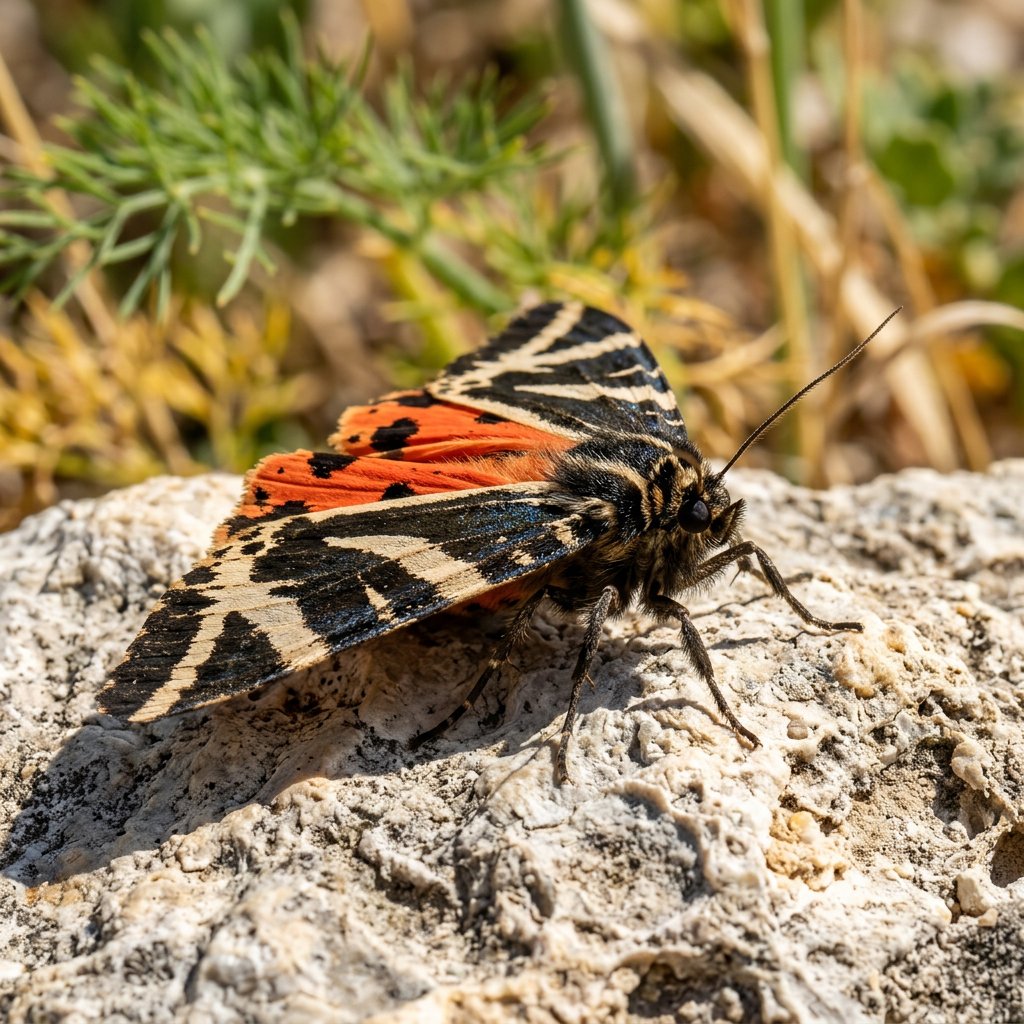
Often mistaken for a butterfly due to its love for the sunshine, the Jersey Tiger is one of the most stylish members of the moth world. Its geometric, cream-colored stripes look like a high-fashion textile design, earning it a reputation as a garden favorite across Europe. While most moths hide under the cover of darkness, this bold flier spends its summer days visiting flowers alongside bees and butterflies.
🔍 How to Identify
- 🦋 Graphic Forewings: The upper wings are a deep chocolate brown or black, striking a sharp contrast with bold, creamy-white diagonal stripes that form a distinct "V" shape.
- 🔥 The Hidden Flash: When it takes flight, it reveals a hidden surprise—vivid orange or scarlet hindwings decorated with a few large, black spots.
- 📐 Triangular Silhouette: At rest, the wings fold into a neat, tent-like triangle, allowing the moth to blend into dappled sunlight and shadows on garden foliage.
🌲 Habitat & Ecology
- 🌸 The Nectar Seeker: You are most likely to spot them fueling up on nectar-rich plants like Buddleia (Butterfly Bush), Hemp-agrimony, and Bramble. They are active pollinators and vital to the garden ecosystem.
- 🍃 Diverse Diet: As caterpillars, they are "generalists," meaning they aren't picky eaters. They can be found munching on Common Nettle, Ground-ivy, and even Raspberry leaves in damp, shaded corners of the garden.
- 🏰 Summer Resident: They are most active during the warmest months, typically from July to early September, often fluttering around woodland edges, coastal cliffs, and suburban gardens.
⚠️ Safety & Toxicity
- ✅ Gentle Visitor: The Jersey Tiger is completely harmless. It does not possess a stinger, it does not bite, and unlike some other moth species, its caterpillars do not have irritating "urticating" hairs.
- 🛡️ Visual Defense: The bright orange on its back wings is a "scare tactic" known as aposematism. It signals to predators (like birds) that the moth might taste bitter, encouraging them to find a snack elsewhere.
✨ Fun Fact
Every year, millions of Jersey Tigers migrate to a single location in Greece called "Petaloudes" (The Valley of the Butterflies). They cover the trees in such massive numbers that the bark appears to be "breathing" with thousands of striped wings!
More Details








