Info
Often mistaken for a harmless white butterfly, the Brown-tail Moth carries a hidden "golden" secret at the tip of its abdomen. While the adult is visually striking and elegant, this species is notorious for its caterpillar stage, which can transform a peaceful backyard into a literal itchy nightmare. It is a moth that demands respect and a very wide berth.
🔍 How to Identify
- ❄️ The Wings: Both the male and female sport snowy, pure-white wings that occasionally feature tiny dark spots at the edges.
- 🟤 The "Tail": Its most defining feature is a thick, velvety tuft of reddish-brown hair at the end of its abdomen, which is used to cover and protect its eggs.
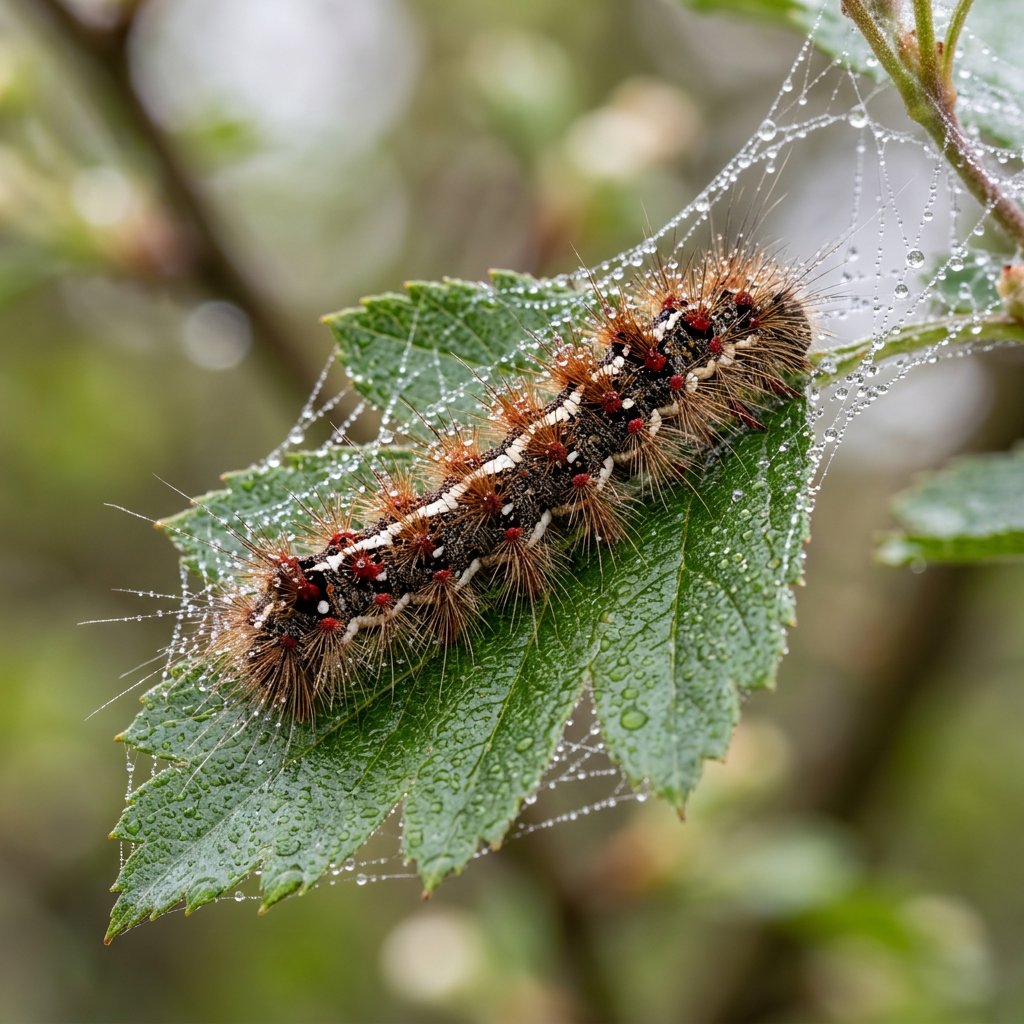
- 🐛 The Caterpillar: Dark brownish-black with white markings along the sides and two very distinct, bright orange-red "warts" near the tail end.
🌲 Habitat & Ecology
- 🕸️ Winter Tents: This insect is famous for its architecture. In late autumn, larvae spin dense, silvery-white silk "tents" at the tips of branches. These nests are incredibly tough and protect the colony from freezing temperatures until spring.
- 🍏 The Menu: They aren't picky eaters but have a strong preference for deciduous trees and shrubs, particularly fruit trees (cherry, apple), hawthorn, blackthorn, and oak. Large populations can completely defoliate a tree in a single season.
⚠️ Safety & Toxicity
- 🚫 Status: HIGH ALERT. This is a significant health pest to humans and pets.
- 🧴 The Itch: The caterpillars are covered in millions of microscopic, barbed hairs containing a toxin. Touching them—or even being near them on a windy day—causes a severe, painful rash similar to poison ivy that can last for weeks.
- 🫁 Respiratory Risk: Because the hairs are so light, they can become airborne. If inhaled, they can cause serious respiratory distress and irritation to the throat and lungs. Never handle the caterpillars or their silken nests without professional gear.
✨ Fun Fact
In the early 1900s, the infestation of Brown-tail moths in the United States was so severe that local governments paid children a "bounty" for every winter nest they collected to help save the local orchards and forests!
More Details








