Info
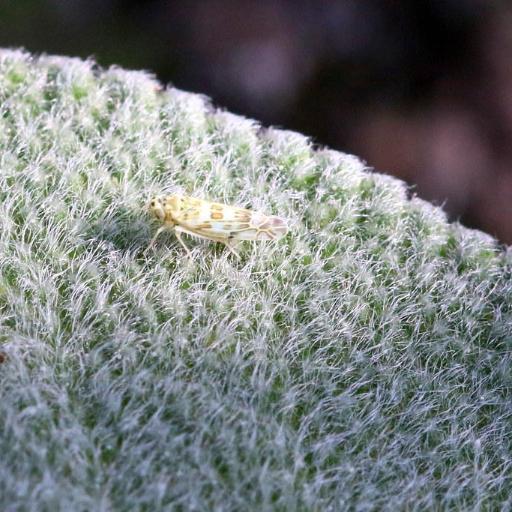
Often called the Sage Leafhopper, this tiny, intricate insect is a frequent guest in aromatic herb gardens. While its mottled patterns are beautiful to look at under a magnifying glass, gardeners usually recognize it by the trail of "stippling" (tiny pale dots) it leaves behind on Mediterranean herbs. It is a minor "foe" to the aesthetic of your garden but a fascinating example of specialized evolution.
🔍 How to Identify
- 🪽 Mottled Wings: The wings are a pale yellowish-green, heavily decorated with distinct dark brown or black spots that create a "salt and pepper" appearance.
- 👁️ Spotted Crown: On its head, you will find two very clear dark spots between the eyes, looking almost like a second pair of tiny eyes.
- 📐 Wedge Shape: Like most leafhoppers, it has a sleek, aerodynamic body that tapers toward the back, usually reaching only about 3 millimeters in length.
🌿 Habitat & Ecology
- 🍽️ Herb Enthusiast: This species is highly selective, preferring plants in the mint family (Lamiaceae). You are most likely to find them tucked away on the undersides of sage, rosemary, lavender, mint, and lemon balm leaves.
- 🦀 Sideways Scuttle: If you try to touch one, it won’t just fly away; it often performs a "crab-walk," quickly scuttling to the other side of a stem to stay out of your line of sight.
- 💧 Sap Feeders: They use needle-like mouthparts to pierce individual plant cells. This removes the chlorophyll, leaving behind the signature white or silvery speckled patches on the foliage.
⚠️ Safety & Toxicity
- ✅ Harmless to Humans: The Sage Leafhopper is completely non-toxic and lacks any ability to bite or sting humans or pets.
- 🌱 Garden Impact: While they don't carry major plant diseases, a large population can make herbs look "bleached" and unappealing. However, the herbs remain safe to eat after a quick rinse to remove the insects.
✨ Fun Fact
Leafhoppers like Eupteryx melissae are the champion jumpers of the insect world relative to their size. They can accelerate at a rate that subjects their tiny bodies to over 200 Gs of force—far more than a fighter pilot or a space shuttle launch!
More Details








