Info
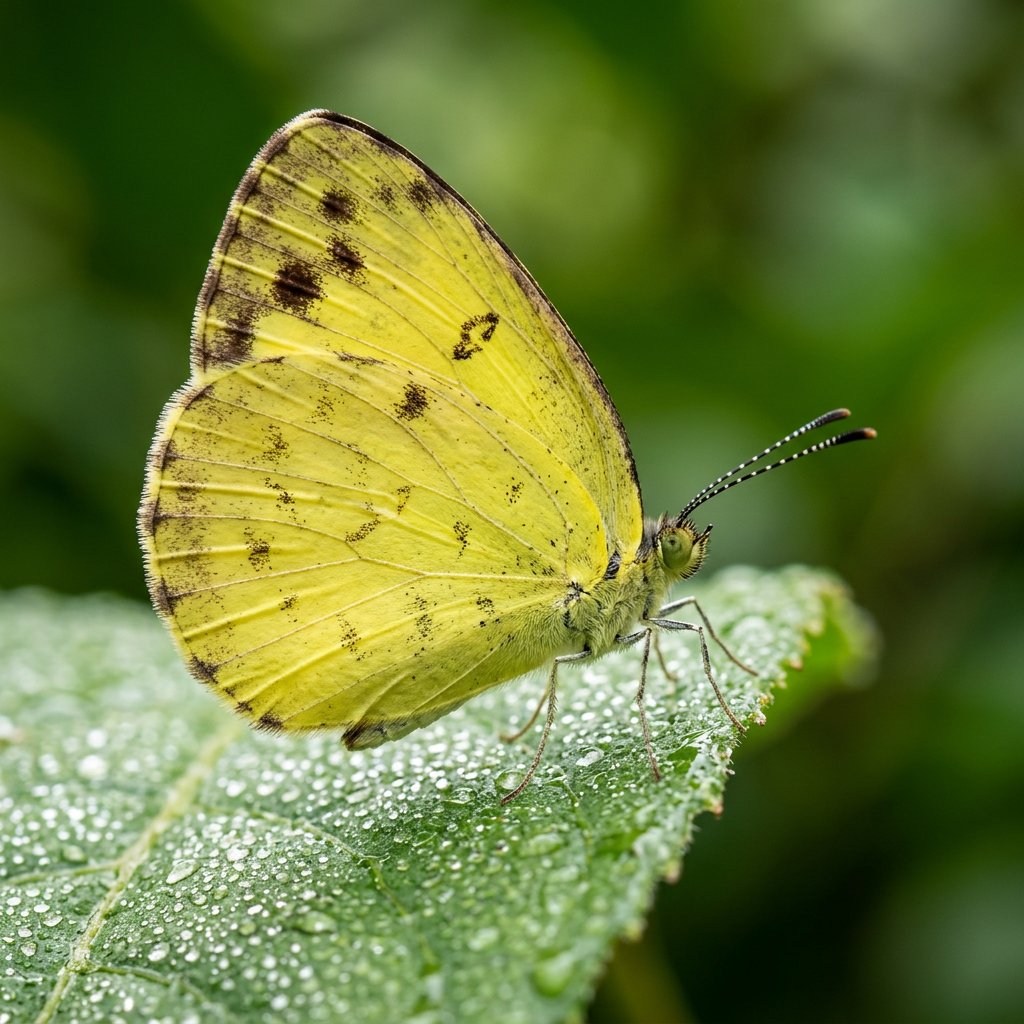
Often called the Three-spot Grass Yellow, this butterfly is like a floating piece of lemon peel dancing through the garden. It is a common and cheerful sight across South and Southeast Asia, frequently found fluttering at knee-height over grassy patches. Despite its delicate appearance, it is a hardy traveler often seen in large, social groups.
🔍 How to Identify
- 🟡 Lemon Wings: Both the upper and lower surfaces are a vibrant, sunny yellow, with a distinct black border along the outer edges of the forewings.
- 🧐 The "Three Spots": Its name comes from three tiny, faint brown spots located in the "cell" area on the underside of the forewing—a key detail for distinguishing it from other very similar Eurema species.
- 📏 Low Flight: They have a weak, bobbing flight pattern, rarely straying far from the ground or the host plants where they were born.
🦋 Behavior & Ecology
- 💧 Mud-Puddling: One of the most enchanting sights is seeing dozens of these butterflies gathered around a damp patch of soil. This is called "puddling," where they sip mineral-rich water to gain nutrients like sodium.
- 🌿 Nursery Plants: They are closely tied to the pea family (Fabaceae). You’ll often find them near Albizia or Acacia trees, where the females carefully glue their tiny, spindle-shaped eggs to the underside of young leaves.
- 🌤️ Sun Seekers: They are most active during the brightest parts of the day, resting with their wings closed tight when the sun goes behind a cloud.
⚠️ Safety & Toxicity
- ✅ Harmless Friend: The Three-spot Grass Yellow is completely safe for humans and pets. They lack any form of sting or bite and are wonderful "starter insects" for children to observe.
- 🦋 Pollinator Role: They are beneficial visitors to your garden, helping to pollinate small, open flowers as they search for nectar.
- 🐛 Minor Garden Pest: While harmless to people, their bright green caterpillars can be quite hungry. If you have ornamental leguminous shrubs, you might notice some leaf-nibbling, but it is rarely enough to harm the plant's health.
✨ Fun Fact
Male Three-spot Grass Yellows are the ultimate gift-givers! During "mud-puddling," they collect essential salts and minerals which they then transfer to the female during mating to help ensure the survival of her eggs.
More Details








