Info
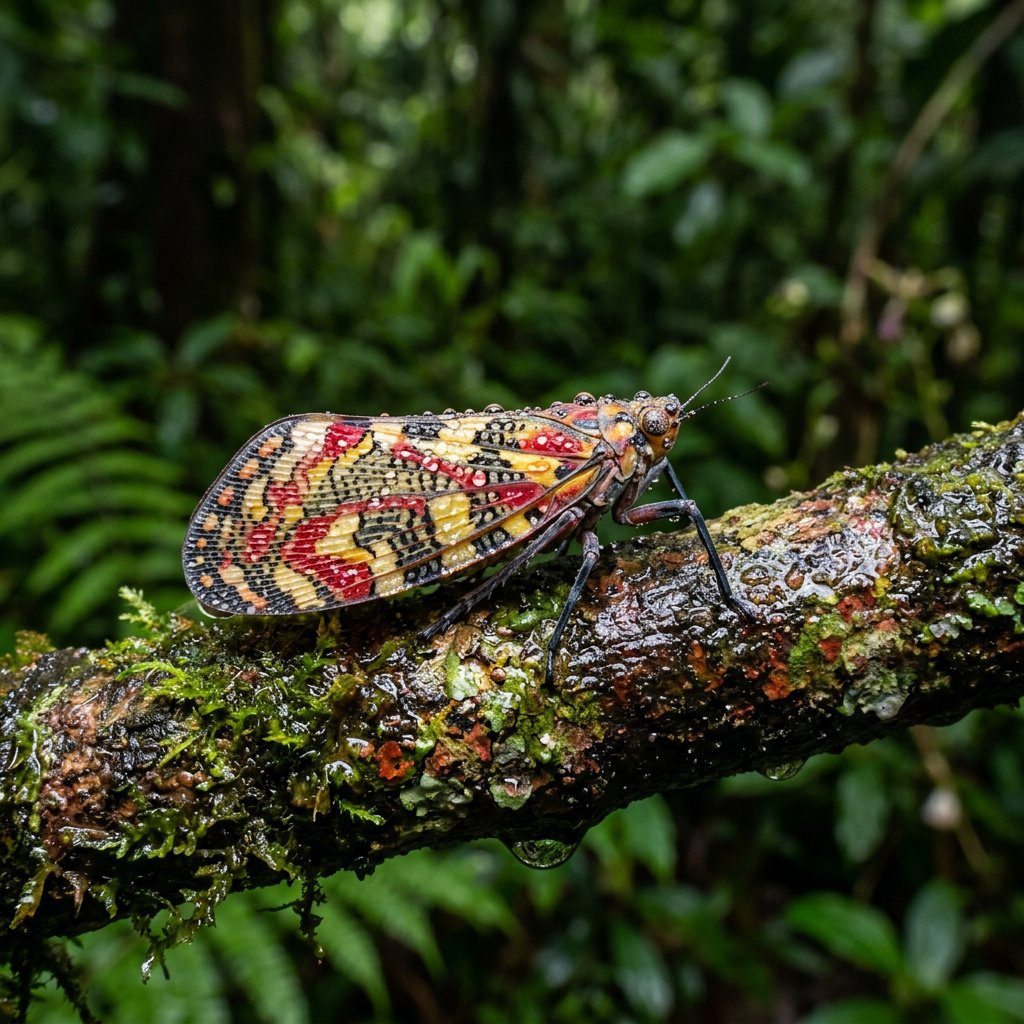
Known as "Broad-chested Planthoppers," these insects look like small, winged shields that stepped out of a watercolor painting. They are masters of optical illusions, often sporting intricate patterns that blend into tree bark or confuse predators by making their rear end look exactly like their face. Found mostly in Australia, Asia, and Africa, they are the quiet, decorative wanderers of the forest and garden.
🔍 How to Identify
- 🛸 Broad Body: True to their name, they have wide, flattened bodies that give them a squat, moth-like silhouette when resting on a branch.
- 🎨 Intricate Wings: The forewings are usually opaque and covered in mottled browns, greys, or vibrant speckles that perfectly mimic lichen or bark.
- 🎭 The "False Head": Many species have spots or filaments on the tips of their wings that look like eyes and antennae. This "back-to-front" disguise tricks birds into attacking the non-vital rear end.
🌲 Habitat & Ecology
- 🍴 The Sap Diet: These insects are specialized sap-suckers. They use a needle-like beak to tap into woody plants and shrubs, though they rarely drink enough to harm a healthy tree.
- 🛡️ Waxy Secrets: Females often produce a snowy-white, waxy substance from their abdomen, which they use to carefully coat and hide their egg masses from predators.
⚠️ Safety & Toxicity
- 🛡️ Completely Harmless: These planthoppers do not bite, sting, or carry diseases. They are gentle creatures that are entirely safe for humans and curious pets to observe.
- 🌿 Garden Nuance: While they are not considered major pests, they do excrete a sticky substance called "honeydew." If you see many of them, you might notice some sticky leaves nearby, which can occasionally lead to harmless black sooty mold.
✨ Fun Fact
[🦵] The Great Escape: Eurybrachids are the "teleporters" of the insect world. If they feel threatened, they use high-pressure muscle tension in their hind legs to launch themselves into the air so fast that they seemingly disappear from sight in a fraction of a second.
More Details








