Info
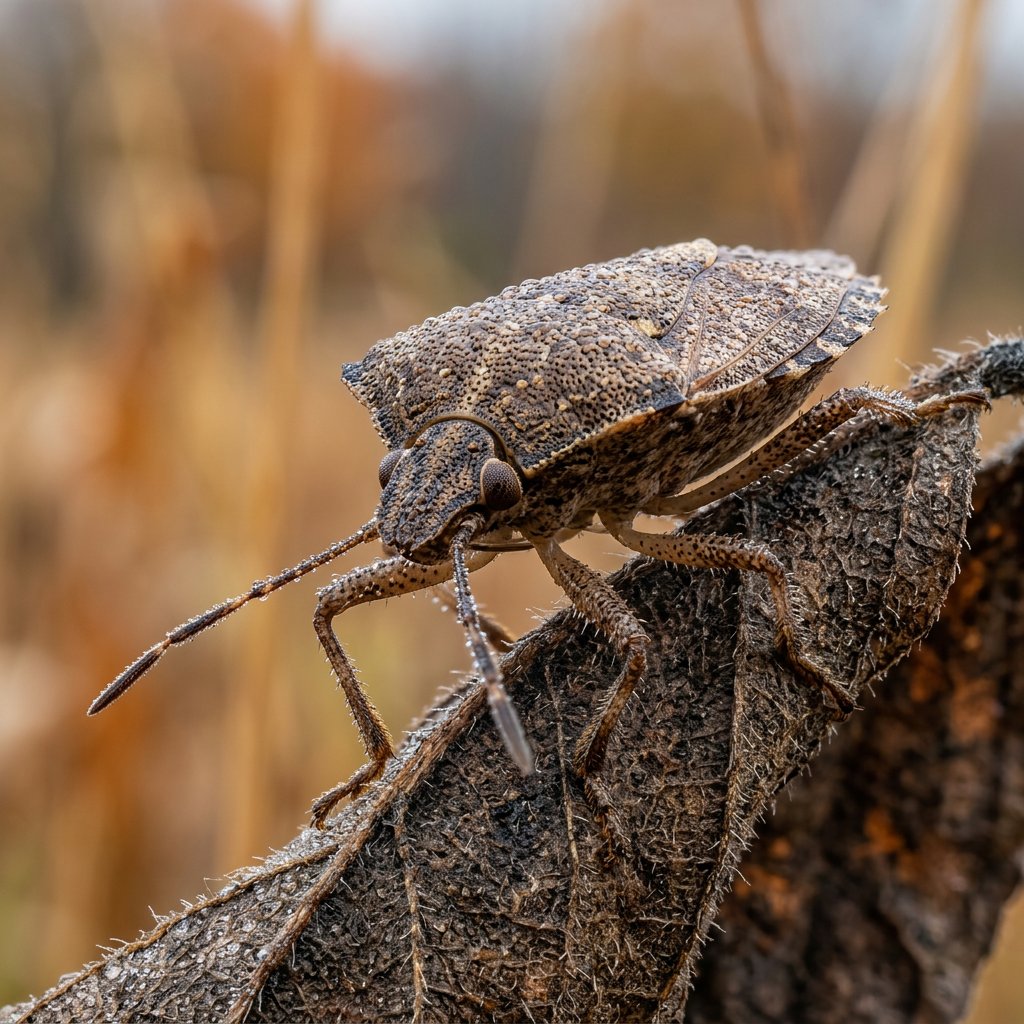
Often found clinging to your ripening tomatoes or sunning themselves on a broad leaf, the Euschistus genus—better known as the Brown Stink Bug—is a common garden resident. While their name might sound like a botanical species, these are actually "shield bugs" that have a complicated relationship with the plants they inhabit. They are the quintessential "uninvited dinner guests" of the vegetable patch, famous for their geometric shape and their pungent defensive spray.
🔍 How to Identify
- 🛡️ Shield-Shaped Body: They possess a distinctive five-sided, flat body that resembles a medieval heraldic shield.
- 🟤 Mottled Coloring: Their exoskeleton is typically a dull, mottled brown or grayish-tan, which provides excellent camouflage against tree bark and dried leaves.
- 📌 Angular "Shoulders": Most species in this genus have prominent, often sharp-pointed "shoulders" (the pronotum) just behind the head.
- 🏁 Wing Pattern: When their wings are folded, you can often see a dark, membranous triangle at the very rear of their backs.
🌲 Behavior & Garden Role
- 🥤 The Straw-Like Mouth: These insects are "true bugs" (Hemiptera), meaning they don't chew. Instead, they have a needle-like proboscis used to pierce plant tissues and suck out the nutrient-rich juices.
- 🍎 Fruit Impact: In the garden, they are considered minor to moderate pests. They love apples, peaches, and tomatoes; their feeding can cause "cat-facing" or dimpling, where the fruit skin becomes scarred and pitted.
- 🌬️ Aromatic Defense: When they feel threatened or are accidentally crushed, they release a pungent chemical from scent glands on their thorax, often described as smelling like strong cilantro or old gym socks.
⚠️ Safety & Toxicity
- ✅ Harmless to Humans: Euschistus bugs do not sting and rarely bite. They have no venom and do not carry diseases that affect humans or pets.
- 👃 The "Stink" Factor: The liquid they spray can be an irritant. If the fluid gets into your eyes, it can cause significant stinging, and on sensitive skin, it may leave a temporary brown stain or cause a mild rash.
- 🐶 Pet Interactions: If a curious dog or cat eats one, the bitter taste and chemical spray may cause them to drool or vomit, but it is generally not life-threatening.
✨ Fun Fact
The "stink" isn't just for defense! Scientists have discovered that these bugs also use chemical signals (pheromones) as a "neighborhood alert" to tell other stink bugs where the best food sources are located.
More Details








