Info
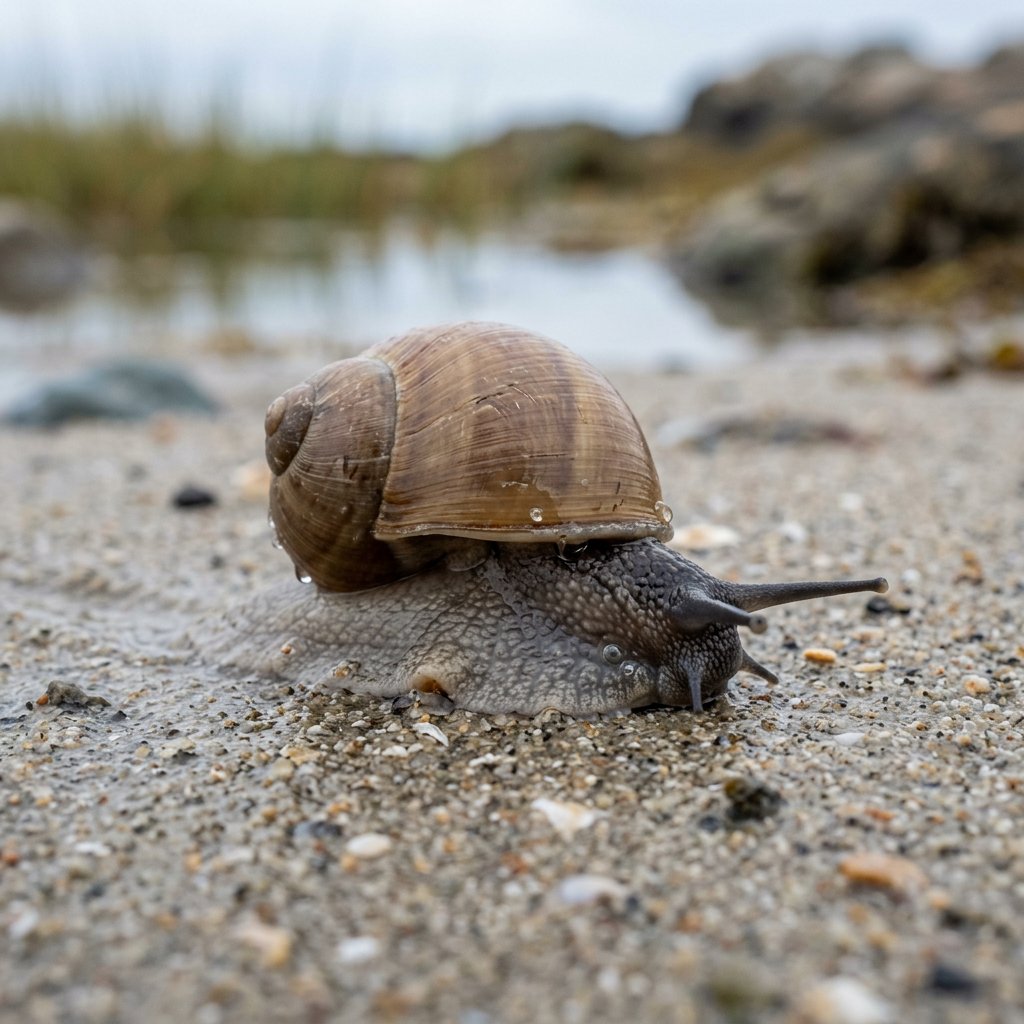
Commonly called the Northern Moon Snail, this creature is actually a massive marine gastropod rather than an insect. A dominant predator of the sandy Atlantic shoreline, it is famous for its smooth, polished shell and the enormous, fleshy foot it uses to glide beneath the waves. Beachcombers often find their empty, ear-shaped shells or their strange, rubber-like egg cases known as "sand collars" washed up after a storm.
🔍 How to Identify
- 🐚 The Shell: A large, smooth, and globular spiral that can grow to the size of a grapefruit. It is typically a creamy tan, grayish-brown, or "shark-skin" blue.
- 👣 The Massive Foot: When active, the snail extends a colossal, soft mantle that can expand to several times the size of its shell, allowing it to "plow" through wet sand.
- 🌀 The Center Spiral: The top of the shell features a distinct, darkened "button" or spire where the growth began.
🌊 Habitat & Ecology
- 🏖️ Submerged Hunter: You won't find this snail in the trees; it lives in the intertidal and subtidal zones. It spends most of its life buried just beneath the surface of the sand, hunting for buried bivalves.
- ⚔️ The "Drill" Attack: This snail is a master predator. It uses a sand-paper-like tongue called a radula to drill a perfectly circular, beveled hole into the shells of clams and mussels to reach the meal inside.
⚠️ Safety & Toxicity
- ✅ Harmless to Humans: The Northern Moon Snail is entirely non-toxic. It does not bite, sting, or carry venom. It is perfectly safe for curious beachcombers to observe.
- 🐚 Check for Residents: If you find a shell, ensure it is truly empty. Aside from the snail itself, empty Moon Snail shells are the "luxury apartments" of the beach, frequently inhabited by large hermit crabs.
✨ Fun Fact
The Moon Snail's eggs are hidden in "sand collars"—mysterious, translucent rings found on the beach that look like discarded plastic or industrial gaskets. These are actually made of a sandwich of sand and mucus, protecting thousands of tiny eggs until they hatch!
More Details








