Info
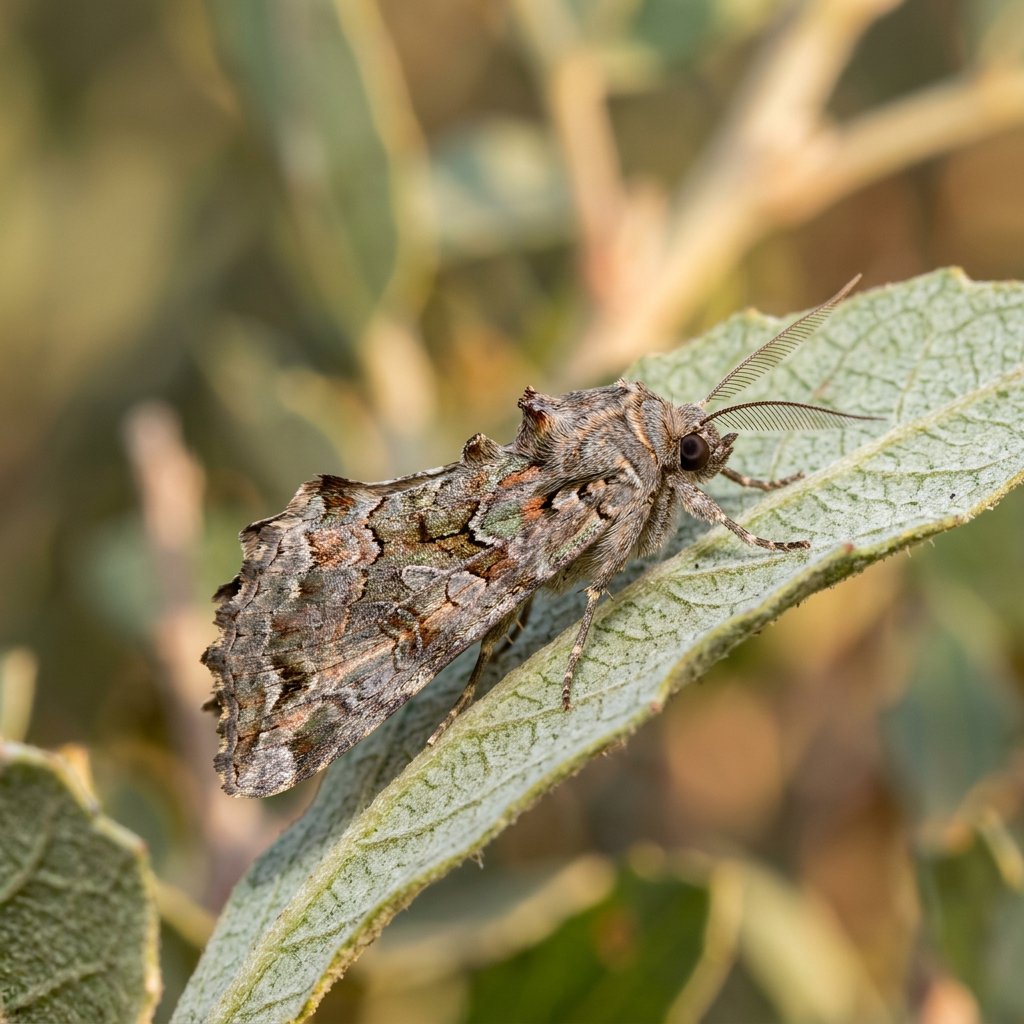
Often called the "Sculptural Moths," members of the genus Eutelia are the architects of the insect world. These moths are famous for their bizarre, geometric resting positions that make them look more like a piece of origami or a splinter of wood than a living creature. While their jagged shapes might look "sharp" or intimidating, they are entirely harmless garden visitors that excel at the art of invisibility.
🔍 How to Identify
- 📐 The "Curled" Posture: Their most famous trait is resting with their abdomen curled sharply upward, often at a 90-degree angle, which breaks up their insect-like silhouette.
- 🎨 Bark-Like Patterns: Their wings are covered in intricate, wavy lines and marbled shades of earthy brown, grey, and tan, perfectly mimicking tree lichen or decaying wood.
- 📏 Stiff Wing Alignment: Unlike many moths that flatten their wings, Eutelia often hold theirs out at stiff, unusual angles to resemble a broken twig.
🌲 Habitat & Ecology
- 🍂 Master of Disguise: You will typically find them clinging to the undersides of leaves or on tree trunks during the day. They rely entirely on their "dead leaf" camouflage to hide from hungry birds.
- 🌿 Specific Diet: As caterpillars, they are often found on specific host plants like Sumac, Poison Ivy (don't worry, the moths aren't itchy!), or Mango trees, depending on the species and region.
- 🌙 Night Life: They are strictly nocturnal and are most commonly seen when they are accidentally lured to porch lights or garden lanterns after dark.
⚠️ Safety & Toxicity
- 🛡️ Perfectly Safe: These moths are "all bark and no bite." They do not possess stingers, fangs, or any chemical sprays.
- 🐾 Pet & Child Friendly: They are not toxic to curious pets or children. Their only defense is staying still and hoping you don't notice them!
✨ Fun Fact
Some species of Eutelia are so specialized in their camouflage that they don't just mimic the color of bark—they mimic the way shadows fall on a piece of wood, using dark patches of scales to create a 3D illusion of depth on their flat wings!
More Details








