Info
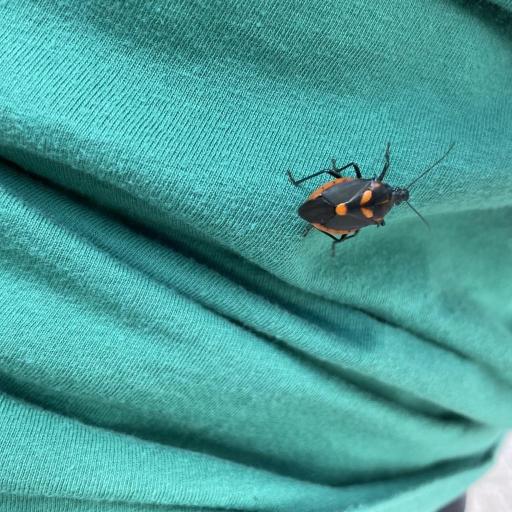
Often referred to as the Florida Predatory Stink Bug, this striking insect is a colorful knight in shining armor for your garden. Unlike its plant-munching cousins that ruin crops, this species is a formidable hunter that stalks pests like a tiny, iridescent panther. With its metallic sheen and bold orange spots, it is one of the most beneficial "true bugs" a gardener can encounter in the humid landscapes of the Southeastern United States.
🔍 How to Identify
- 🛡️ The Shield: It features a classic shield-shaped body, typically measuring about 12-17mm, with a deep iridescent blue-black or dark purple base color.
- 🟠 Three-Spot Pattern: Look for three distinct bright orange or red spots on the "scutellum" (the triangular part of its back).
- ⚔️ Humeral Spines: It has sharp, prominent "shoulders" that stick out to the sides, giving it an armored, aggressive appearance.
- 🗡️ The Beak: Its proboscis (snout) is twice as thick as that of plant-eating stink bugs, designed specifically for piercing the tough hides of other insects.
🌲 Habitat & Ecology
- 🐛 The Pest Assassin: This bug is a generalist predator, meaning it isn't picky. It devours over 100 different species of pests, including the notorious tomato hornworm, velvetbean caterpillars, and Colorado potato beetles.
- 🐺 Wolf-Pack Mentality: In a rare display of insect cooperation, the young nymphs often hunt in "packs." By working together, a group of small nymphs can successfully take down a large caterpillar that a single bug couldn't handle alone.
- 🏡 Southern Native: While its name highlights Florida, it is commonly found in gardens, citrus groves, and woodlands across the Southeastern United States, from Texas to North Carolina.
⚠️ Safety & Toxicity
- ✅ Friend of the Gardener: This insect is considered a "Friend." It does not eat plants and provides free, organic pest control for your vegetables and ornamentals.
- 💥 Defensive Poke: While it has no stinger, it can deliver a painful "bite" with its piercing snout if handled roughly or squeezed. The sensation is similar to a sharp needle prick but is not medically significant.
- 🐶 Pet Safety: It is non-toxic to pets, though the bug may release a mild foul-smelling musk if a curious dog tries to sniff it too closely.
✨ Fun Fact
The Florida Predatory Stink Bug is so effective at pest control that it has been studied for use as a "biological control agent" to protect commercial crops without the need for chemical pesticides!
More Details








