Info
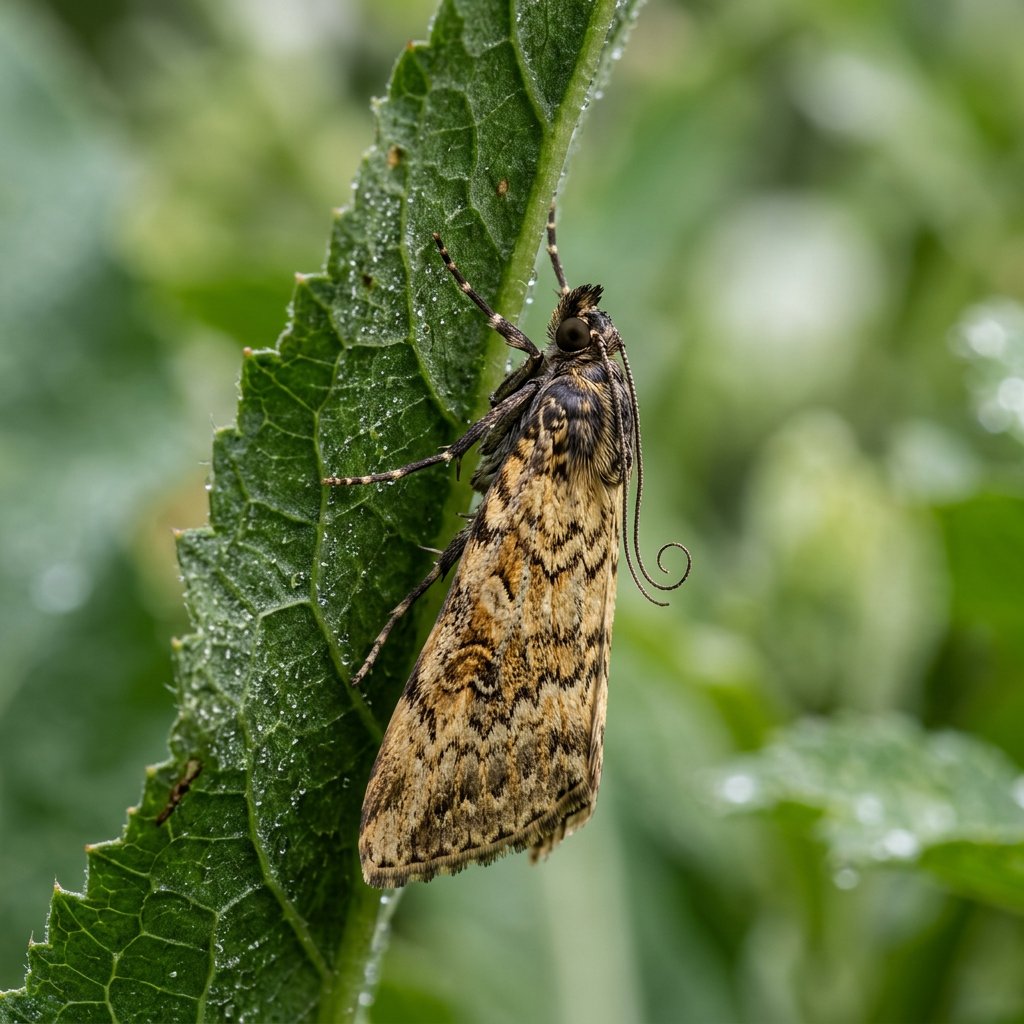
Known commonly as the Garden Pebble, this moth is a master of disguise that looks more like a fragment of dried leaf or a small stone than a living creature. While the adult is a subtle, nocturnal beauty, it is often viewed as a "frenemy" by gardeners. Its larvae have a refined palate, specifically targeting your homegrown vegetables, making it a frequent visitor to allotments and backyard patches across Europe and Asia.
🔍 How to Identify
- 📐 The Silhouette: When resting, the moth holds its wings in a very distinct, sharp triangular or "arrowhead" shape.
- 🎨 Wing Patterns: The wings are a creamy buff color, marked with several dark, diagonal lines that meet in the middle to create a series of "V" shapes, mimicking the veins of a leaf.
- 🐛 The Larvae: The caterpillars are pale green with a dark stripe down the back and yellowish sides, often found hiding in silken webs on the undersides of leaves.
🌲 Habitat & Behavior
- 🥗 The Brassica Specialist: This insect is a specialist herbivore. The caterpillars feed almost exclusively on the Mustard family (Brassicas), including cabbage, kale, horseradish, and radishes.
- 🌙 Night Owl: The adult Garden Pebble is strictly nocturnal. You are most likely to spot them fluttering around porch lights or resting on garden fences during the day, where their "pebble" camouflage keeps them safe from hungry birds.
- 🔄 Double Trouble: In many regions, they produce two generations per year—one in early summer and another in late autumn—meaning gardeners need to stay vigilant throughout the growing season.
⚠️ Safety & Toxicity
- ✅ Harmless to Humans: This moth is completely safe for people. It does not bite, sting, or carry any diseases.
- 🥬 Garden Pest: While safe for you, it is a "foe" to your vegetable garden. The larvae can skeletonize leaves quickly if left unchecked.
- 🐾 Pet Safe: They are non-toxic to cats and dogs, though chasing them might lead to a knocked-over plant or two!
✨ Fun Fact
The specific name forficalis comes from the Latin word "forfex," meaning scissors. This refers to the way the moth's long, thin palps (mouthparts) can sometimes look like a tiny pair of shears!
More Details








