Info
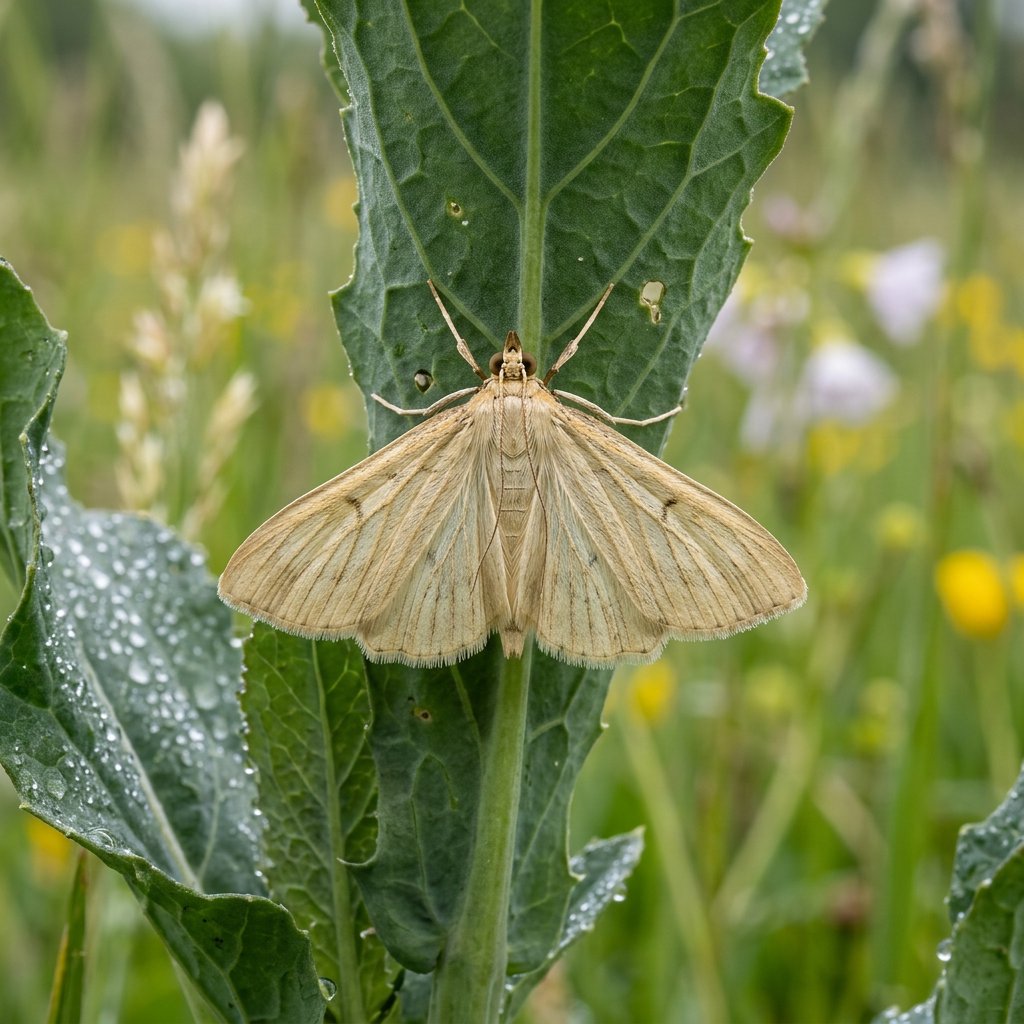
The Evergestis pallidata, commonly known as the Purple-backed Cabbageworm, is a small moth that tells a story of two identities. While the adult moth is a master of camouflage with its "toasted parchment" wings, its caterpillar stage is famous for its bold, regal racing stripe. Though it may look like a delicate visitor to your garden, it is a well-known specialist with a very specific appetite for spicy greens.
🔍 How to Identify
- 🎨 The Chequered Pattern: The adult moth features pale, straw-colored forewings crisscrossed with delicate, wavy brown lines that create a subtle "chequered" or grid-like appearance.
- 💜 The Royal Stripe: The larvae (caterpillars) are the easiest to spot; they have a distinct, broad purplish-brown band running down their backs, sharply contrasted by pale greenish-white sides.
- 📐 Tent-Like Posture: When resting on a leaf or wall, the moth holds its wings in a tight, neat triangle, looking almost like a tiny piece of folded origami.
🌲 Habitat & Ecology
- 🥬 The Brassicaceae Buffet: These insects are highly specialized. You will almost exclusively find them near members of the mustard family, including horseradish, cabbage, kale, and wild mustard.
- 🍂 Leaf Skeletonizers: Unlike some caterpillars that eat the whole leaf, young Evergestis pallidata often feed in groups on the underside of leaves, eating the soft tissue but leaving the veins behind, creating a "windowpane" or skeletonized effect.
⚠️ Safety & Toxicity
- ✅ Harmless to Humans: This moth is a "friend" in terms of physical safety. It does not bite, sting, or possess irritating hairs. You can safely relocate them from your garden by hand.
- 🐛 Garden Foe: While safe for humans and pets, they are considered a minor pest for gardeners. If you find them on your food crops, they are edible (if you're adventurous!), but most gardeners prefer to move them to wild mustard plants instead.
✨ Fun Fact
The Purple-backed Cabbageworm is a world traveler! Originally native to Europe and Asia, it successfully hitched a ride to North America in the late 1800s and has since become a common sight in gardens from coast to coast.
More Details








