Info
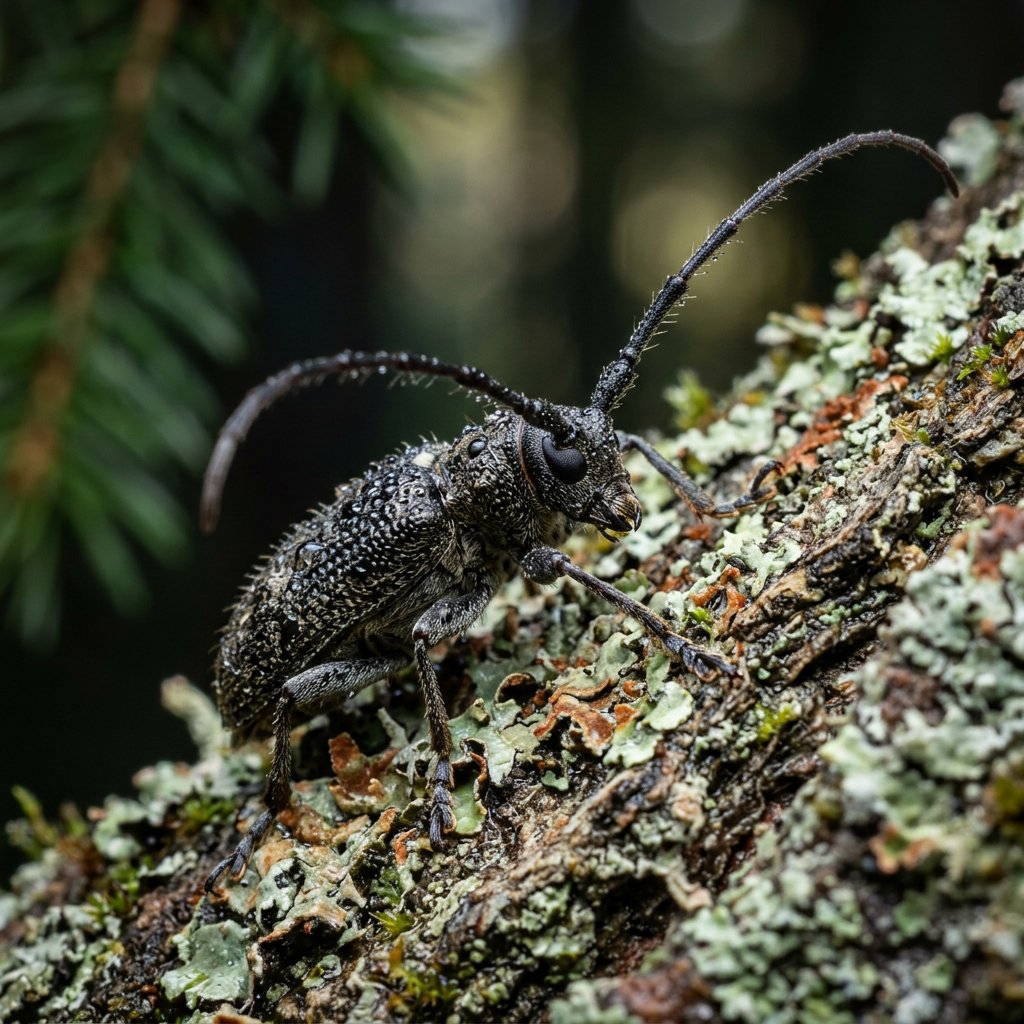
Known as the Flower Longhorn Beetle, Evodinus is a striking visitor to summer blossoms. Often found in mountainous regions or dense forests, these beetles act as miniature messengers, moving pollen from bloom to bloom while looking incredibly stylish. While their long "horns" and bold patterns might look like they mean business, they are actually gentle wanderers of the high country.
🔍 How to Identify
- 🎨 Striking Patterns: Most species sport bold yellow or cream-colored spots and bands on a dark, metallic, or brownish background. This "warning" coloration mimics wasps to trick predators into staying away.
- 🗼 Long Antennae: True to their "longhorn" name, their segmented antennae are often nearly as long as their bodies, serving as highly sensitive chemical receptors.
- 📐 Tapered Body: Their wing covers (elytra) are notably wider at the "shoulders" and narrow significantly toward the tail, giving them a sleek, triangular silhouette.
🌲 Habitat & Ecology
- 🌸 Nectar Lovers: You’ll most likely find adults perched on wild roses, hydrangeas, or cow parsnips. They are active during the day, soaking up the sun and fueling up on pollen and nectar.
- 🪵 The Wood Cycle: While the adults enjoy the flowers, their larvae are busy "working" inside decaying logs of coniferous or deciduous trees. They help break down old wood, playing a vital role in forest decomposition.
⚠️ Safety & Toxicity
- 🟢 Harmless Friend: Evodinus beetles are completely non-toxic and do not possess a stinger. They are a "friend" to the gardener and hiker alike.
- 👄 Gentle Grip: While they have mandibles (jaws) for chewing pollen, they are not aggressive. They might give a tiny, harmless pinch if handled very roughly, but they would much rather fly away.
✨ Fun Fact
- 🏔️ Mountain Dwellers: The most common species in North America is Evodinus monticola. Its name literally translates to "mountain dweller," as it is a specialist of high-elevation meadows where the air is cool and the wildflowers are plenty!
More Details








