Info
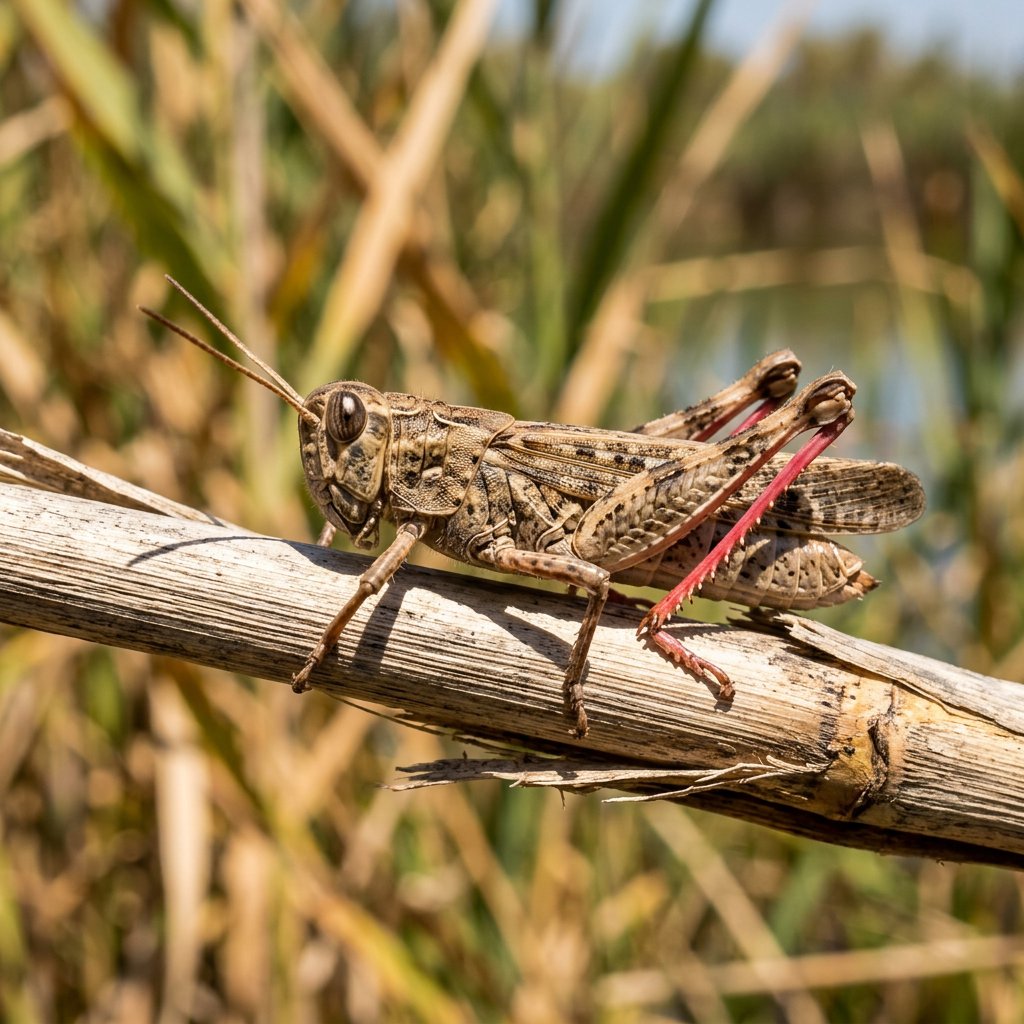
The Lamenting Grasshopper (Eyprepocnemis plorans) is a striking and elegant orthopteran often found basking in the Mediterranean sun. Its name comes from the distinct vertical dark markings under its eyes, which look like "teardrop" streaks, giving the insect a perpetually mournful expression. While its name sounds somber, it is a highly active and resilient jumper common in warm, irrigated gardens and agricultural fields.
🔍 How to Identify
- 👁️ The "Teardrop" Mark: Look for the signature dark vertical stripe running directly down from each eye, which is the most reliable way to identify this species.
- 🦵 Colorful Hind Legs: The powerful jumping legs feature a beautiful gradient, often showing a bluish or purplish tint on the lower segment (tibia) and a bright white or pale ring near the "knee."
- 🎨 Sleek Camouflage: The body is typically a mix of sandy browns, olives, and greys with a pale stripe running down the center of its back, allowing it to blend perfectly with dry grasses.
🌲 Habitat & Ecology
- 🌾 The Green Gourmet: This grasshopper is a generalist herbivore, meaning it enjoys a wide buffet of plants including grasses, leafy vegetables, and even some ornamental garden flowers.
- 💧 Moisture Lover: Unlike some desert-dwelling relatives, the Lamenting Grasshopper prefers areas with a bit of humidity, frequently congregating near irrigation ditches, marshes, or well-watered suburban lawns.
- 🦗 Solitary Nature: You will usually find them hanging out alone rather than in massive swarms; they prefer to spend their days perching on tall stalks to soak up the sun.
⚠️ Safety & Toxicity
- ✅ Harmless Resident: This insect is completely safe for humans and pets. It does not possess a stinger and its mandibles are designed for leaves, not skin.
- 🌿 Garden Impact: While they are not "locusts" in the destructive sense, a high population in a small vegetable patch might lead to some visible "holing" in your leaves.
✨ Fun Fact
The Lamenting Grasshopper is a celebrity in the world of genetics! It is famous among scientists for carrying "B-chromosomes"—extra pieces of DNA that aren't necessary for life but "hitchhike" through generations, making this insect a key subject for studying evolution and genome complexity.
More Details








