Info
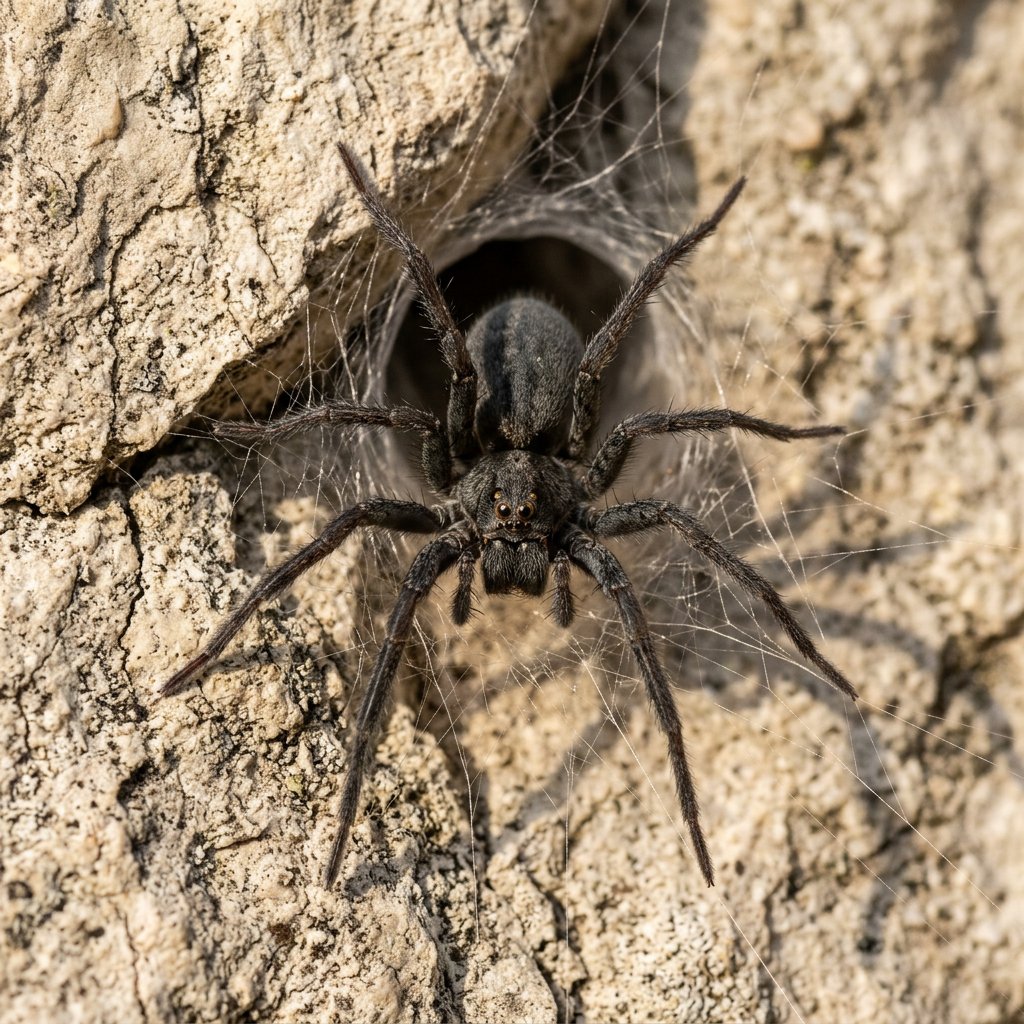
Often called the Southern House Spider or the Crevice Weaver, Filistata insidiatrix is a master of disguise and architectural design. While its long legs and dark markings often lead people to mistake it for its more dangerous cousin, the Brown Recluse, this spider is actually a timid, long-lived resident of old stone walls and quiet corners. In Mediterranean regions and across the southern parts of Europe, it is a legendary pest controller that prefers to stay hidden in the shadows.
🔍 How to Identify
- 🕷️ Velvety Texture: Both males and females have a dense, fine coat of hairs that gives them a soft, matte, charcoal or grayish-brown appearance.
- 📏 Leg Span: They possess remarkably long, slender legs. Males are often more "spindly" and are frequently confused with Recluse spiders due to their coloring and movements.
- 🕸️ The "Telltale" Web: Unlike a typical spiral web, they build a silk tube inside a crevice. From the entrance, they radiate "trip-lines" of fuzzy, blueish silk that alert the spider when a meal is walking by.
🌲 Habitat & Ecology
- 🧱 Urban Architect: You will almost always find them in man-made structures—specifically in the cracks of brick walls, old window frames, or stone foundations where the mortar has crumbled.
- 🌙 Patient Predator: This is not an active hunter. It is a "sit-and-wait" predator that can survive for long periods without food, tucked away in its silk-lined bunker until a beetle or moth trips its silk alarm system.
- ⏳ Slow & Steady: Unlike many spiders that live only a year, the females of this species are known for their longevity, often living several years in the same crack or crevice.
⚠️ Safety & Toxicity
- 🛡️ Harmless Ally: Despite their intimidating size and resemblance to more "famous" venomous spiders, they are considered harmless to humans.
- 🚫 Non-Aggressive: They are extremely shy. If disturbed, their first instinct is to retreat deep into their silk tube rather than bite.
- 🐾 Pet & Child Safety: Their venom is not medically significant. A bite might cause minor localized redness similar to a bee sting, but they lack the potency to harm pets or children.
✨ Fun Fact
The silk produced by Filistata insidiatrix is "cribellate," meaning it isn't sticky with glue. Instead, it is so fine and "woolly" that it snags the tiny hairs and spines on an insect's legs like a piece of Velcro!
More Details








