Info
Often called the "Freshwater Shrimp" or "Scud," Gammarus lacustris is an underwater acrobat that serves as a vital pulse for healthy aquatic ecosystems. While technically a crustacean and not a true insect, these tiny "side-swimmers" are the ultimate cleanup crew for lakes and streams. They are a favorite snack for trout, making them a legendary inspiration for fly-fishing lures.
🔍 How to Identify
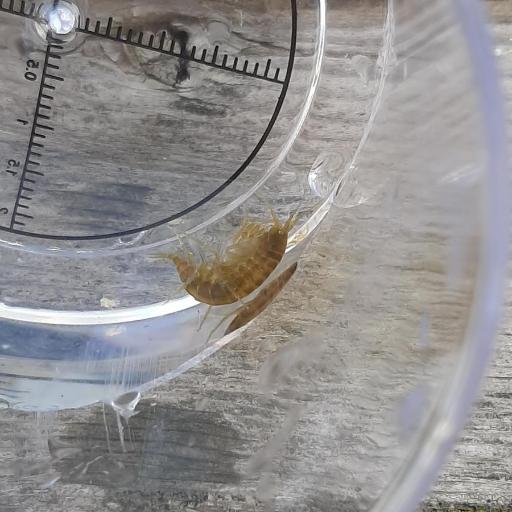
- 🦐 Body Shape: They feature a distinct C-shaped, hunched body that is "laterally compressed," meaning they look like they’ve been squashed from the sides.
- 🐚 Exoskeleton: Their bodies are divided into segments protected by a translucent, brownish, or olive-green shell that acts as armor against the current.
- 🦵 Leg Configuration: They possess seven pairs of legs. The front pairs are used for grasping food, while the rear pairs are designed for their signature "side-swimming" motion.
🌊 Habitat & Ecology
- 💎 Water Quality: These creatures are indicators of high water quality. They thrive in cold, oxygen-rich freshwater environments, particularly in lakes with plenty of limestone or calcium for shell-building.
- 🍂 The Shredder Role: They are primary "shredders" in the food web. By munching on fallen leaves and decaying organic matter, they break down complex nutrients so that smaller microbes can thrive.
- 🐟 The Foundation: Because they are rich in fats and proteins, they are a primary food source for game fish, waterfowl, and even some predatory aquatic insects.
⚠️ Safety & Toxicity
- ✅ Status: Harmless to humans and pets. They do not bite, sting, or carry diseases that affect land mammals.
- 🦠 The Parasite Factor: Some scuds can carry "Acanthocephalan" parasites. These parasites actually change the scud's behavior, forcing them to swim toward the light so they get eaten by ducks, which allows the parasite to complete its life cycle.
- 🧼 Handling: If you find them in your pond or aquarium, they are beneficial "cleaners" and are safe to handle with bare hands.
✨ Fun Fact
When Gammarus lacustris is infected by certain parasites, its body turns from a dull green to a bright, glowing orange. This "mind-control" trick makes the scud stand out against the dark lake bottom, ensuring a hungry bird will see it and snap it up!
More Details








