Info
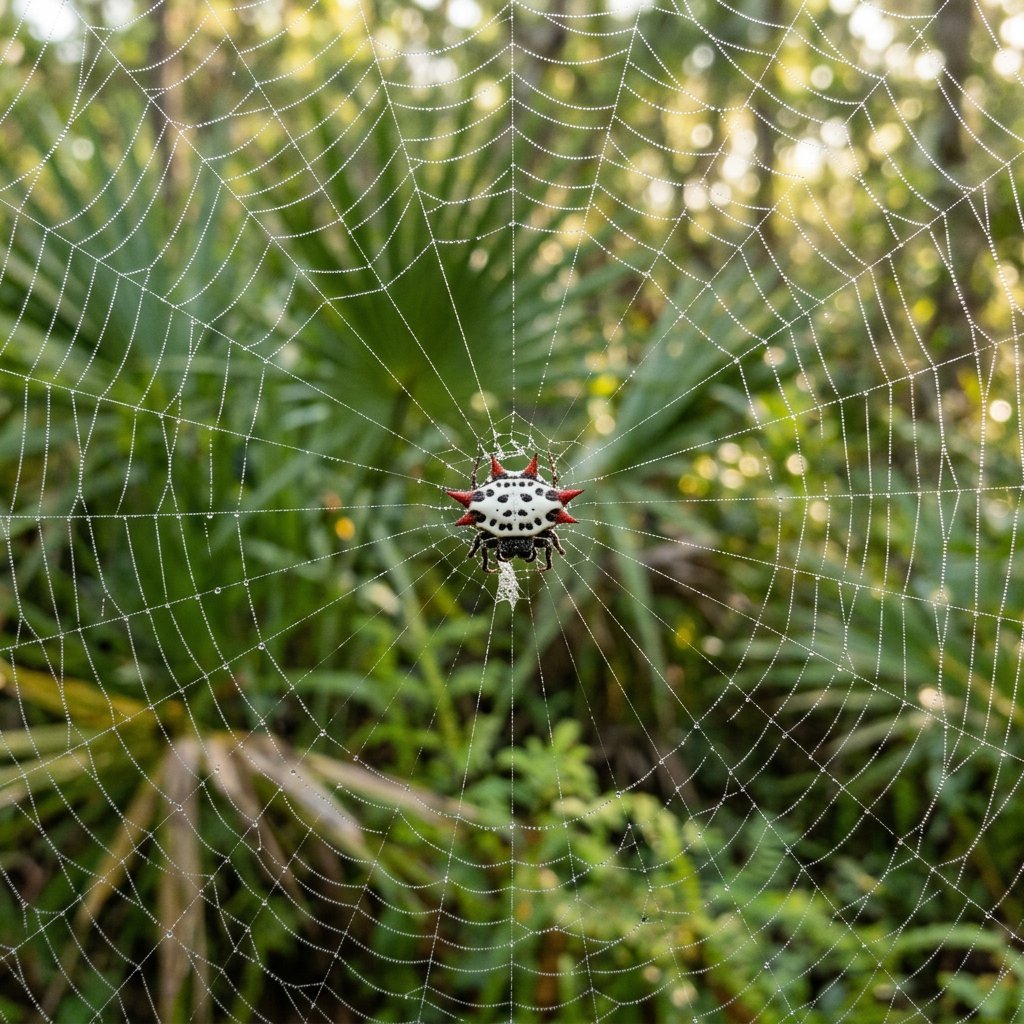
Often called the Crab Spider, Star Spider, or Spiny-backed Orb-weaver, this tiny architect looks more like a piece of hand-painted porcelain or a medieval mace than a typical garden spider. It is a common and welcome sight in citrus groves and backyard gardens across the southern United States and Central America. Despite its intimidating "armor," it is a docile neighbor that spends its days suspended in a masterpiece of silk engineering.
🔍 How to Identify
- 🦀 The "Crab" Shell: The spider features a broad, hardened abdomen that is significantly wider than it is long, giving it a distinct crab-like silhouette.
- 📍 Six Pointed Spines: Look for six prominent spines (thorns) protruding from the edges of the abdomen, usually colored red or black.
- 🎨 Vibrant Colors: The top of the shell is typically bright white or lemon yellow, decorated with several symmetrical black dots (sigilla) that look like tiny ink splats.
🌲 Habitat & Ecology
- 🕸️ Web Master: This spider builds vertical, circular orb webs, often at head-height between trees or shrubs. You might notice small "tufts" of white silk along the web lines, which may serve as warning signs to prevent birds from flying through their hard work.
- 🍽️ Pest Control: As a classic orb-weaver, it is a beneficial "friend" in the garden. It sits in the center of its web daily, waiting to catch and consume small flying pests like mosquitoes, flies, and beetles.
- 🏡 Preferred Spots: They are particularly fond of citrus trees, evergreen shrubs, and the corners of porches where light attracts tasty night-flying insects.
⚠️ Safety & Toxicity
- ✅ Status: Harmless and non-aggressive.
- 🐕 Pet & Human Safety: While the spider can bite if squeezed or handled roughly, its venom is not medically significant to humans or pets. The bite is usually less painful than a bee sting.
- 🌵 The "Prickle" Factor: The main "danger" isn't a bite, but rather accidentally walking into one. The sharp abdominal spines can cause a tiny prick or scratch on sensitive skin, but they do not carry any toxins.
✨ Fun Fact
The Gasteracantha cancriformis has a remarkably short lifespan; most females live only until they have produced an egg sac (usually in the autumn), after which they perish, leaving the next generation to emerge in the spring.
More Details








