Info
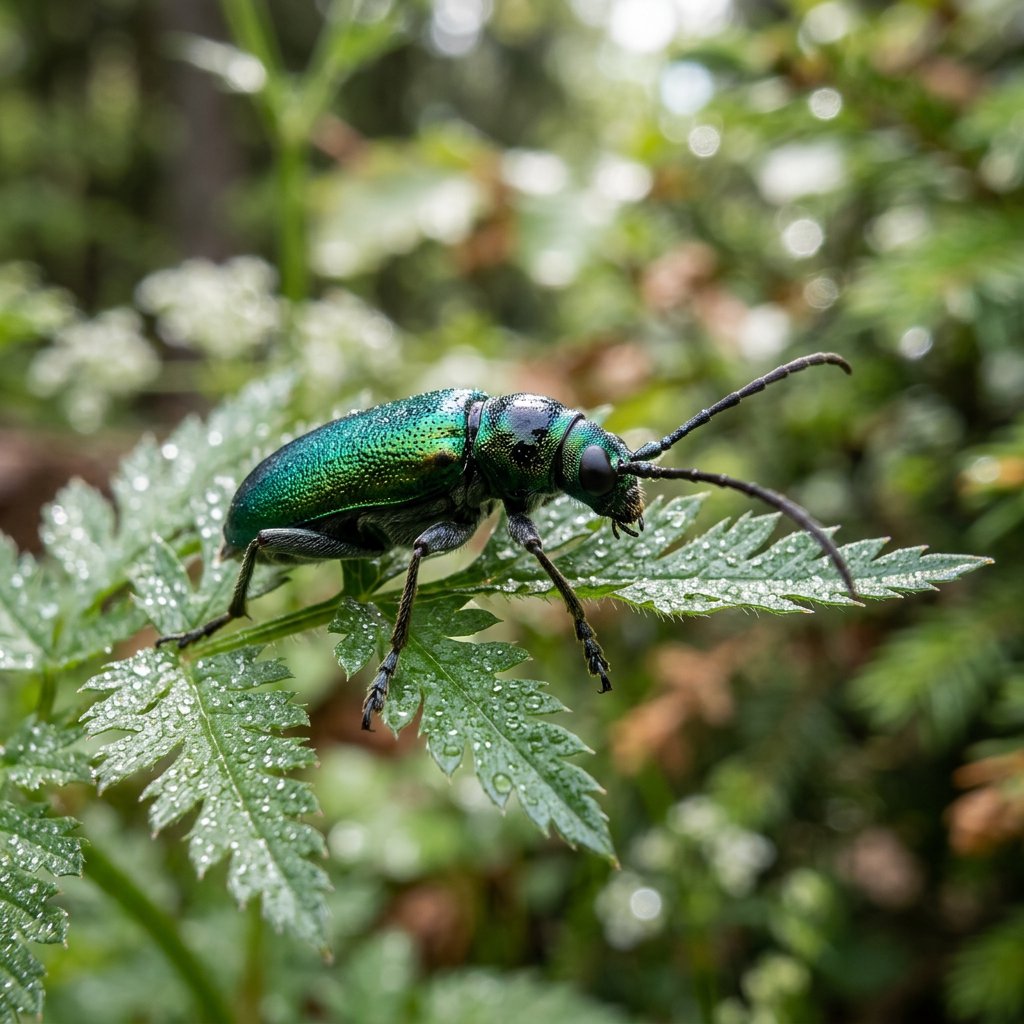
Often mistaken for a piece of lost jewelry caught in the sunlight, Gaurotes virginea is a dazzling member of the longhorn beetle family. Found throughout the mountain forests of Europe and Asia, its shimmering metallic body serves as a brilliant example of nature’s artistry. These beetles are sun-lovers, frequently seen dancing between wildflowers in high-altitude meadows.
🔍 How to Identify
- 💎 Metallic Armor: The wing covers (elytra) are its most striking feature, boasting a brilliant, polished metallic sheen that ranges from sapphire blue to emerald green or deep violet.
- 🎨 The Hidden Splash: If you see the beetle from below or mid-flight, you’ll notice a startling contrast—its abdomen is a bright, warm reddish-orange.
- 📡 Longhorn Silhouette: True to its family name, it sports long, elegant, segmented antennae that it uses to navigate the scented world of forest flowers.
🌲 Habitat & Ecology
- 🌸 Pollen Enthusiast: While many beetles hide under bark, the adults are active during the day. They are frequent visitors to white-flowered plants like Cow Parsnip and Elderberry, where they feed on nectar and pollen.
- 🌲 The Circle of Life: The larvae are "wood-borers," but they aren't pests to healthy gardens. They prefer the decaying wood of coniferous trees, such as Pine and Spruce, helping to break down old timber back into the soil.
⚠️ Safety & Toxicity
- 🛡️ Harmless Jewel: Gaurotes virginea is completely harmless to humans. It does not possess a stinger, and unlike some larger beetles, its mandibles are not strong enough to pierce human skin.
- 🐾 Non-Toxic: It carries no known toxins, making it a safe (though very fast-moving) neighbor for curious pets and children exploring the outdoors.
✨ Fun Fact
These beetles are "polymorphic," meaning members of the same family can look completely different! While most are blue or green, lucky hikers might spot a rare individual that is entirely black or even a deep, velvet purple.
More Details








