Info
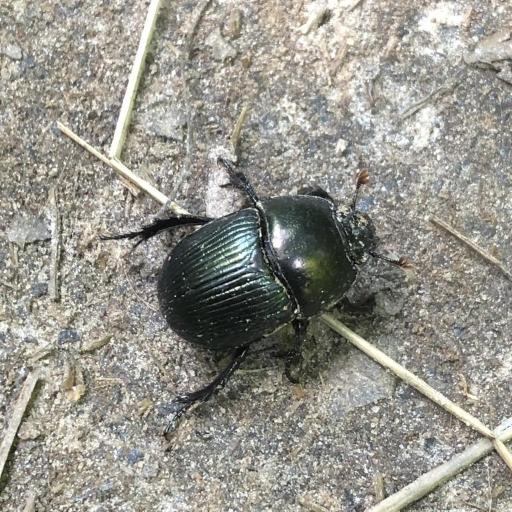
Often called the Splendid Earth-Boring Dung Beetle, this insect is proof that nature finds beauty in the most unlikely places. While many waste-consuming beetles are dull or black, this species sports a high-gloss, metallic finish that rivals the luster of a gemstone. Far from being a pest, it acts as an essential "sanitation engineer" for North American forests and fields.
🔍 How to Identify
- 💎 Metallic Sheen: Its most striking feature is its iridescent exoskeleton, which shimmers with deep violet, forest green, or coppery-blue hues depending on the angle of the light.
- 🛡️ Robust Build: It has a thick, oval-shaped body that is heavily armored, giving it a sturdy, "tank-like" appearance.
- ⛏️ Digging Tools: The front legs are wide and fringed with jagged, sturdy spines, which the beetle uses as powerful shovels to "bulldoze" through soil.
🌲 Habitat & Ecology
- 🚜 Soil Aerators: As "earth-borers," these beetles dig deep vertical tunnels beneath their food sources. By dragging organic matter underground to lay their eggs, they naturally fertilize the earth and improve soil oxygen levels.
- 🍄 Diverse Diet: While dung is a primary food source, Geotrupes splendidus is frequently found under rotting fungi, decaying fruit, or thick leaf litter in deciduous forests.
- 🌙 Night Moves: They are primarily nocturnal or crepuscular, often attracted to porch lights during mid-to-late summer evenings.
⚠️ Safety & Toxicity
- ✅ Harmless Helper: This beetle is entirely non-aggressive. It possesses no stinger and its mandibles are not designed to bite humans.
- 🐾 Safe for Pets: It is non-toxic to dogs and cats. If a curious pet happens to find one, the beetle’s only defense is its hard shell and its ability to tuck its legs in and wait for the danger to pass.
✨ Fun Fact
Despite their "dirty" job, these beetles are surprisingly clean! They have specialized hairs on their undersides that help brush away debris, and they spend a significant amount of time grooming their antennae to ensure their "scent-tracking" sensors are always sharp.
More Details








